
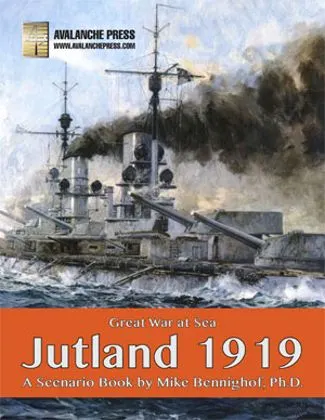
- Puntuación BGG
- 8,4
Great War at Sea: Jutland 1919
- 2 jugadores
- 30–240 min
- Complejidad 3,0/5
- 2018
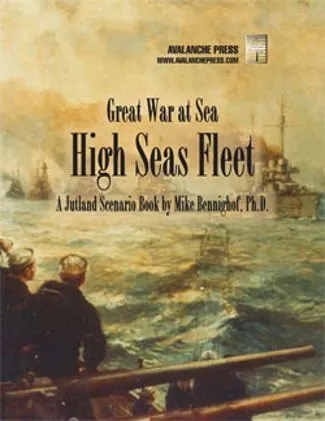
Ayuda con las reglas de Great War at Sea: High Seas Fleet
Explicaciones claras de turnos, efectos de cartas y situaciones dudosas, con referencias a fuentes oficiales e historial de preguntas guardado.
¿Qué quieres saber?
Las respuestas salen del reglamento oficial, con la página para comprobarlo.
Great War at Sea: High Seas Fleet es una expansión de Great War at Sea: Jutland publicada en 2015 para 1–2 jugadores, con partidas de 30 a 240 minutos y a partir de 12 años. Fue diseñado por Michael Bennighof y sus mecánicas principales son Dice Rolling, Secret Unit Deployment y Hexagon Grid.










En inglés
Description from the publisher: During the brief period between 1906 and 1914, so the story goes, Britain and Germany engaged in a furious naval arms race sparked by the launch of the Royal Navy’s revolutionary battleship Dreadnought. This rivalry, egged on in Germany by Grand Admiral Alfred von Tirpitz, then helped ignite the First World War. As usual, reality is a little more complicated than popular history. Tirpitz’s enemy lay not across the North Sea but rather in the War Ministry offices just on the other side of the Brandenburger Tor. Army and Navy battled furiously for funding, inventing, respectively, the (possibly mythical) Schlieffen Plan and the Risk Theory (less mythical, but just as detached from reality) to justify ever-higher levels of spending. In the event, neither got what they wanted: the Navy did not build a new class of dreadnoughts every fiscal year, nor did the Army get to muster two dozen new divisions to “reinforce the right.” But what if Tirpitz had won his real battle? Germany had the financial and industrial resources to build a fleet to challenge the British. What might this fleet have looked like, and how would it have stood up to the Grand Fleet in battle? High Seas Fleet is a supplement for the Great War at Sea series that studies this question with background essays, over two dozen new scenarios, and 70 new scorchless, sootless laser-cut playing pieces. It is not playable by itself; you’ll need our Jutland game (and only our Jutland game) to play the scenarios. You can, of course, just read the essays and fondle the pieces without owning Jutland. We won’t tell. New pieces include German battleships designed but never built: the 1904 semi-dreadnought, the 1905 dreadnought, the 1912 dreadnought with 13.8-inch main guns, and the repeat Baden class super-dreadnoughts. There are additional cruisers and battleships to fill out the classes of the German program, and the full Blücher class of six armored cruisers. This is a powerful fleet that can stand toe-to-toe with the British Grand Fleet – the fleet the propagandists boasted of but Tirpitz feared to actually build. Now you can lead it into battle.
Según el catálogo, Great War at Sea: High Seas Fleet admite de 1 a 2 jugadores. Este intervalo corresponde al número de jugadores indicado por la editorial, así que el juego puede prepararse para cualquier grupo dentro de ese margen. La preparación, algunas reglas y la puntuación pueden variar según el número de jugadores; consulta la configuración exacta en el reglamento de tu edición.
La duración indicada para Great War at Sea: High Seas Fleet es de 30 a 240 minutos, la estimación de la editorial para una partida completa. El tiempo real depende del grupo, del número de jugadores y del conocimiento de las reglas: las primeras partidas suelen alargarse y los grupos con experiencia terminan antes. La preparación y la explicación de las reglas no están incluidas.
El catálogo indica Great War at Sea: High Seas Fleet a partir de 12 años. Es la recomendación de la editorial y refleja la lectura necesaria, la complejidad de las reglas y las piezas pequeñas, no solo el tema. Los más pequeños a menudo pueden jugar con ayuda de un adulto: comprueba la edad recomendada en tu edición y la experiencia de tu grupo.
Great War at Sea: High Seas Fleet tiene una puntuación de complejidad de 3,0 sobre 5 según los jugadores de BoardGameGeek, lo que lo convierte en un juego de complejidad media. La puntuación refleja cuánto conocimiento de reglas, planificación y toma de decisiones exige una partida típica. Los juegos exigentes requieren una explicación inicial más larga, así que conviene usar una guía de preparación.
Great War at Sea: High Seas Fleet pertenece a estas categorías: Wargame, Nautical y Expansion for Base-game. Sus mecánicas principales son Dice Rolling, Secret Unit Deployment y Hexagon Grid. Las categorías describen el tema y la ambientación de un juego, mientras que las mecánicas describen lo que los jugadores hacen realmente en su turno. Cada mecánica lleva a una página del catálogo con juegos similares.
Los autores acreditados de Great War at Sea: High Seas Fleet son: Michael Bennighof. Estos créditos proceden de los datos publicados del juego y nombran a las personas responsables de su diseño, no a ilustradores ni editoriales. Las páginas de autor de MeepleRules reúnen otros títulos de los mismos autores, algo útil cuando un juego te gusta y buscas otros parecidos.
El catálogo clasifica Great War at Sea: High Seas Fleet como expansión de Great War at Sea: Jutland. Las expansiones añaden contenido, reglas o escenarios al juego base y normalmente no se pueden jugar solas, así que necesitas Great War at Sea: Jutland para usarla. Comprueba que tu edición de Great War at Sea: Jutland sea compatible, porque algunas expansiones se revisaron entre ediciones.