
- Puesto en BGG
- BGG #88
- Puntuación BGG
- 8,0
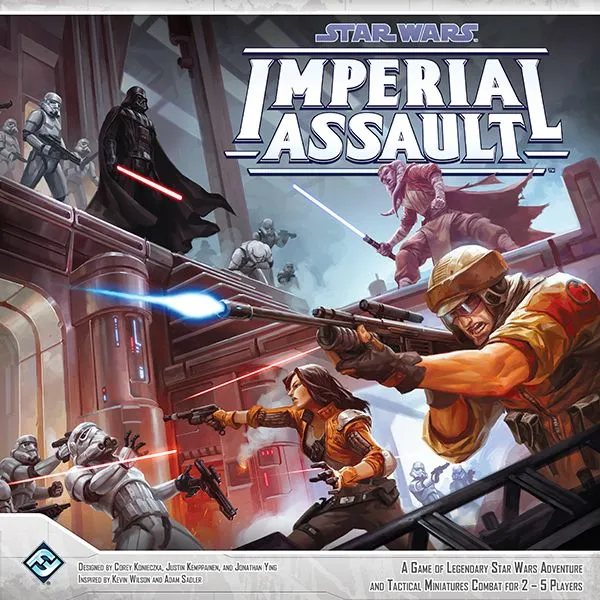
Star Wars: Imperial Assault
- 2–5 jugadores
- 60–120 min
- Complejidad 3,3/5
- 2014
Ayuda con las reglas de Kill Team: Brutal & Cunning
Explicaciones claras de turnos, efectos de cartas y situaciones dudosas, con referencias a fuentes oficiales e historial de preguntas guardado.
¿Qué quieres saber?
Las respuestas salen del reglamento oficial, con la página para comprobarlo.
Kill Team: Brutal & Cunning es una expansión de Warhammer 40,000: Kill Team – Hivestorm publicada en 2024 para 1–2 jugadores, con partidas de 30 a 90 minutos y a partir de 12 años.

En inglés
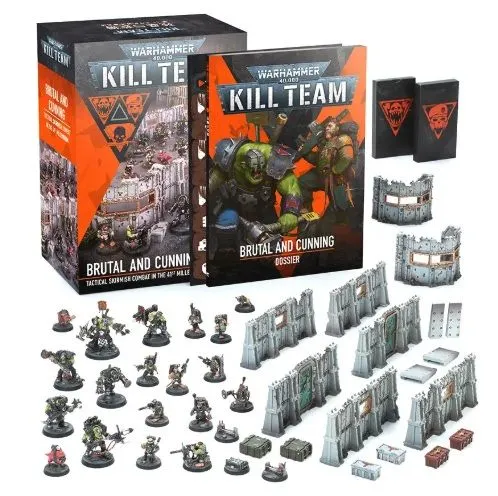
Kill Team: Brutal and Cunning pits the belligerent Ork Wrecka Krew against a band of wily Ratling marksmen in a tense battle in the Undermuzzle Barrens. There’s a third drop of kill teams and datacards to round out the available teams, while Lieutenant Titus makes his debut as a solo release, and mechanical horrors beyond mortal comprehension arrive in Legions Imperialis. Kill Team: Brutal and Cunning contains two kill teams. The Wrecka Krew is made up of a Boss Nob, five Orks, and two Bomb Squigs, while there are 10 Ratling operatives and a battlemutt lead by a Ratling Fixer. It also includes Killzone Upgrade: Compound Siege, comprising two bunkers, six fire steps and six stockades for use with Killzone: Volkus. The 72-page softback Brutal and Cunning dossier is packed with lore for the mission and kill teams, plus rules for the Wrecka Krew and Ratlings, and the Volkus Compound Mission Pack contains PvP and PvE scenarios. You’ll also get all the datacards and tokens you need for both kill teams, as well as an Ork transfer sheet with 438 transfers. Brutal and Cunning is the first expansion for the latest edition of Kill Team. —description from the publisher
Según el catálogo, Kill Team: Brutal & Cunning admite de 1 a 2 jugadores. Este intervalo corresponde al número de jugadores indicado por la editorial, así que el juego puede prepararse para cualquier grupo dentro de ese margen. La preparación, algunas reglas y la puntuación pueden variar según el número de jugadores; consulta la configuración exacta en el reglamento de tu edición.
La duración indicada para Kill Team: Brutal & Cunning es de 30 a 90 minutos, la estimación de la editorial para una partida completa. El tiempo real depende del grupo, del número de jugadores y del conocimiento de las reglas: las primeras partidas suelen alargarse y los grupos con experiencia terminan antes. La preparación y la explicación de las reglas no están incluidas.
El catálogo indica Kill Team: Brutal & Cunning a partir de 12 años. Es la recomendación de la editorial y refleja la lectura necesaria, la complejidad de las reglas y las piezas pequeñas, no solo el tema. Los más pequeños a menudo pueden jugar con ayuda de un adulto: comprueba la edad recomendada en tu edición y la experiencia de tu grupo.
Kill Team: Brutal & Cunning pertenece a estas categorías: Fighting, Wargame y Miniatures. Las categorías describen el tema, la ambientación y el estilo de un juego, no sus reglas. Filtra el catálogo por la misma categoría para encontrar juegos similares si te gustó Kill Team: Brutal & Cunning y buscas algo parecido para tu próxima noche de juegos.
El catálogo clasifica Kill Team: Brutal & Cunning como expansión de Warhammer 40,000: Kill Team – Hivestorm. Las expansiones añaden contenido, reglas o escenarios al juego base y normalmente no se pueden jugar solas, así que necesitas Warhammer 40,000: Kill Team – Hivestorm para usarla. Comprueba que tu edición de Warhammer 40,000: Kill Team – Hivestorm sea compatible, porque algunas expansiones se revisaron entre ediciones.