
- Puesto en BGG
- BGG #6547
- Puntuación BGG
- 6,7
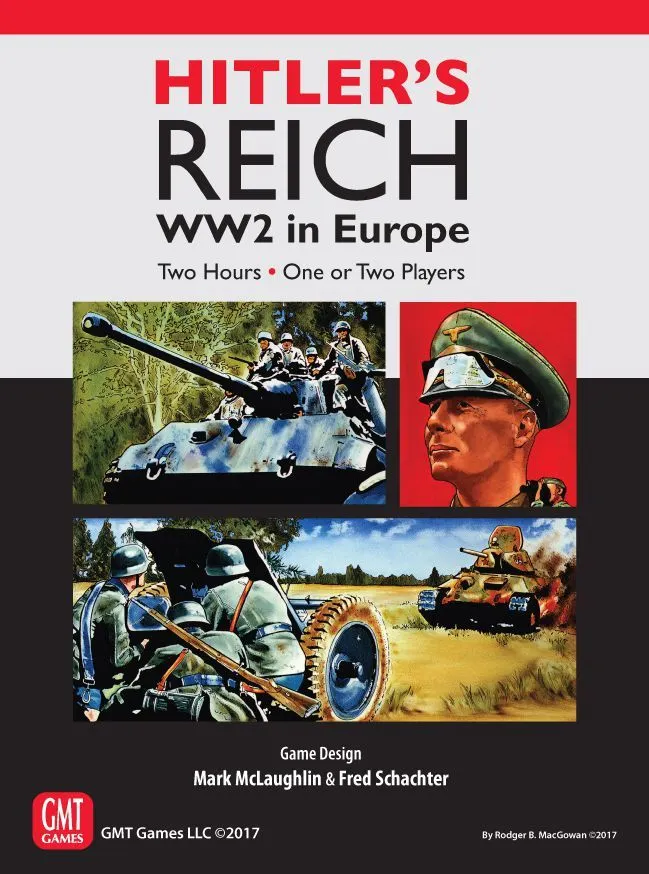
Hitler's Reich: WW2 in Europe
- 1–4 jugadores
- 120 min
- Complejidad 3,1/5
- 2018
2008
Ayuda con las reglas de Kutuzov: The War in Russia, 1812
Explicaciones claras de turnos, efectos de cartas y situaciones dudosas, con referencias a fuentes oficiales e historial de preguntas guardado.
Para 2 jugadores
¿Qué quieres saber?
Las respuestas salen del reglamento oficial, con la página para comprobarlo.
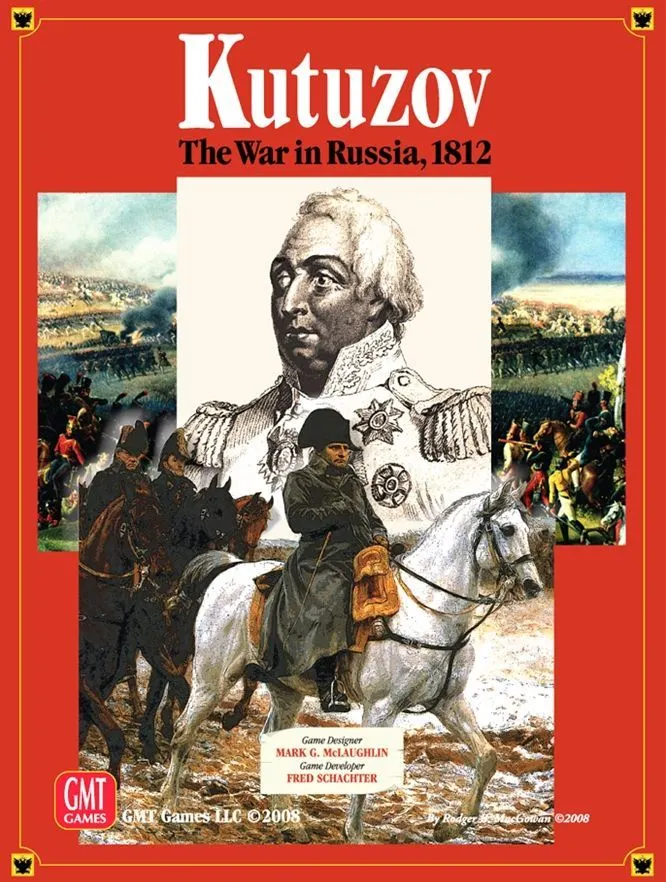
Kutuzov: The War in Russia, 1812 es un juego de mesa publicado en 2008 para 2–4 jugadores, con partidas de 360 minutos y a partir de 12 años. Fue diseñado por Mark McLaughlin y Fred Schachter y sus mecánicas principales son Area Movement, Point to Point Movement y Campaign / Battle Card Driven.
En inglés
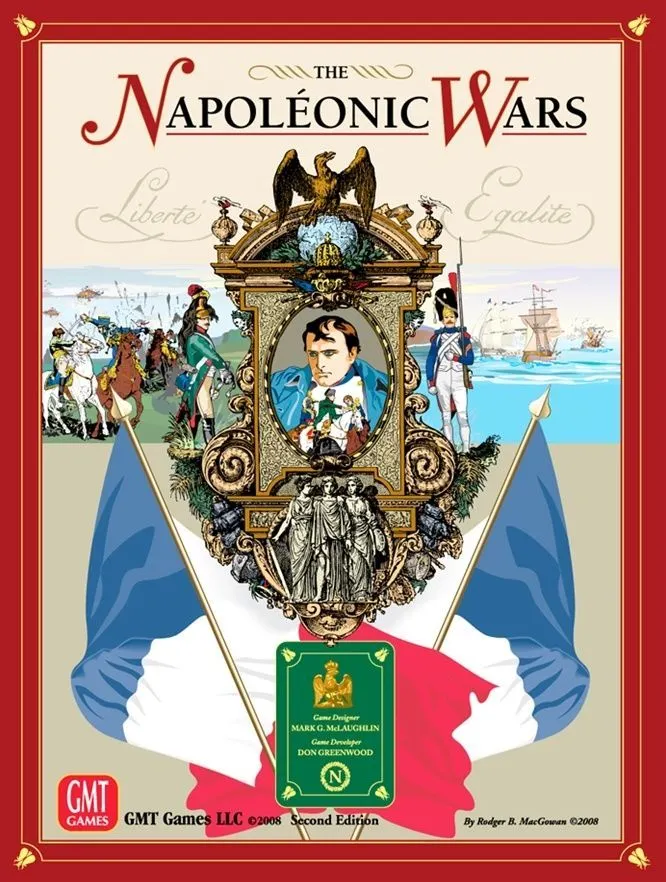
Kutuzov is an interactive, play it complete in one-sitting card-driven game of sweeping manoeuvres, epic battles, storied sieges, lethal attrition and crucial-to-win troop morale for one to four players from the designer of The Napoleonic Wars and Wellington. In the spring of 1812 Emperor Napoleon of France gathered the regiments of 20 nations together into the largest military force yet raised in Europe. That June he led this Grand Army of over 600,000 men across the Nieman River to begin what he believed would be his greatest and perhaps final triumph: the invasion and subjugation of Russia. As the defending armies fell back before this prodigious onslaught, Tsar Alexander turned to a pugnacious and crafty old warrior to help save his country, his people and his Romanov Dynasty: Marshal Mikhail KUTUZOV. Kutuzov uses the same basic rules system as found in The Napoleonic Wars, as it has been modified for even more interactive play in Wellington . As with the later title, there are no diplomatic or political rules: other than those which come into play should Imperial morale fall so low as to trigger the desertion of the Austrians or outright revolt of the Prussians. There are no naval rules other than a Russian ability to move between friendly ports and a "Hornblower" Home Card that allows for a Russian invasion on the Baltic Coast). Kutuzov is thus primarily a game of manoeuvre and combat, where players can recreate the sieges and legendary battles made so familiar to gamers as brought to life in such great books as Leo Tolstoy's War and Peace. As this is Russia, however, not all enemies stand in solid ranks before you. Players must contend not only with their opponents but with Cossack raiders, Polish Lancers, often brutally horrifying attrition, fragile morale, treacherous allies, political events from outside the theatre of war and, of course, "Scorched Earth" and "General Winter" himself, whose scourge effects both invader and defender of Holy Mother Russia. 110 Cards, most with quotes from the actual participants in that great struggle, drive the game and bring to it the flavour of being in Russia during the 1812 Campaign. The Imperials and Tsarists each have mini- "Home Decks" of a dozen cards each to share, thus increasing the chance that events, forces and options that were presented to the original contenders will arise during play. The other 86 cards, which include many "Must Play" political events, however, ensure every playing of the game will be very different. Kutuzov comes with a campaign game that can last one, two, three or four turns - but which includes numerous mechanisms that can bring the game to a "Sudden Death" ending at the conclusion of or even DURING A TURN. Mark and Fred, in seeking to deliver more value, variation and enjoyable gaming have provided two other game start scenarios which allow for the game to begin at the commencement of what would be turn two (On to Smolensk!) or turn three (Napoleon in Moscow) of the campaign. A fourth and rather unique method of play allows for two players to each take ONE of the powers from EACH side, in a highly competitive and unusual game of labyrinthine think and double-think. A fifth version allows for two players to play the game using a SINGLE hand of cards each, with "chips" to buy additional cards for their side as the play progresses. The Campaign and the Scenarios: "Invasion": A Turn One game start should see the French and their Allies' military juggernaut smash across the border and attempt to catch and annihilate the Russians before they can mass to defend their Motherland Can the players surpass their historical counterparts? "On to Smolensk !": This permits players to avoid the border battles and initial French advances to begin play at a watershed of the Campaign: The Grand Army confronting concentrated Russian forces defending Smolensk immediately before Kutuzov arrives to take command. Will the French advance on Moscow as they did historically or seek victory through an alternative offensive direction…north to St. Petersberg or south to seize the Ukraine and other southern victory points? "Napoleon in Moscow": In this version of Kutuzov the bloody Battle of Borodino has been fought. The Grand Army reposes in Moscow awaiting Russian surrender or at least agreement to terms. The first chill snow of Winter has fallen, harbinger what's to come: should the French remain deep in Russia hoping to conquer the country or is it time to withdraw to better defences for the 1813 Campaign? In all of the scenarios, the Imperial Powers have an initial advantage in numbers, leadership, Resources, and Morale. They are, after all, an Army that has never known defeat; a superb military instrument, led by the most powerful man in Europe with his devoted retinue of almost legendary Marshals. They face an enemy who has not tasted victory in Battle in nearly a generation, let alone full-scale war of the likes of which Napoleon wages. The French must take advantage of their superiority quickly, as that will soon dissipate in the immense marshes, unending steppes and fiercely fought over fields and cities of Russia. If they do not or can not succeed, then the advantage slips away to the forces of the Tsar, who, under Kutuzov, will not just be defending Russia, but will be advancing into the outer marches of that yet fragile empire led by their archenemy… Napoleon.
Según el catálogo, Kutuzov: The War in Russia, 1812 admite de 2 a 4 jugadores. Este intervalo corresponde al número de jugadores indicado por la editorial, así que el juego puede prepararse para cualquier grupo dentro de ese margen. La preparación, algunas reglas y la puntuación pueden variar según el número de jugadores; consulta la configuración exacta en el reglamento de tu edición.
La duración indicada para Kutuzov: The War in Russia, 1812 es de 360 minutos, la estimación de la editorial para una partida completa. El tiempo real depende del grupo, del número de jugadores y del conocimiento de las reglas: las primeras partidas suelen alargarse y los grupos con experiencia terminan antes. La preparación y la explicación de las reglas no están incluidas.
El catálogo indica Kutuzov: The War in Russia, 1812 a partir de 12 años. Es la recomendación de la editorial y refleja la lectura necesaria, la complejidad de las reglas y las piezas pequeñas, no solo el tema. Los más pequeños a menudo pueden jugar con ayuda de un adulto: comprueba la edad recomendada en tu edición y la experiencia de tu grupo.
Kutuzov: The War in Russia, 1812 tiene una puntuación de complejidad de 3,4 sobre 5 según los jugadores de BoardGameGeek, lo que lo convierte en un juego de complejidad media. La puntuación refleja cuánto conocimiento de reglas, planificación y toma de decisiones exige una partida típica. Los juegos exigentes requieren una explicación inicial más larga, así que conviene usar una guía de preparación.
Kutuzov: The War in Russia, 1812 pertenece a estas categorías: Wargame y Napoleonic. Sus mecánicas principales son Area Movement, Point to Point Movement y Campaign / Battle Card Driven. Las categorías describen el tema y la ambientación de un juego, mientras que las mecánicas describen lo que los jugadores hacen realmente en su turno. Cada mecánica lleva a una página del catálogo con juegos similares.
Los autores acreditados de Kutuzov: The War in Russia, 1812 son: Mark McLaughlin y Fred Schachter. Estos créditos proceden de los datos publicados del juego y nombran a las personas responsables de su diseño, no a ilustradores ni editoriales. Las páginas de autor de MeepleRules reúnen otros títulos de los mismos autores, algo útil cuando un juego te gusta y buscas otros parecidos.
El catálogo clasifica Kutuzov: The War in Russia, 1812 como juego base. Se juega por sí solo con los componentes de la caja y no requiere ningún otro título. Las expansiones, si existen, añaden contenido o reglas nuevas y aparecen por separado en el catálogo con un enlace a este juego base.