

- Puesto en BGG
- BGG #29.878
- Puntuación BGG
- 5,1
Simpsons Trading Card Game
- 2–5 jugadores
- 20 min
- Complejidad 1,4/5
- 2003
2000
Ayuda con las reglas de Looney Tunes Trading Card Game
Explicaciones claras de turnos, efectos de cartas y situaciones dudosas, con referencias a fuentes oficiales e historial de preguntas guardado.
¿Qué quieres saber?
Las respuestas salen del reglamento oficial, con la página para comprobarlo.
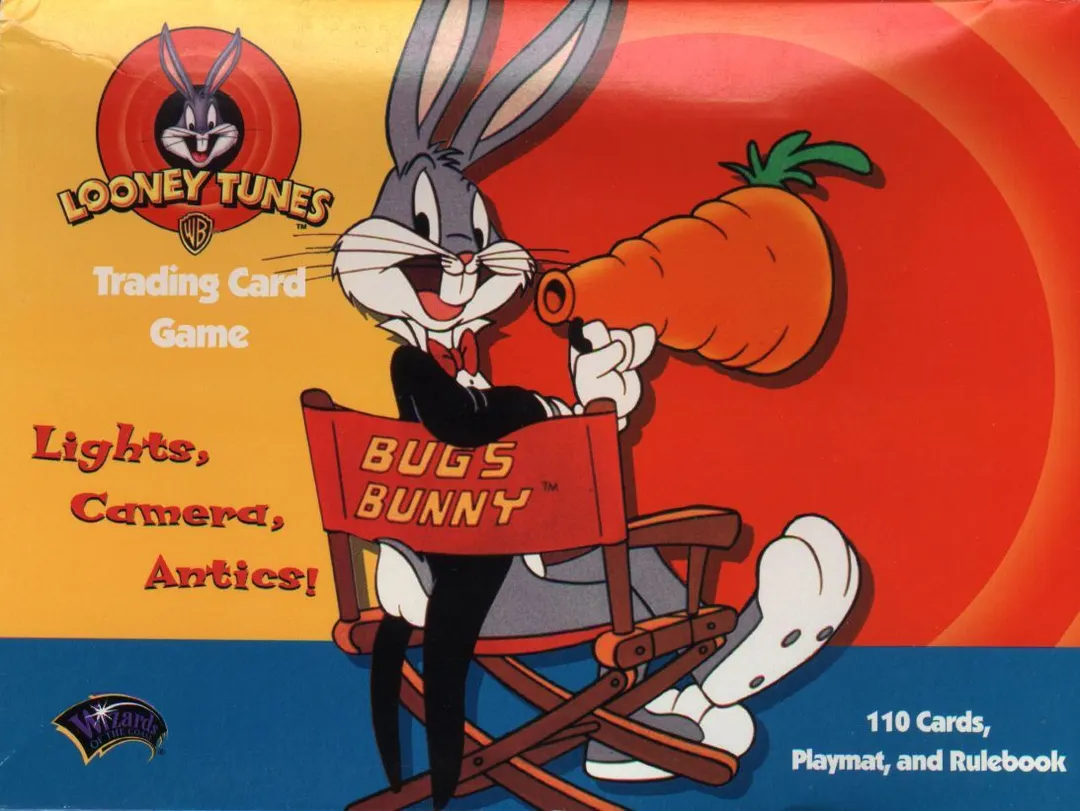
Looney Tunes Trading Card Game es un juego de mesa publicado en 2000 para 2–4 jugadores y con partidas de 20 minutos. Fue diseñado por James Ernest.




En inglés
A very simple game which, unusual for a collectible card game, has only three types of cards. Scenes, which are Loony Tune episodes, have a value and color. Actors, which are characters from various cartoons, each also have a value and color. Special effects are the monkey wrenches that may be thrown into the mix for more randomness. Four scenes are laid out and replenished when depleted. The object is to play Actors to the scenes to try to steal them. The active player plays actors and/or special effects to a scene then the inactive player does the same. After both have played the scene is removed and scored. To win the scene you must have the best actors. The hierarchy for scoring is... 1. The highest value of same color actors not exceeding the scene value. 2. The highest value of wrong colored actors not exceeding the scene value. 3. The highest value actors exceeding the scene value. These actors are overacting. ...with the active player winning ties. The game is good for children because of its simplicity but will not keep the interest of veteran game players. The artwork is from Looney Tunes both color and B/W episodes and are laid out nicely on the cards.
Según el catálogo, Looney Tunes Trading Card Game admite de 2 a 4 jugadores. Este intervalo corresponde al número de jugadores indicado por la editorial, así que el juego puede prepararse para cualquier grupo dentro de ese margen. La preparación, algunas reglas y la puntuación pueden variar según el número de jugadores; consulta la configuración exacta en el reglamento de tu edición.
La duración indicada para Looney Tunes Trading Card Game es de 20 minutos, la estimación de la editorial para una partida completa. El tiempo real depende del grupo, del número de jugadores y del conocimiento de las reglas: las primeras partidas suelen alargarse y los grupos con experiencia terminan antes. La preparación y la explicación de las reglas no están incluidas.
Looney Tunes Trading Card Game tiene una puntuación de complejidad de 1,0 sobre 5 según los jugadores de BoardGameGeek, lo que lo convierte en un juego ligero. La puntuación refleja cuánto conocimiento de reglas, planificación y toma de decisiones exige una partida típica. Los juegos exigentes requieren una explicación inicial más larga, así que conviene usar una guía de preparación.
Looney Tunes Trading Card Game pertenece a estas categorías: Card Game, Humor y Animals. Las categorías describen el tema, la ambientación y el estilo de un juego, no sus reglas. Filtra el catálogo por la misma categoría para encontrar juegos similares si te gustó Looney Tunes Trading Card Game y buscas algo parecido para tu próxima noche de juegos.
Los autores acreditados de Looney Tunes Trading Card Game son: James Ernest. Estos créditos proceden de los datos publicados del juego y nombran a las personas responsables de su diseño, no a ilustradores ni editoriales. Las páginas de autor de MeepleRules reúnen otros títulos de los mismos autores, algo útil cuando un juego te gusta y buscas otros parecidos.
El catálogo clasifica Looney Tunes Trading Card Game como juego base. Se juega por sí solo con los componentes de la caja y no requiere ningún otro título. Las expansiones, si existen, añaden contenido o reglas nuevas y aparecen por separado en el catálogo con un enlace a este juego base.