
- Puesto en BGG
- BGG #26.217
- Puntuación BGG
- 5,4
Tanbo
- 2–4 jugadores
- 30–90 min
- Complejidad 2,8/5
- 1993

2012
Ayuda con las reglas de Redstone
Explicaciones claras de turnos, efectos de cartas y situaciones dudosas, con referencias a fuentes oficiales e historial de preguntas guardado.
Para 2 jugadores
¿Qué quieres saber?
Las respuestas salen del reglamento oficial, con la página para comprobarlo.
Redstone es un juego de mesa publicado en 2012 para 2 jugadores, con partidas de 20 a 60 minutos y a partir de 5 años. Fue diseñado por Mark Steere y sus mecánicas principales son Tile Placement, Square Grid y Enclosure.



En inglés
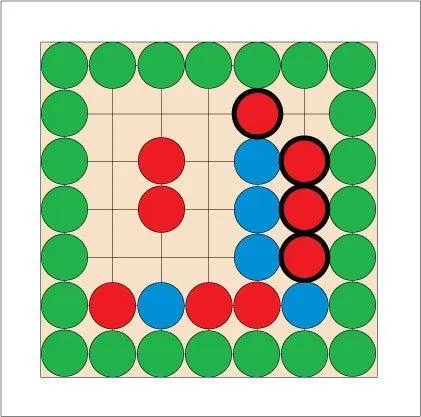
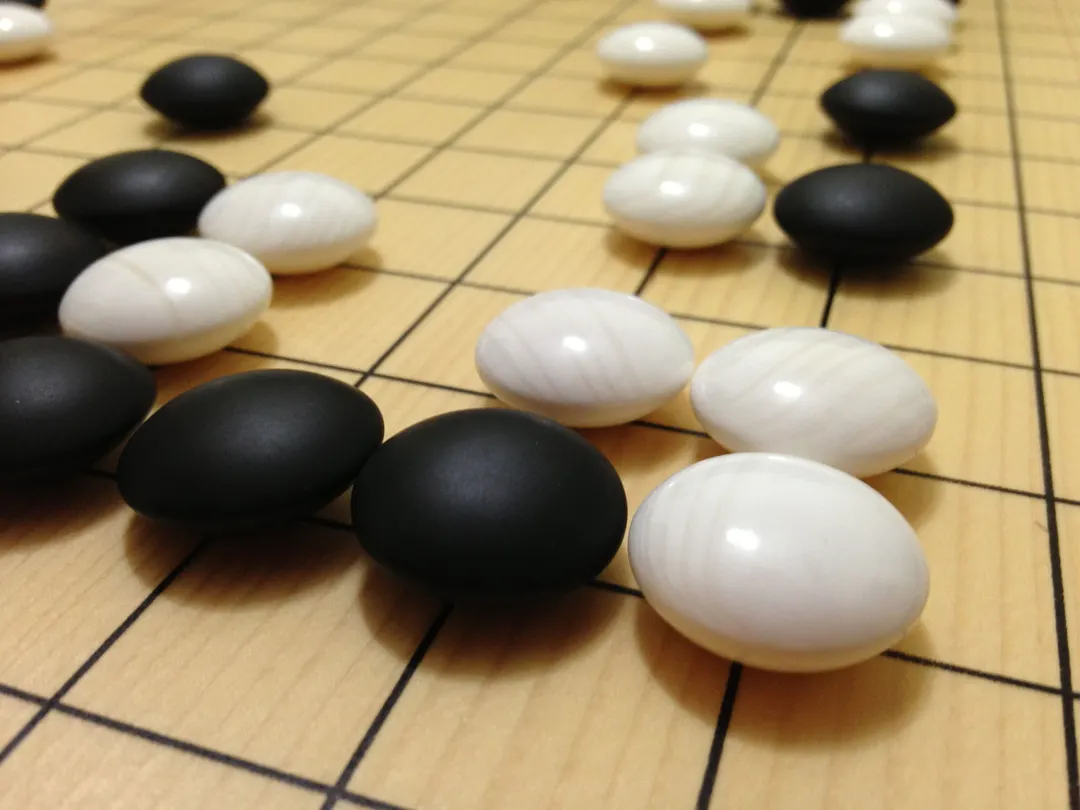
Redstone is a variation of Go in which red stones are used to capture. Red stones are permanent. They cannot themselves be captured. “Adjacent” will mean orthogonally (horizontally or vertically) adjacent here. The two players, Black and White, each have unlimited stones of their own color. They also share an unlimited supply of red stones. Draws cannot occur in Redstone. Luis Bolaños Mures made a material contribution to the design of Redstone. Object of the game You must annihilate your opponent, removing all of his stones from the board. If your placement eliminates all black and white stones from the board, you win. If your placement eliminates all of your own stones while enemy stones remain on the board, you lose. Play Starting with Black, the two players take turns placing stones onto unoccupied points on the board, subject to restrictions, one stone per turn. Passing is not allowed in Redstone. Players will always have a placement available and must make one. A group is an orthogonally interconnected collection of one or more like-colored stones. Only black groups and white groups will be discussed here, not red groups. A liberty is an unoccupied point adjacent to a (black or white) group. A capturing placement results in one or more groups, of either or both colors, having no liberties. Such a placement can only be made with a red stone. Conversely, a red stone can only be placed if it bounds (completely deprives of liberties) one or more groups of either or both colors. Red stones are permanent. They cannot themselves be captured. Self capture is allowed. When multiple groups without liberties result from a placement, all such groups are removed immediately following said placement, regardless of the groups' colors. Unlike Go, if you unbound your own temporarily bounded group by removing a neighboring enemy group, you must still remove your own temporarily bounded group. Pie rule Since Redstone is a game of annihilation, not of point score, Go’s komi can’t be used. Instead, Redstone uses the pie rule for balance.
Según el catálogo, Redstone admite 2 jugadores. Es el número de jugadores indicado por la editorial, así que el juego está diseñado exactamente para esa cantidad de participantes. Las variantes para otros tamaños de grupo, si existen, se describen en el reglamento de tu edición; consúltalo antes de preparar otra configuración.
La duración indicada para Redstone es de 20 a 60 minutos, la estimación de la editorial para una partida completa. El tiempo real depende del grupo, del número de jugadores y del conocimiento de las reglas: las primeras partidas suelen alargarse y los grupos con experiencia terminan antes. La preparación y la explicación de las reglas no están incluidas.
El catálogo indica Redstone a partir de 5 años. Es la recomendación de la editorial y refleja la lectura necesaria, la complejidad de las reglas y las piezas pequeñas, no solo el tema. Los más pequeños a menudo pueden jugar con ayuda de un adulto: comprueba la edad recomendada en tu edición y la experiencia de tu grupo.
Redstone pertenece a estas categorías: Territory Building y Abstract Strategy. Sus mecánicas principales son Tile Placement, Square Grid y Enclosure. Las categorías describen el tema y la ambientación de un juego, mientras que las mecánicas describen lo que los jugadores hacen realmente en su turno. Cada mecánica lleva a una página del catálogo con juegos similares.
Los autores acreditados de Redstone son: Mark Steere. Estos créditos proceden de los datos publicados del juego y nombran a las personas responsables de su diseño, no a ilustradores ni editoriales. Las páginas de autor de MeepleRules reúnen otros títulos de los mismos autores, algo útil cuando un juego te gusta y buscas otros parecidos.
El catálogo clasifica Redstone como juego base. Se juega por sí solo con los componentes de la caja y no requiere ningún otro título. Las expansiones, si existen, añaden contenido o reglas nuevas y aparecen por separado en el catálogo con un enlace a este juego base.