
- Puesto en BGG
- BGG #9107
- Puntuación BGG
- 6,5
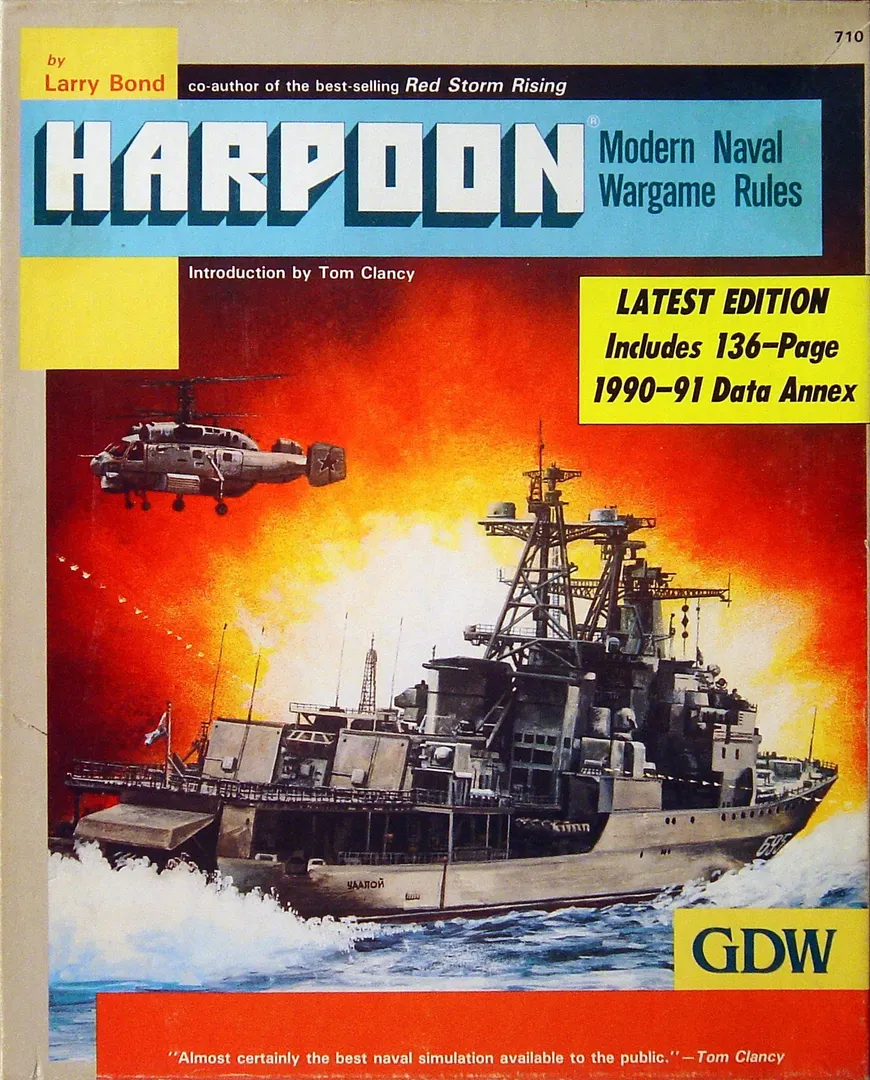
Harpoon (Third Edition)
- 2 jugadores
- 180 min
- Complejidad 4,0/5
- 1987
2003
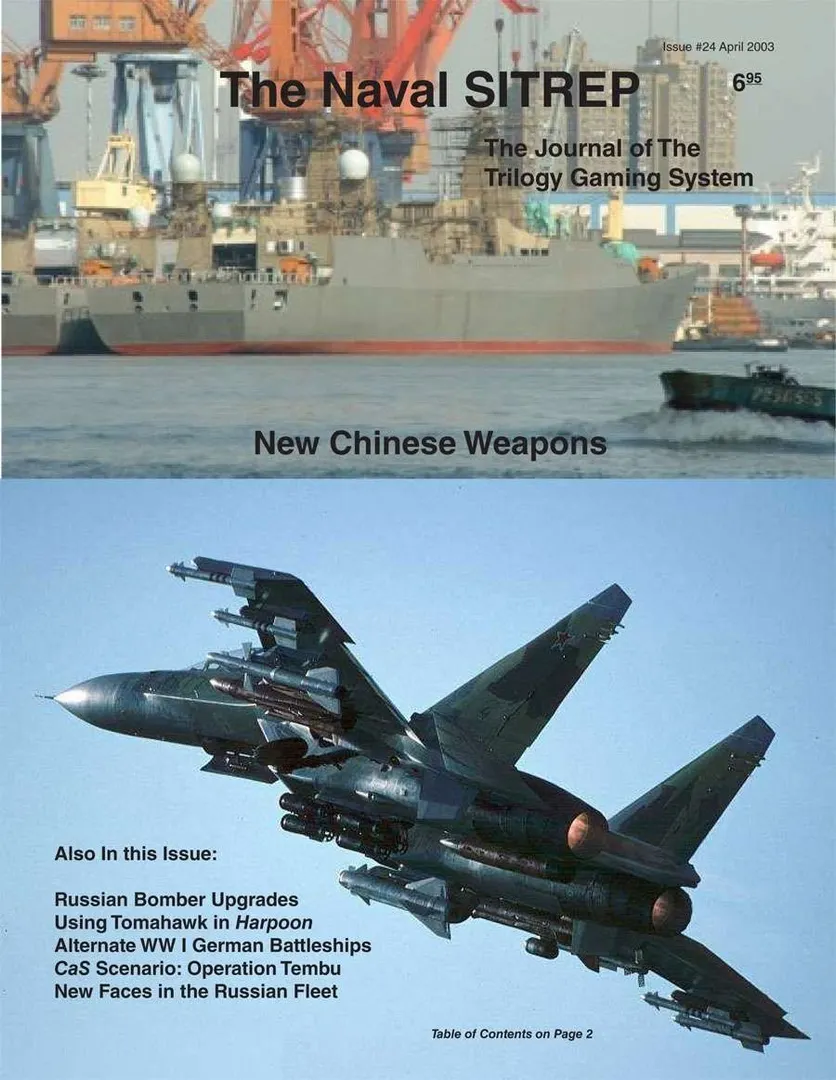
Ayuda con las reglas de The Naval SITREP: The Journal of Naval Miniatures Wargaming #24
Explicaciones claras de turnos, efectos de cartas y situaciones dudosas, con referencias a fuentes oficiales e historial de preguntas guardado.
¿Qué quieres saber?
Las respuestas salen del reglamento oficial, con la página para comprobarlo.
The Naval SITREP: The Journal of Naval Miniatures Wargaming #24 es una expansión de juego de mesa publicada en 2003 para 2–8 jugadores, con partidas de 60 minutos y a partir de 12 años. Fue diseñado por Dave Arneson, Larry Bond, Stuart Machin, Peter Grining y Christoph Kluxen y sus mecánicas principales son Dice Rolling y Simulation.



En inglés
The Naval SITREP is published twice a year by the Admiralty Trilogy Group. It supports the Admiralty Trilogy game system with scenarios, articles on history and technology, and rules expansions & corrections. The Naval SITREP Issue #24 was published in April of 2003. Table of contents: CaS Scenario: Operation Tembu New Faces in the Russian Fleet The UCAV Arrives Chinese Flank Attack You Are What You Fight Unconventional Mine Warfare Russian Cruise Missile and Bomber Upgrades Storm Shadow Deploys Alternate Capital Ship Designs of the Imperial German Navy Using Tomahawk in Harpoon New Chinese Ships and Weapons New Harpoon MAD Detection Rules Submarine Flooding Rules New Harpoon EO Rules Harpoon Land Attack Missile Rules Smarter (and Simpler) Radar in H4 Book Review: Soviet Long Range and Naval Aviation Missiles Book Review: Seapower and Space Book Review: Ordeal by Exocet Book Review: Russian Air Power
Según el catálogo, The Naval SITREP: The Journal of Naval Miniatures Wargaming #24 admite de 2 a 8 jugadores. Este intervalo corresponde al número de jugadores indicado por la editorial, así que el juego puede prepararse para cualquier grupo dentro de ese margen. La preparación, algunas reglas y la puntuación pueden variar según el número de jugadores; consulta la configuración exacta en el reglamento de tu edición.
La duración indicada para The Naval SITREP: The Journal of Naval Miniatures Wargaming #24 es de 60 minutos, la estimación de la editorial para una partida completa. El tiempo real depende del grupo, del número de jugadores y del conocimiento de las reglas: las primeras partidas suelen alargarse y los grupos con experiencia terminan antes. La preparación y la explicación de las reglas no están incluidas.
El catálogo indica The Naval SITREP: The Journal of Naval Miniatures Wargaming #24 a partir de 12 años. Es la recomendación de la editorial y refleja la lectura necesaria, la complejidad de las reglas y las piezas pequeñas, no solo el tema. Los más pequeños a menudo pueden jugar con ayuda de un adulto: comprueba la edad recomendada en tu edición y la experiencia de tu grupo.
The Naval SITREP: The Journal of Naval Miniatures Wargaming #24 pertenece a estas categorías: Wargame, Miniatures y Nautical. Sus mecánicas principales son Dice Rolling y Simulation. Las categorías describen el tema y la ambientación de un juego, mientras que las mecánicas describen lo que los jugadores hacen realmente en su turno. Cada mecánica lleva a una página del catálogo con juegos similares.
Los autores acreditados de The Naval SITREP: The Journal of Naval Miniatures Wargaming #24 son: Dave Arneson, Larry Bond, Stuart Machin, Peter Grining y Christoph Kluxen. Estos créditos proceden de los datos publicados del juego y nombran a las personas responsables de su diseño, no a ilustradores ni editoriales. Las páginas de autor de MeepleRules reúnen otros títulos de los mismos autores, algo útil cuando un juego te gusta y buscas otros parecidos.
El catálogo clasifica The Naval SITREP: The Journal of Naval Miniatures Wargaming #24 como expansión. Las expansiones añaden contenido, reglas o escenarios a un juego base existente y normalmente no se pueden jugar solas. Comprueba en la caja o en la descripción de la editorial qué juego base se necesita y asegúrate de que tu edición de ese juego sea compatible con esta expansión.