

- Rang BGG
- BGG #19 899
- Note BGG
- 6,9
Denain 1712
- 2 joueurs
- 60 min
- Complexité 2,5/5
- 1998

2019
Aide aux règles de Blenheim 1704 AD
Des explications claires des tours, effets de cartes et situations litigieuses, avec des références aux sources officielles et un historique des questions sauvegardé.
Pour 2 joueurs
Que voulez-vous savoir ?
Les réponses viennent du livret officiel, avec la page à vérifier.
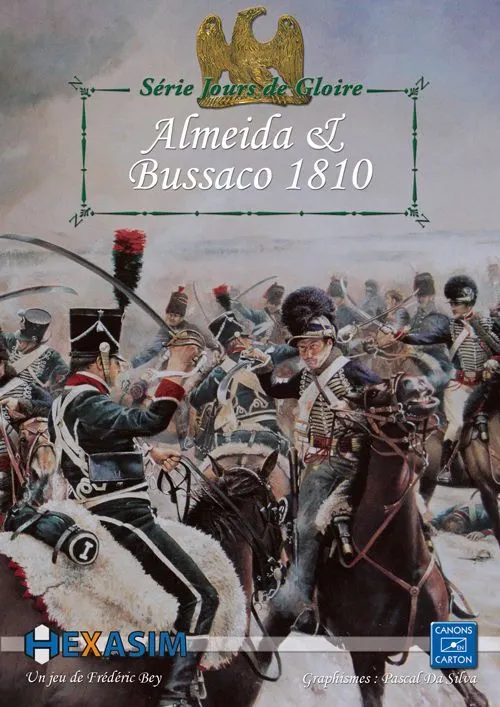
Blenheim 1704 AD est un jeu de société sorti en 2019 pour 2 joueurs. Il a été conçu par Frédéric Bey et ses principales mécaniques sont Dice Rolling et Hexagon Grid.




En anglais
"Blenheim 1704 AD" is a tactical wargame from "Turning Point Simulations" which focuses on the battlefield area itself, with each side having two distinct commands and forces. Players will command the varied forces of each side, with British, Dutch, Austrians, Prussians, Danes, and various German allies on one side and French, Bavarians, and even Irish fighting for Louis. Each unit in the game represents one brigade with each combat strength point around 400 men or 200 horses. One hex on the map equals 400 meters. A turn represents around one hour of action and the game can last up to 7 turns. “But ‘twas a famous victory!” Many wars have been fought to tip or maintain that illusive “balance of power” between nations, while including other objectives. The War of Spanish Succession might be the poster child for “balance” efforts, as demonstrated by the British… who allied with the Hapsburgs to stop a union between France and Spain…then left the war when it looked like the Hapsburgs could win (since Britain also feared a union of Spain and Austria!). Over the course of a 12-year war, there was much coming and going (along with secret negotiations and betrayals). The war included battlefields as far apart as Quebec and the Papal States, from the Netherlands to Hungary, and to various spots all over the German states. Including a small village on the Danube named Blindheim… which the British would garble as “Blenheim.” Up to that point, things had been going well for the French and their armies looked to capture Vienna and take the Habsburgs out of the equation. Marlborough changed all that, but only after lying to his Dutch allies and virtually “stealing” the army he marched 250 miles away from the Low Countries he was expected to protect. After days of marching, countermarching, probes and parrying, the Allies attacked a foe of slightly larger size and in good positions, while the French were expecting them to retreat. Their cavalry was somewhat dispersed and too much of their infantry was in the towns of the area. And, up to that point, the French Army was considered “unbeatable.” The battle went back and forth, with each side having opportunities for success but seeing confusion and heavy losses confound good plans. Certainly Marlborough and Eugene worked together marvelously well, especially for allies, which may have been the key difference. Tallard and Marsin and the Bavarians had their chances but missed them, needing infantry where they had cavalry and cavalry where they had infantry. When the British attacked the “seam” between the two forces, Marsin’s regiments fell back and Tallard’s collapsed. French losses were heavy, and their army’s aura of invincibility was gone forever. Though the war would continue for over 10 more years, Blenheim rates as “decisive” because this cost Louis the chance to knock the Habsburgs out of the war early. Instead, it would be his Bavarian allies who would lose out and become vassals to Vienna. In the end, the war would end as countries spun into exhaustion and a number of rulers died from age or sickness, making separate treaties that were finally consolidated under the Treat of Utrecht. France would not dominate the continent and, the most visible effect to us today, Britain still possesses Gibraltar. —description from the publisher
Selon le catalogue, Blenheim 1704 AD se joue à 2 personnes. C’est le nombre de joueurs indiqué par l’éditeur : le jeu est donc conçu pour exactement ce nombre de participants. Les variantes pour d’autres tailles de groupe, s’il en existe, sont décrites dans la règle de votre édition ; consultez-la avant d’installer une autre configuration.
Blenheim 1704 AD obtient une note de complexité de 2,5 sur 5 auprès des joueurs de BoardGameGeek, ce qui en fait un jeu plutôt léger. Cette note reflète la quantité de règles, de planification et de décisions qu’exige une partie typique. Prévoyez une explication plus longue pour les jeux exigeants et utilisez un guide de préparation avant la soirée.
Blenheim 1704 AD appartient à ces catégories : Wargame et Age of Reason. Ses principales mécaniques sont Dice Rolling et Hexagon Grid. Les catégories décrivent le thème et l’univers d’un jeu, tandis que les mécaniques décrivent ce que les joueurs font réellement pendant leur tour. Chaque mécanique mène à une page du catalogue avec des jeux similaires.
Les auteurs crédités pour Blenheim 1704 AD sont : Frédéric Bey. Ces crédits proviennent des données publiées du jeu et désignent les personnes responsables de sa conception, et non les illustrateurs ou les éditeurs. Les pages d’auteurs sur MeepleRules regroupent les autres titres des mêmes auteurs, ce qui est utile lorsqu’un jeu vous plaît et que vous en cherchez de similaires.
Le catalogue présente Blenheim 1704 AD comme un jeu de base. Il se joue seul avec le matériel contenu dans la boîte et ne nécessite aucun autre titre. Les extensions, s’il en existe, y ajoutent du contenu ou des règles et sont répertoriées séparément dans le catalogue, avec un lien vers ce jeu de base.