- Note BGG
- 6,3
Ignite: A New Enemy
- 1–8 joueurs
- 30–120 min
- 2021
2021
Aide aux règles de Ignite
Des explications claires des tours, effets de cartes et situations litigieuses, avec des références aux sources officielles et un historique des questions sauvegardé.
Pour 2 joueurs
Que voulez-vous savoir ?
Les réponses viennent du livret officiel, avec la page à vérifier.
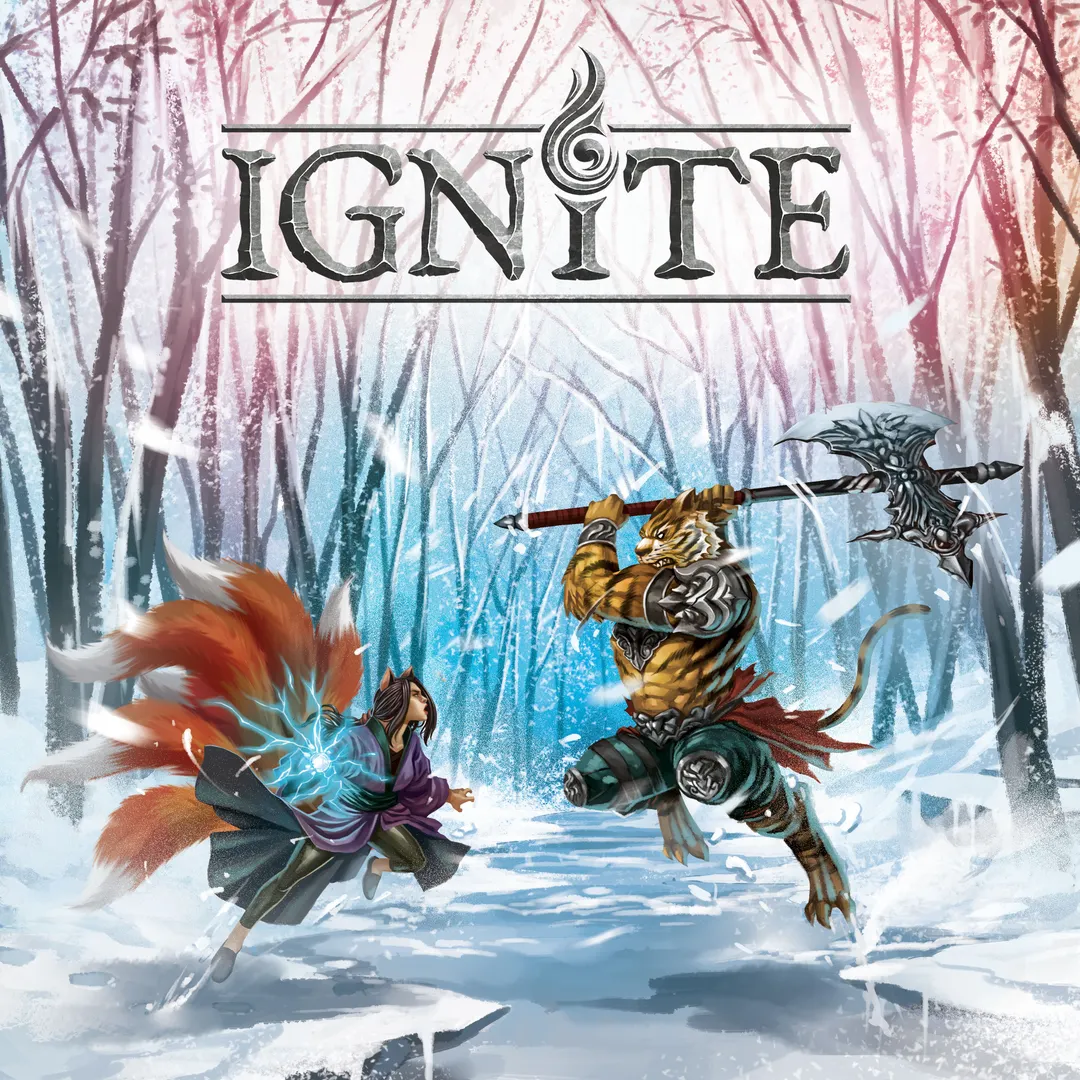
Ignite est un jeu de société sorti en 2021 pour 2 à 8 joueurs, avec des parties de 40 à 160 minutes et à partir de 13 ans. Il a été conçu par Darren Terpstra et ses principales mécaniques sont Variable Player Powers, Hand Management et Area Majority / Influence.
En anglais
Many ages have past since the use of magic broke the world. Since then, the races of Oshos have lived in an unstable peace. Yet as memory slips to myth, and myth slips to legend, the "Great Races" once more begin meddling with magic, and the tainted power corrupts the land yet again. Lava swallows up whole villages and a terrible famine spreads. "Lower" nomadic races begin rising up, pillaging and raiding nearby towns for food. Peace is no longer an option. War is here, and only one race can reign supreme. Ignite is a dueling deckbuilder where players battle miniatures across a variably built board. Each player has 3 units of their chosen race, each with its own asymmetrical race ability. Each unit has 3 hit points. When your unit takes a point of damage you insert a dagger into the back of the miniature. The player who inflicts the last point of damage keeps the unit as a trophy. Whoever has the most trophies at the end of the game wins. Each card in your hand can be played for its honor value (allowing you to buy more cards) or for its battle effect (affecting your units and cards). Knowing when to battle and when to invest is incredibly important. In the middle of the board is the bazaar. While one of your units is here it may sell a card. Selling a card allows you to trash it (removing it permanently from your deck) and gain honor equal to its original cost, allowing you to buy more powerful cards. The bazaar is powerful, but also dangerous as your opponents are often right there next to you. There are 4 special types of terrain in Ignite and you'll have to choose how best to use them. Village: Allows you to purchase a card, but a successful attack against you will do additional damage. Forest: Protects you from ranged attacks, but fire attacks will spread through the entire forest. Water: Necessary for certain powerful spells, but freeze and lightning attacks will spread through the entire body of water. Lava: If you are pushed into lava, your unit immediately dies. In Ignite there is a strength and weakness to everything. Invest too early in powerful magic attacks, and you won't have any honor to purchase more valuable equipment when you need it. Invest in bows and arrows to gain a range advantage over the enemy, but remember, you can only shoot arrows if you also have a bow in your hand. Prefer getting up close and personal with melee weapons? Just be sure you have mounts available to bring your unit within striking distance. Ignite comes from our love of deckbuilders. The main complaints against deckbuilders are that they (1) have minimal player interaction, playing a lot like solitaire (2) have an anti-climactic end-game (3) often feel the same after a few games. We built a deckbuilder where negotiation, alliance-making, and begging were legitimate strategies. Where the end of the game is the most exciting part. And where you will never play the same game twice (between the asymmetric race abilities, variably built board, and incredibly varied weapons, items, and spells). —description from the publisher
Selon le catalogue, Ignite se joue de 2 à 8 personnes. Cette fourchette correspond au nombre de joueurs indiqué par l’éditeur : le jeu s’installe donc pour toute taille de groupe dans cette limite. La mise en place, certaines règles et le décompte peuvent varier selon l’effectif ; vérifiez la configuration exacte dans la règle de votre édition.
La durée indiquée pour Ignite est de 40 à 160 minutes, selon l’estimation de l’éditeur pour une partie complète. La durée réelle dépend du groupe, de l’effectif et de la connaissance des règles : les premières parties sont plus longues, les groupes expérimentés terminent plus vite. Mise en place et explication des règles ne sont pas comprises.
Le catalogue indique Ignite à partir de 13 ans. C’est la recommandation de l’éditeur ; elle tient compte de la lecture nécessaire, de la complexité des règles et des petits composants, pas seulement du thème. Les plus jeunes peuvent souvent participer avec l’aide d’un adulte : vérifiez l’âge indiqué sur votre édition et tenez compte de l’expérience de votre groupe.
Ignite obtient une note de complexité de 3,0 sur 5 auprès des joueurs de BoardGameGeek, ce qui en fait un jeu de complexité moyenne. Cette note reflète la quantité de règles, de planification et de décisions qu’exige une partie typique. Prévoyez une explication plus longue pour les jeux exigeants et utilisez un guide de préparation avant la soirée.
Ignite appartient à ces catégories : Fantasy, Fighting et Wargame. Ses principales mécaniques sont Variable Player Powers, Hand Management et Area Majority / Influence. Les catégories décrivent le thème et l’univers d’un jeu, tandis que les mécaniques décrivent ce que les joueurs font réellement pendant leur tour. Chaque mécanique mène à une page du catalogue avec des jeux similaires.
Les auteurs crédités pour Ignite sont : Darren Terpstra. Ces crédits proviennent des données publiées du jeu et désignent les personnes responsables de sa conception, et non les illustrateurs ou les éditeurs. Les pages d’auteurs sur MeepleRules regroupent les autres titres des mêmes auteurs, ce qui est utile lorsqu’un jeu vous plaît et que vous en cherchez de similaires.
Le catalogue présente Ignite comme un jeu de base. Il se joue seul avec le matériel contenu dans la boîte et ne nécessite aucun autre titre. Les extensions, s’il en existe, y ajoutent du contenu ou des règles et sont répertoriées séparément dans le catalogue, avec un lien vers ce jeu de base.