
- Rang BGG
- BGG #16 031
- Note BGG
- 6,8
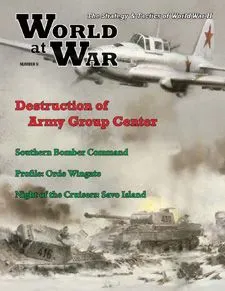
Destruction of Army Group Center (Second Edition)
- 2 joueurs
- 180 min
- Complexité 2,3/5
- 2009

2018
Aide aux règles de Last Stand at Isandlwana, 22 January 1879
Des explications claires des tours, effets de cartes et situations litigieuses, avec des références aux sources officielles et un historique des questions sauvegardé.
Pour 2 joueurs
Que voulez-vous savoir ?
Les réponses viennent du livret officiel, avec la page à vérifier.
Last Stand at Isandlwana, 22 January 1879 est un jeu de société sorti en 2018 pour 2 joueurs. Il a été conçu par Ty Bomba et ses principales mécaniques sont Dice Rolling, Grid Movement et Hexagon Grid.





En anglais
Last Stand at Isandlwana, 22 January 1879 is a two-player tactical wargame of low-intermediate complexity simulating the last 90 to 240 minutes of that infamous and legendary battle of the Anglo-Zulu War. The Zulu player is on the offensive, attempting to wipe out the entire British force on the map as quickly as possible. The British is attempting to win by having some remnant hold out longer than occurred historically or, alternatively, by having some portion of his command escape off the map and get back to relative safety at Roarke’s drift. Solitaire-play is easily doable. Each game turn of Last Stand is equal to five to 20 minutes of “real time,” depending on the tempo of action in each turn. Each hexagon on the 22x34” map represents 217 yards (200 meters) from side to opposite side. There are 176 5/8” counters with each British unit-counter representing a company or a “detachment” of infantry. On the Zulu side, they individual units each represent temporary battlefield agglomerations of the about 100 to 200 warriors. Magazine: Strategy & Tactics #314
Selon le catalogue, Last Stand at Isandlwana, 22 January 1879 se joue à 2 personnes. C’est le nombre de joueurs indiqué par l’éditeur : le jeu est donc conçu pour exactement ce nombre de participants. Les variantes pour d’autres tailles de groupe, s’il en existe, sont décrites dans la règle de votre édition ; consultez-la avant d’installer une autre configuration.
Last Stand at Isandlwana, 22 January 1879 obtient une note de complexité de 2,0 sur 5 auprès des joueurs de BoardGameGeek, ce qui en fait un jeu plutôt léger. Cette note reflète la quantité de règles, de planification et de décisions qu’exige une partie typique. Prévoyez une explication plus longue pour les jeux exigeants et utilisez un guide de préparation avant la soirée.
Last Stand at Isandlwana, 22 January 1879 appartient à ces catégories : Wargame et Post-Napoleonic. Ses principales mécaniques sont Dice Rolling, Grid Movement et Hexagon Grid. Les catégories décrivent le thème et l’univers d’un jeu, tandis que les mécaniques décrivent ce que les joueurs font réellement pendant leur tour. Chaque mécanique mène à une page du catalogue avec des jeux similaires.
Les auteurs crédités pour Last Stand at Isandlwana, 22 January 1879 sont : Ty Bomba. Ces crédits proviennent des données publiées du jeu et désignent les personnes responsables de sa conception, et non les illustrateurs ou les éditeurs. Les pages d’auteurs sur MeepleRules regroupent les autres titres des mêmes auteurs, ce qui est utile lorsqu’un jeu vous plaît et que vous en cherchez de similaires.
Le catalogue présente Last Stand at Isandlwana, 22 January 1879 comme un jeu de base. Il se joue seul avec le matériel contenu dans la boîte et ne nécessite aucun autre titre. Les extensions, s’il en existe, y ajoutent du contenu ou des règles et sont répertoriées séparément dans le catalogue, avec un lien vers ce jeu de base.