
- Rang BGG
- BGG #14 254
- Note BGG
- 7,3
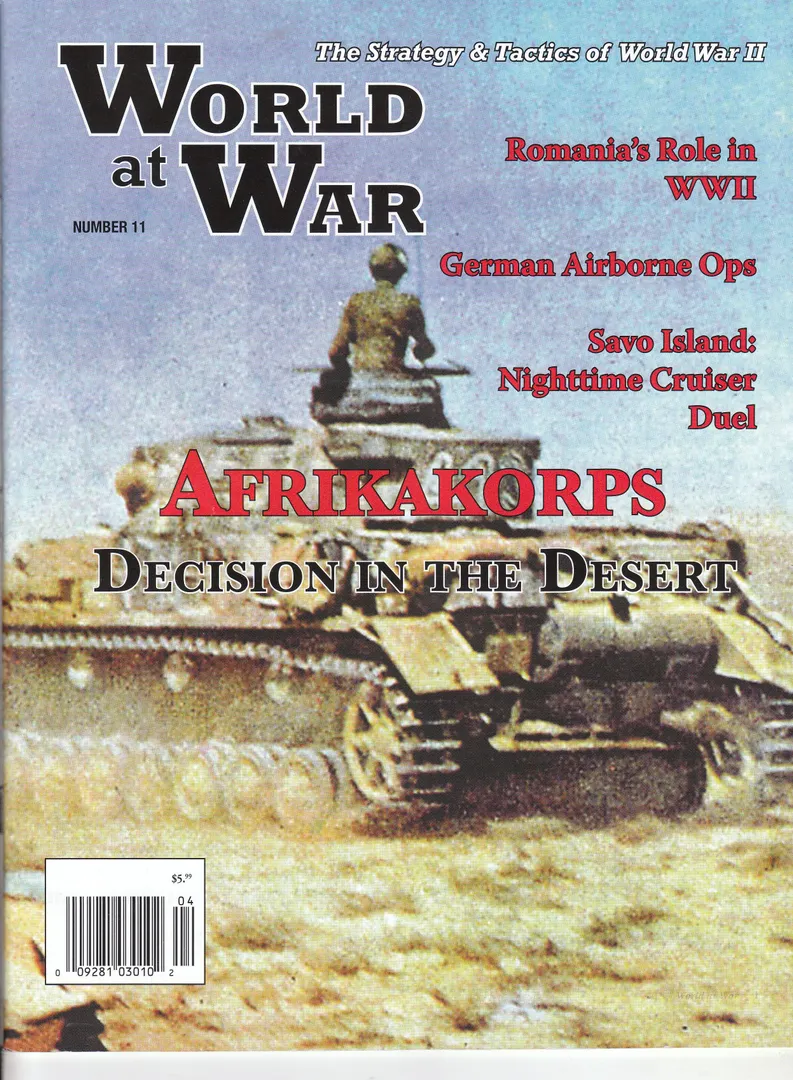
Afrikakorps: Decision in the Desert, 1941-42
- 1–2 joueurs
- 240 min
- Complexité 2,4/5
- 2010
2007
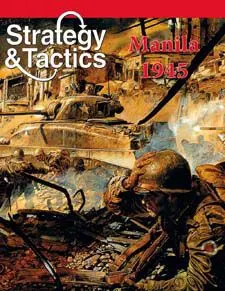
Aide aux règles de Manila '45: Stalingrad of the Pacific
Des explications claires des tours, effets de cartes et situations litigieuses, avec des références aux sources officielles et un historique des questions sauvegardé.
Pour 2 joueurs
Que voulez-vous savoir ?
Les réponses viennent du livret officiel, avec la page à vérifier.
Manila '45: Stalingrad of the Pacific est un jeu de société sorti en 2007 pour 2 joueurs, avec des parties de 180 minutes et à partir de 12 ans. Il a été conçu par Joseph Miranda et Ty Bomba et ses principales mécaniques sont Hexagon Grid.
En anglais
Manila '45: Stalingrad of the Pacific (M'45), is a two-player, low-to-intermediate complexity wargame that simulates the American liberation of the capital of the Philippines in World War II, which took place from 3 February to 4 March 1945. To control complexity and present an overall-force-commander's-view of the battle, the game uses a tactically scaled map and units of maneuver coupled with an operationally scaled game turn length. The American player is generally on the offensive, trying to clear the entire Japanese defending force from the city prior to the end of the game. Each game turn of M'45 equals three days. Each hexagon on the map represents 0.3 miles (0.5 km) from side to opposite side. The units of maneuver in the game are companies, batteries and battalions, representing anywhere from a about 100 to 1,000 men and their equipment. Historically the Japanese fought to the last man (literally, not metaphorically), and the game's victory conditions represent that brutally absolute mindset. To determine the winner, both players examine the map at the end of Game Turn 10. If at that time there's one or more Japanese units still in play anywhere, the Japanese player is declared to have won the game. If there are no Japanese units left on the map at that time, the US player is declared to have won the game. Of course, if all Japanese units are wiped out prior to the end of the last game turn, play stops and the US player is declared the victor. No draws are possible. Tacticians will enjoy the fact there are 22 unit types in the game: heavy artillery, heavy anti-aircraft, heavy mortar, heavy rocket artillery, naval infantry (armed ship crews), regular infantry, combat engineers, heavy weapons (machineguns), anti-aircraft, military police, anti-tank, field artillery, rear echelon ad hoc infantry, glider infantry, paratroopers, bridging engineers, mortars, armored cavalry, tanks, self-propelled artillery, amphibious tractors, and self-propelled anti-tank.
Selon le catalogue, Manila '45: Stalingrad of the Pacific se joue à 2 personnes. C’est le nombre de joueurs indiqué par l’éditeur : le jeu est donc conçu pour exactement ce nombre de participants. Les variantes pour d’autres tailles de groupe, s’il en existe, sont décrites dans la règle de votre édition ; consultez-la avant d’installer une autre configuration.
La durée indiquée pour Manila '45: Stalingrad of the Pacific est de 180 minutes, selon l’estimation de l’éditeur pour une partie complète. La durée réelle dépend du groupe, de l’effectif et de la connaissance des règles : les premières parties sont plus longues, les groupes expérimentés terminent plus vite. Mise en place et explication des règles ne sont pas comprises.
Le catalogue indique Manila '45: Stalingrad of the Pacific à partir de 12 ans. C’est la recommandation de l’éditeur ; elle tient compte de la lecture nécessaire, de la complexité des règles et des petits composants, pas seulement du thème. Les plus jeunes peuvent souvent participer avec l’aide d’un adulte : vérifiez l’âge indiqué sur votre édition et tenez compte de l’expérience de votre groupe.
Manila '45: Stalingrad of the Pacific obtient une note de complexité de 2,4 sur 5 auprès des joueurs de BoardGameGeek, ce qui en fait un jeu plutôt léger. Cette note reflète la quantité de règles, de planification et de décisions qu’exige une partie typique. Prévoyez une explication plus longue pour les jeux exigeants et utilisez un guide de préparation avant la soirée.
Manila '45: Stalingrad of the Pacific appartient à ces catégories : Wargame et World War II. Ses principales mécaniques sont Hexagon Grid. Les catégories décrivent le thème et l’univers d’un jeu, tandis que les mécaniques décrivent ce que les joueurs font réellement pendant leur tour. Chaque mécanique mène à une page du catalogue avec des jeux similaires.
Les auteurs crédités pour Manila '45: Stalingrad of the Pacific sont : Joseph Miranda et Ty Bomba. Ces crédits proviennent des données publiées du jeu et désignent les personnes responsables de sa conception, et non les illustrateurs ou les éditeurs. Les pages d’auteurs sur MeepleRules regroupent les autres titres des mêmes auteurs, ce qui est utile lorsqu’un jeu vous plaît et que vous en cherchez de similaires.
Le catalogue présente Manila '45: Stalingrad of the Pacific comme un jeu de base. Il se joue seul avec le matériel contenu dans la boîte et ne nécessite aucun autre titre. Les extensions, s’il en existe, y ajoutent du contenu ou des règles et sont répertoriées séparément dans le catalogue, avec un lien vers ce jeu de base.