
- Note BGG
- 7,0
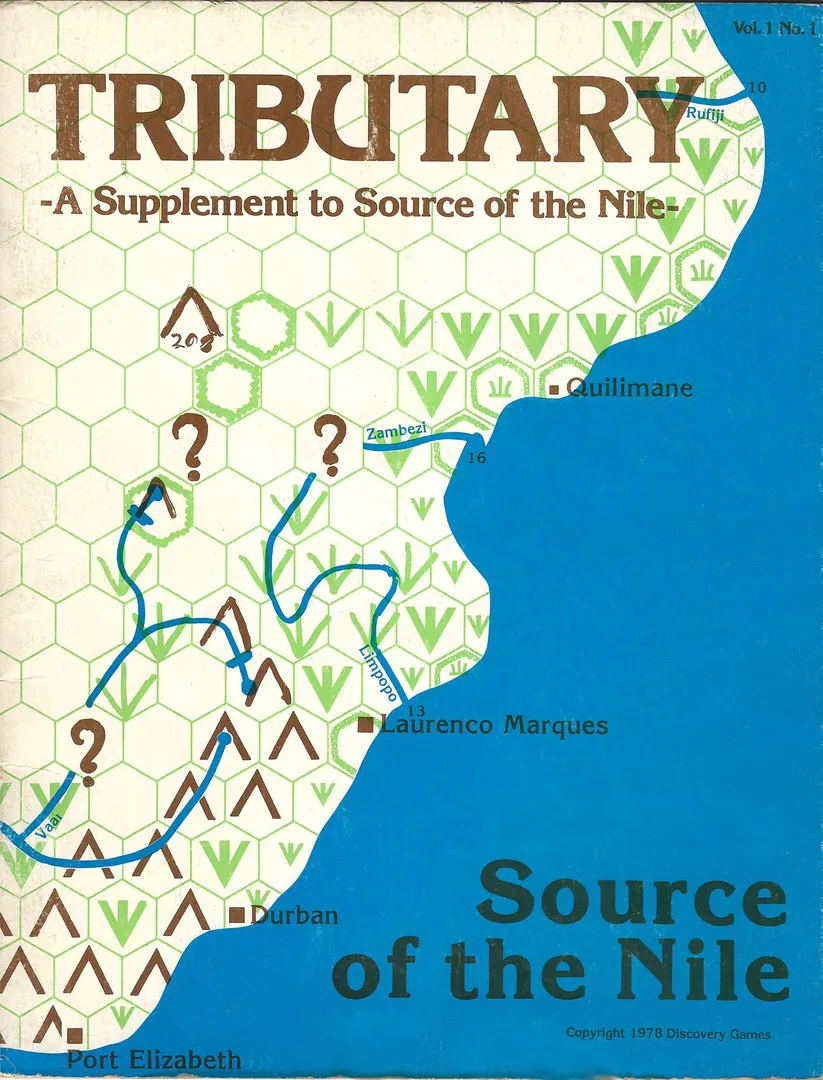
Source of the Nile: Tributary
- 1–6 joueurs
- 180 min
- Complexité 2,8/5
- 1978
1978
Aide aux règles de Source of the Nile
Des explications claires des tours, effets de cartes et situations litigieuses, avec des références aux sources officielles et un historique des questions sauvegardé.
Pour 1 joueur
Que voulez-vous savoir ?
Les réponses viennent du livret officiel, avec la page à vérifier.
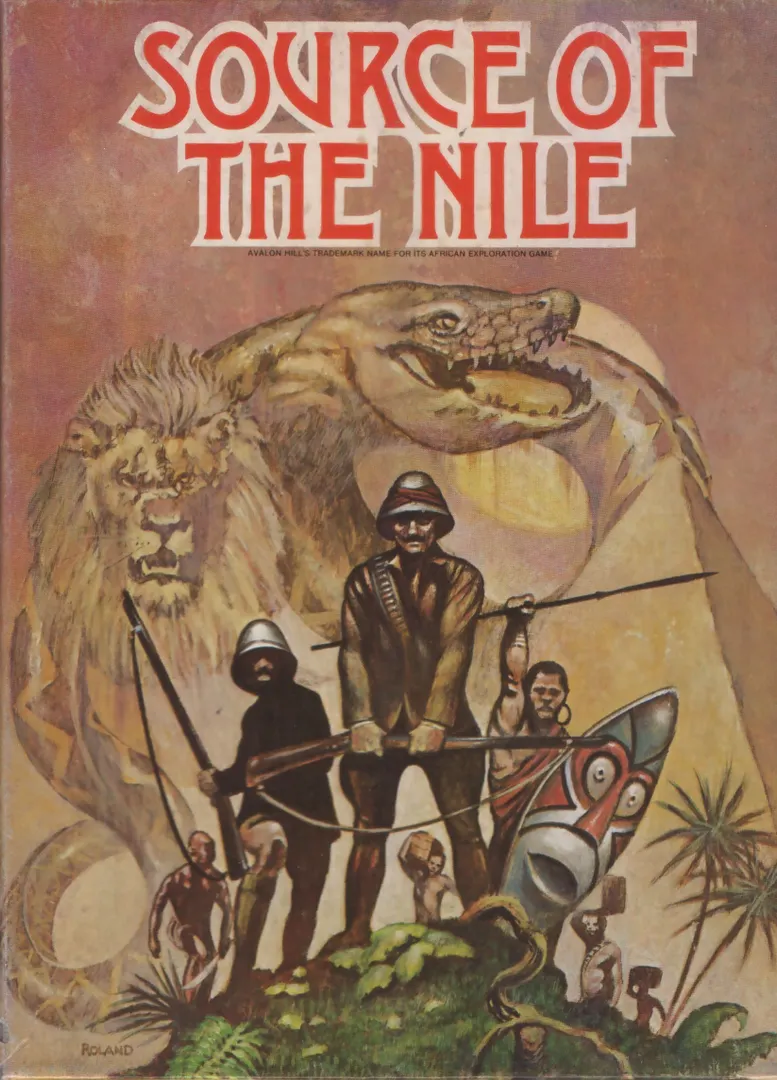
Source of the Nile est un jeu de société sorti en 1978 pour 1 à 6 joueurs, avec des parties de 180 minutes et à partir de 12 ans. Il a été conçu par Ross Maker et Dave Wesely et ses principales mécaniques sont Dice Rolling, Variable Set-up et Paper-and-Pencil.












En anglais
Designed to be an educational and challenging game in which players compete primarily with Nature and with each other, luck tends to be an element in the game, but can be overcome by careful play. Because the situation is forever changing, there is no single best strategy; however, players must weigh risks against gains with every decision they make and good judgment will pay off. The game is played on a mapboard showing Africa from Khartoum to Capetown and Lagos to Mombasa. The periphery of this map, showing the territory known ca. 1820, is filled-in; the center is blank. A hexagonal grid is superimposed on the map to regulate movement and to delimit territory explored. In the course of play, each player moves a token (representing his explorer) from explored hexagons to blank hexagons one at a time.; terrain, native tribes and other discoveries within the hexagons are then semi-randomly determined, with allowance made for previous discoveries in adjacent hexagons. The player interacts with the discoveries (e.g. negotiates with new natives for guides) and records them on the mapboard using wax crayons. The mapboard surface is erasable. If the explorer dies before returning to Europe to publish his discoveries, all hexagons which only he has explored will be erased and "subsequent explorers will find that his discoveries were only rumors"; i.e., when other players explore the erased hexagons later they will have to generate new discoveries there. When explorers do return to civilization, however, they may publish their discoveries, after which they are safe from erasure. Players may also emulate real explorers by withholding some of their discoveries since they will enjoy some advantages when moving through terrain or dealing with natives known only to them. Points are scored for discoveries as they are published and once scored will not be lost if the explorer dies or is retired by his player. A player may retire his explorer at any time and then start a new explorer in Europe. Before each trip to Africa, explorers will have to raise money to support their expedition. New explorers with no discoveries to their credit must do this by drawing chance cards for several turns until they feel their finances are adequate. Experienced explorers can accelerate this process by publishing discoveries, which allow them to draw additional chance cards.
Selon le catalogue, Source of the Nile se joue de 1 à 6 personnes. Cette fourchette correspond au nombre de joueurs indiqué par l’éditeur : le jeu s’installe donc pour toute taille de groupe dans cette limite. La mise en place, certaines règles et le décompte peuvent varier selon l’effectif ; vérifiez la configuration exacte dans la règle de votre édition.
La durée indiquée pour Source of the Nile est de 180 minutes, selon l’estimation de l’éditeur pour une partie complète. La durée réelle dépend du groupe, de l’effectif et de la connaissance des règles : les premières parties sont plus longues, les groupes expérimentés terminent plus vite. Mise en place et explication des règles ne sont pas comprises.
Le catalogue indique Source of the Nile à partir de 12 ans. C’est la recommandation de l’éditeur ; elle tient compte de la lecture nécessaire, de la complexité des règles et des petits composants, pas seulement du thème. Les plus jeunes peuvent souvent participer avec l’aide d’un adulte : vérifiez l’âge indiqué sur votre édition et tenez compte de l’expérience de votre groupe.
Source of the Nile obtient une note de complexité de 2,9 sur 5 auprès des joueurs de BoardGameGeek, ce qui en fait un jeu plutôt léger. Cette note reflète la quantité de règles, de planification et de décisions qu’exige une partie typique. Prévoyez une explication plus longue pour les jeux exigeants et utilisez un guide de préparation avant la soirée.
Source of the Nile appartient à ces catégories : Exploration et Post-Napoleonic. Ses principales mécaniques sont Dice Rolling, Variable Set-up et Paper-and-Pencil. Les catégories décrivent le thème et l’univers d’un jeu, tandis que les mécaniques décrivent ce que les joueurs font réellement pendant leur tour. Chaque mécanique mène à une page du catalogue avec des jeux similaires.
Les auteurs crédités pour Source of the Nile sont : Ross Maker et Dave Wesely. Ces crédits proviennent des données publiées du jeu et désignent les personnes responsables de sa conception, et non les illustrateurs ou les éditeurs. Les pages d’auteurs sur MeepleRules regroupent les autres titres des mêmes auteurs, ce qui est utile lorsqu’un jeu vous plaît et que vous en cherchez de similaires.
Le catalogue présente Source of the Nile comme un jeu de base. Il se joue seul avec le matériel contenu dans la boîte et ne nécessite aucun autre titre. Les extensions, s’il en existe, y ajoutent du contenu ou des règles et sont répertoriées séparément dans le catalogue, avec un lien vers ce jeu de base.