
- Rang BGG
- BGG #5 546
- Note BGG
- 7,2
A Victory Denied: Crisis at Smolensk, July-September, 1941
- 2 joueurs
- 240 min
- Complexité 2,6/5
- 2009
2010
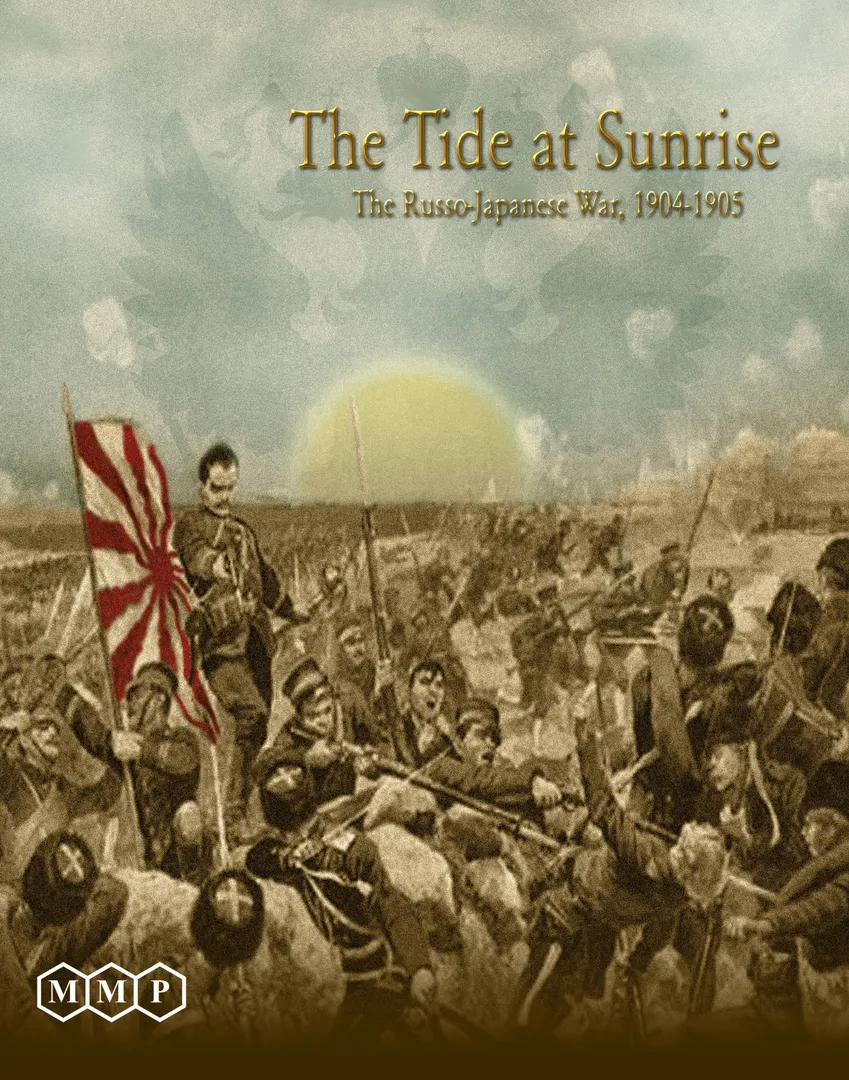
Aide aux règles de The Tide at Sunrise: The Russo-Japanese War, 1904-1905
Des explications claires des tours, effets de cartes et situations litigieuses, avec des références aux sources officielles et un historique des questions sauvegardé.
Pour 2 joueurs
Que voulez-vous savoir ?
Les réponses viennent du livret officiel, avec la page à vérifier.
The Tide at Sunrise: The Russo-Japanese War, 1904-1905 est un jeu de société sorti en 2010 pour 2 joueurs, avec des parties de 240 minutes et à partir de 12 ans. Il a été conçu par Adam Starkweather et Yukihiro Kuroda et ses principales mécaniques sont Dice Rolling, Hexagon Grid et Simulation.



En anglais
(from Multi-Man Publishing web site:) Tide at Sunrise continues the philosophy that began with A Victory Lost. Using tried and true mechanics but with some major twists, Tide at Sunrise will be a major test of player skill that is rarely seen in the wargaming hobby. Here, the base system is little more than the tried and true game from SPI called Napoleon at Waterloo. But not all is at it seems. Here is the sequence of play: Japanese Player Turn * Naval Phase * Transport Allocation * Movement Phase * Combat Phase * Replacement and Recovery Russian Player Turn * Colonel Akashi Secret Operations Phase * Transport Allocation Phase * Movement Phase * Combat Phase * Supply and Recovery Phase After the completion of both Player Turns, victory points are determined and, if the Japanese have not won a sudden death win, play continues to the next turn. The game focuses on two aspects of the actual event. Players have to manage their armies using an abstract logistical system called “Transport Points” in the game. The Japanese Transport Points are an abstraction of the merchant marine force that the Japanese had available in 1904 and 1905. This can be disrupted from Russian naval activity. The Russian Transport Points are an abstraction of the rail capacity of the newly built Trans-Siberian Railroad. Weather can affect this total if there are heavy snows in Siberia. Colonel Akashi can also stir up trouble and reduce the available Russian Transport totals with sudden strikes and riots in the Russian heartland. Both players use these points to bring on new forces and to replace battlefield losses. Finding the right balance of the two uses is key to being successful in the game. Secondly, players must find the delicate balance between defending and attacking on two separate fronts. How much defends and attacks towards the all-important port of Port Arthur and how much attacks or holds the tough mountain passes of Manchuria - the key to the open plains to the north – where terrain is less defensible and victory points are everywhere. Victory in the game is determined by success in the naval war, the capture of key terrain objectives and enemy losses. Game components: * One 22” by 39” full color map * 140 1/2” land formation counters * 44 1 1/4” by 5/8” ship counters * 16 page full color rulebook Game summary: * Playtime: 3-5 hours * Complexity: Simple * Solitaire rating: excellent Game scale: * Turns: 12 (each turn represents one month of real time) * Counters: Divisions and Brigades for the land units, Capital Ships for the naval units * Hex scale: 10 kilometers Game Credits: * Designer: Yukihiro Kuroda * Developer: Adam Starkweather * Graphic Artist: Niko Eskubi
Selon le catalogue, The Tide at Sunrise: The Russo-Japanese War, 1904-1905 se joue à 2 personnes. C’est le nombre de joueurs indiqué par l’éditeur : le jeu est donc conçu pour exactement ce nombre de participants. Les variantes pour d’autres tailles de groupe, s’il en existe, sont décrites dans la règle de votre édition ; consultez-la avant d’installer une autre configuration.
La durée indiquée pour The Tide at Sunrise: The Russo-Japanese War, 1904-1905 est de 240 minutes, selon l’estimation de l’éditeur pour une partie complète. La durée réelle dépend du groupe, de l’effectif et de la connaissance des règles : les premières parties sont plus longues, les groupes expérimentés terminent plus vite. Mise en place et explication des règles ne sont pas comprises.
Le catalogue indique The Tide at Sunrise: The Russo-Japanese War, 1904-1905 à partir de 12 ans. C’est la recommandation de l’éditeur ; elle tient compte de la lecture nécessaire, de la complexité des règles et des petits composants, pas seulement du thème. Les plus jeunes peuvent souvent participer avec l’aide d’un adulte : vérifiez l’âge indiqué sur votre édition et tenez compte de l’expérience de votre groupe.
The Tide at Sunrise: The Russo-Japanese War, 1904-1905 obtient une note de complexité de 2,3 sur 5 auprès des joueurs de BoardGameGeek, ce qui en fait un jeu plutôt léger. Cette note reflète la quantité de règles, de planification et de décisions qu’exige une partie typique. Prévoyez une explication plus longue pour les jeux exigeants et utilisez un guide de préparation avant la soirée.
The Tide at Sunrise: The Russo-Japanese War, 1904-1905 appartient à ces catégories : Wargame et Post-Napoleonic. Ses principales mécaniques sont Dice Rolling, Hexagon Grid et Simulation. Les catégories décrivent le thème et l’univers d’un jeu, tandis que les mécaniques décrivent ce que les joueurs font réellement pendant leur tour. Chaque mécanique mène à une page du catalogue avec des jeux similaires.
Les auteurs crédités pour The Tide at Sunrise: The Russo-Japanese War, 1904-1905 sont : Adam Starkweather et Yukihiro Kuroda. Ces crédits proviennent des données publiées du jeu et désignent les personnes responsables de sa conception, et non les illustrateurs ou les éditeurs. Les pages d’auteurs sur MeepleRules regroupent les autres titres des mêmes auteurs, ce qui est utile lorsqu’un jeu vous plaît et que vous en cherchez de similaires.
Le catalogue présente The Tide at Sunrise: The Russo-Japanese War, 1904-1905 comme un jeu de base. Il se joue seul avec le matériel contenu dans la boîte et ne nécessite aucun autre titre. Les extensions, s’il en existe, y ajoutent du contenu ou des règles et sont répertoriées séparément dans le catalogue, avec un lien vers ce jeu de base.