

- Pozycja w BGG
- BGG #4455
- Ocena BGG
- 8,7
Last Blitzkrieg: Wacht am Rhein, The Battle of the Bulge
- 2–4 graczy
- 180–960 min
- Złożoność 3,8/5
- 2016
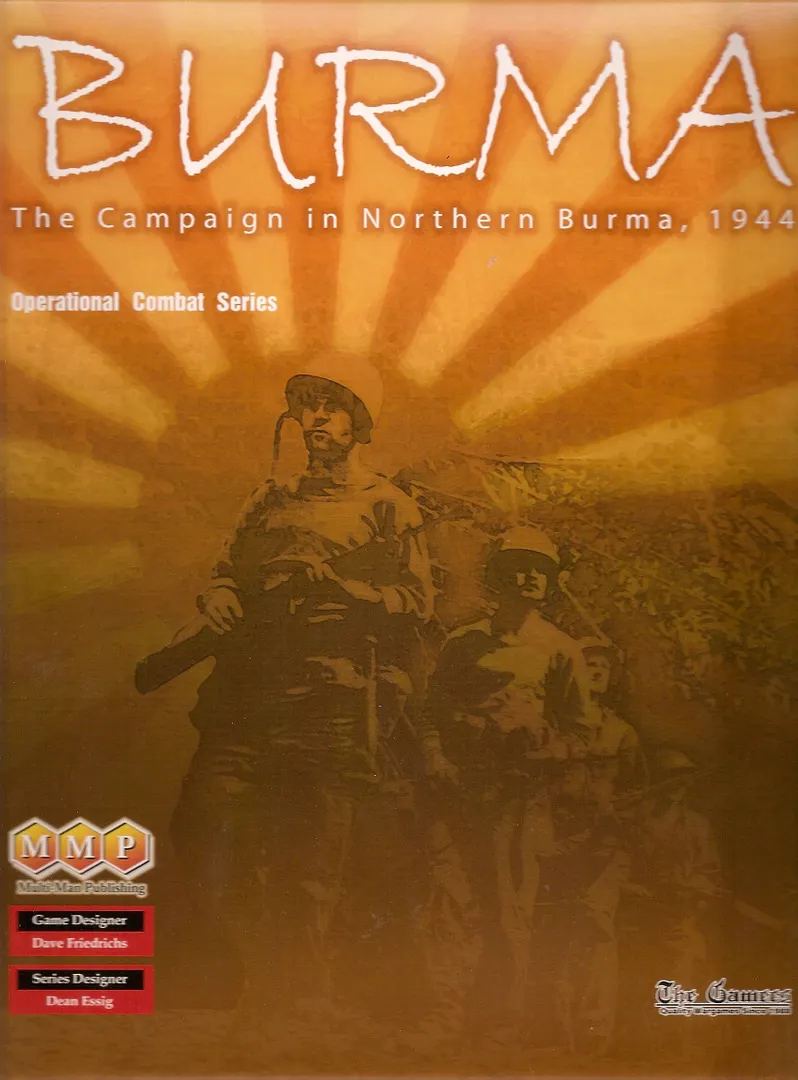
1999
Pomoc w zasadach gry Burma: The Campaign in Northern Burma, 1944
Zrozumiałe wyjaśnienia tur, efektów kart i spornych sytuacji z odnośnikami do oficjalnych źródeł i zapisaną historią pytań.
Dla 1 gracza
Co chcesz wiedzieć?
Odpowiedzi pochodzą z oficjalnej instrukcji, ze stroną do sprawdzenia.
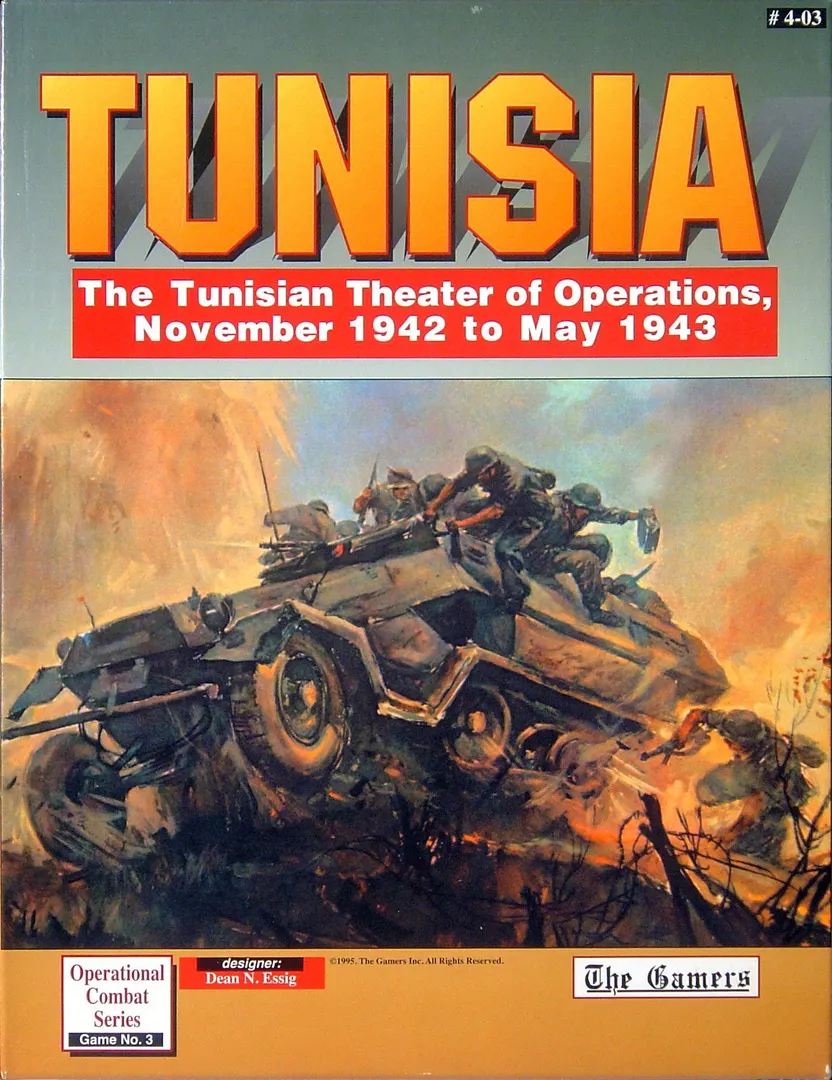
Burma: The Campaign in Northern Burma, 1944 to gra planszowa wydana w 1999 roku dla 1–2 graczy, z rozgrywką trwającą 60–3600 minut i dla osób od 12 lat. Projekt gry: Dean Essig i Dave Friedrichs. Główne mechaniki: Dice Rolling i Hexagon Grid.





Po angielsku
Burma - The Campaign for Northern Burma, March-August, 1944, is the sixth game in the Operational Combat Series (OCS) from The Gamers, and covers covers the 1944 campaigns beginning with the Japanese "U-Go" offensive and ending up as what would be know as Imphal-Kohima, the most dramatic defeat ever inflicted on a Japanese army. In the spring of 1944, two equally matched opponents faced each other in the jungles and mountains of Northern Burma. During that spring and summer, three independent, but simultaneous, dramas unfolded. In the west, the Japanese launched an all-out offensive to capture Imphal. In the center, the Chindits landed in the Japanese rear area. In the east, the Chinese/US forces moved toward Myitkyina against stubborn Japanese defenses. These battles took place in horrible terrain under the most difficult conditions imaginable with troops whose quality ranged from the world’s best to the world’s worst. Burma contains British, Indian, US, and Chinese troops of varying qualities with ample opportunities for both sides to attack and defend. While mainly a British and Indian show, the campaign would end up involving US (Galahad) and Chinese troops as well. Burma is the most markedly different of the OCS games, with a wide variety of unit types and qualities, the extremely dense terrain and lack of roads creating a challenging supply situation for both sides, and a more balanced situation as both sides have opportunities to attack and defend. There is more of the "cool stuff" too, with Galahad, Chindits, Gurkhas, lots of air supply, elephant and oxen transport options creating some interesting situations, and the ever-enigmatic and unusual Japanese Army. Imphal-Kohima is by far the most interesting ground campaign of the PTO (from an operational perspective), and it's conversion to OCS is remarkably smooth, with a fairly modest set of game-specific rules. Unlike some other OCS games, Burma has an excellent range of scenarios, from a couple very short scenarios (1-2 hrs) through to a good selection of longer (6hr) scenarios and on up to 3 monster campaign games (30-60 hrs). Scenario Info: Learning Scenario: 1/8th of Map B; 5 turns Short Scenario 1 - Operation Thursday: 1/4 of Map B; 9 turns Short Scenario 2 - U-Go: 3/4 map of Map B; 10 turns Short Scenario 3 - Merril's Marauders: 3/4 map, but requires both maps to play; 24 turns Short Scenario 4 - Sato's Dilemna: 1/2 map of Map A; 11 turns Short Scenario 5 - Imphal: 1/2 map of Map A; 17 turns Campaign Scenarios 1, 2, and 3 (which use both maps, obviously); 45, 41, and 31 turns respectively Game Scale: Turn: 1/2 week Hex: 5 miles / 8 Km Units: Battalion to Division Game Inventory (Burma II - printed 2008): Two 22 x 34" full-color mapsheets Three dual-side printed countersheets (2 combat, 1 markers - 840 1/2" counters) One 48-page OCS version v4.0 rules booklet One 40-page Burma II specific rules booklet Two 4-sided OCS v4.0 Charts & Tables booklets Two 6-sided dice Players: 1 or more (also suitable for solitaire and team play) Playing Time: 1 to 60 hours Complexity: High Solitaire Suitability: Moderate
Według katalogu Burma: The Campaign in Northern Burma, 1944 obsługuje od 1 do 2 graczy. Ten zakres odpowiada liczbie graczy podanej przez wydawcę, więc grę można przygotować dla dowolnej grupy w jego granicach. Przygotowanie, niektóre zasady i punktacja mogą jednak różnić się w zależności od liczby graczy; dokładną konfigurację sprawdź w instrukcji swojego wydania.
Podany czas rozgrywki w Burma: The Campaign in Northern Burma, 1944 wynosi 60–3600 minut. To szacunek wydawcy dla pełnej partii. Rzeczywisty czas zależy od grupy, liczby graczy i znajomości zasad: pierwsze partie zwykle trwają dłużej, a doświadczone grupy kończą szybciej. Przygotowanie gry i tłumaczenie zasad nie są wliczone w ten szacunek.
Katalog podaje dla Burma: The Campaign in Northern Burma, 1944 wiek od 12 lat. To zalecenie wydawcy, które uwzględnia wymagania dotyczące czytania, złożoność zasad i drobne elementy, a nie tylko tematykę. Młodsi gracze często mogą dołączyć z pomocą dorosłego; sprawdź zalecenie wiekowe swojego wydania i weź pod uwagę doświadczenie grupy z grami planszowymi.
Burma: The Campaign in Northern Burma, 1944 ma ocenę złożoności 4,0 na 5 według graczy BoardGameGeek, co czyni ją grą ciężką. Ocena pokazuje, ile znajomości zasad, planowania i podejmowania decyzji wymaga typowa rozgrywka. Cięższe gry wymagają dłuższego pierwszego tłumaczenia, dlatego przed wieczorem z grami warto skorzystać z przewodnika przygotowania.
Burma: The Campaign in Northern Burma, 1944 należy do tych kategorii: Wargame i World War II. Główne mechaniki to Dice Rolling i Hexagon Grid. Kategorie opisują temat i świat gry, a mechaniki to, co gracze faktycznie robią w swojej turze. Każda mechanika prowadzi do strony katalogu z podobnymi grami, co pomaga znaleźć coś porównywalnego na kolejny wieczór.
Autorzy wymienieni przy Burma: The Campaign in Northern Burma, 1944 to: Dean Essig i Dave Friedrichs. Te informacje pochodzą z opublikowanych danych gry i wskazują osoby odpowiedzialne za jej projekt, a nie ilustratorów czy wydawców. Strony autorów w MeepleRules zbierają inne tytuły tych samych twórców, co pomaga, gdy gra ci się podoba i szukasz podobnych.
W katalogu Burma: The Campaign in Northern Burma, 1944 figuruje jako gra podstawowa. Można w nią grać samodzielnie, korzystając z elementów z pudełka, bez żadnego innego tytułu. Dodatki, jeśli istnieją, dokładają nową zawartość lub zasady i są wymienione w katalogu osobno, z odnośnikiem do tej gry podstawowej.