
- Pozycja w BGG
- BGG #13 278
- Ocena BGG
- 7,6
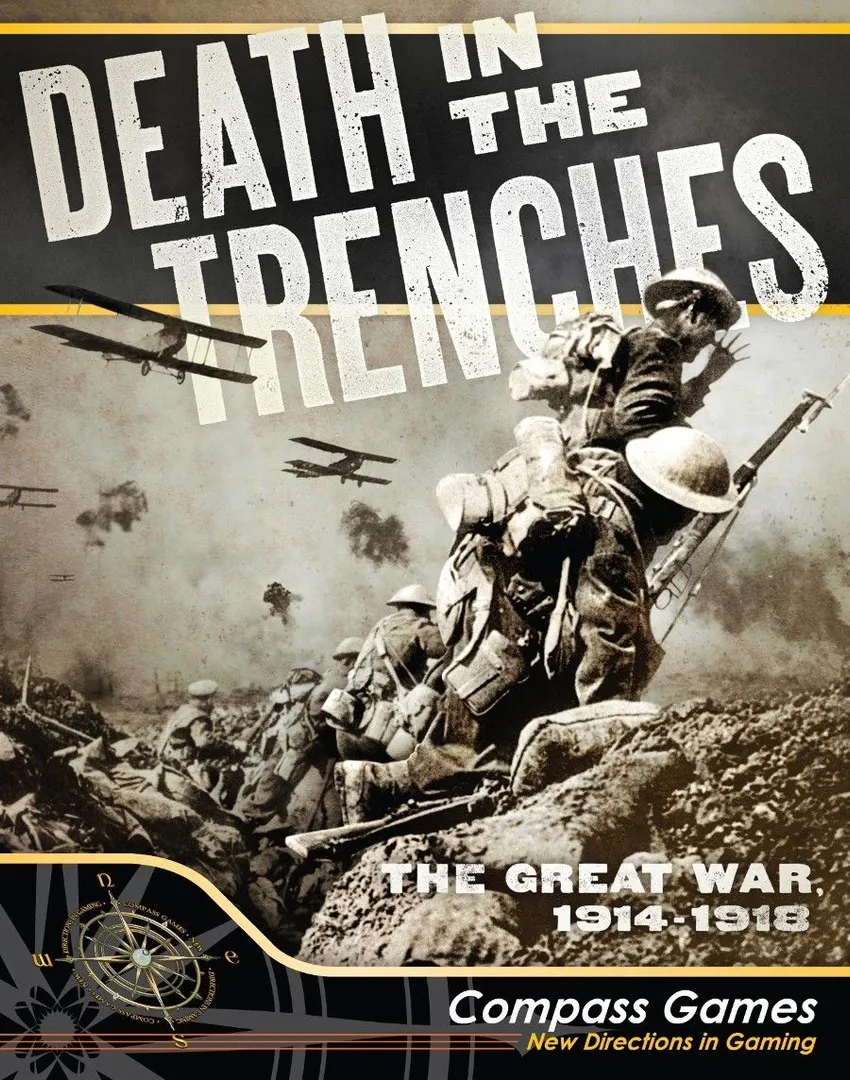
Death in the Trenches: The Great War 1914-1918 (Second Edition)
- 1–2 graczy
- 300 min
- Złożoność 3,6/5
- 2022
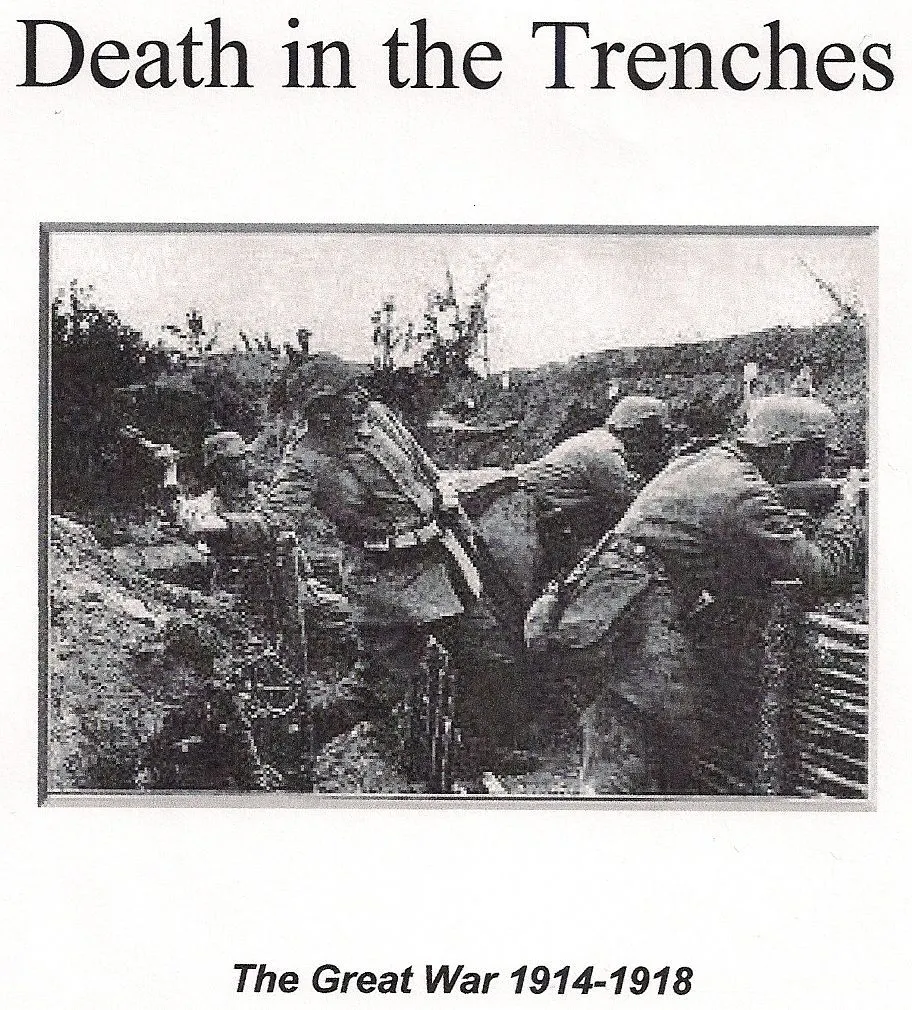
2005
Pomoc w zasadach gry Death in the Trenches: The Great War, 1914-1918
Zrozumiałe wyjaśnienia tur, efektów kart i spornych sytuacji z odnośnikami do oficjalnych źródeł i zapisaną historią pytań.
Co chcesz wiedzieć?
Odpowiedzi pochodzą z oficjalnej instrukcji, ze stroną do sprawdzenia.
Death in the Trenches: The Great War, 1914-1918 to gra planszowa wydana w 2005 roku dla 1–2 graczy, z rozgrywką trwającą 960 minut i dla osób od 12 lat. Projekt gry: Ben Madison i Wes Erni. Główne mechaniki: Dice Rolling, Hexagon Grid i Simulation.






Po angielsku
DEATH IN THE TRENCHES is a strategic-level World War I game covering the entire war, from the opening shots in Serbia and Belgium to the final defeat -- or victory! -- of Germany and Austria-Hungary in 1918. The game includes a map stretching from the Pyrenees to Moscow, and from Norway to the Sudan, covering every square inch of territory in Europe and the Near East which saw combat from 1914 to 1918, in a manageable 34x22" format. An additional map shows the German colonies The game also features 400 beautifully-illustrated counters depicting the national armies that fought in the war -- from the Germans, French, British and Russians all the way down to the Persians, Montenegrins, Armenians, South Africans, and a host of other specialized units (French Foreign Legion, Gurkhas, Italian "Arditi", Cossacks, Tyrolean Kaiserjaeger, Zionists, Bavarians, "Dunsterforce"... even the Chinese may send a small expeditionary force). DEATH IN THE TRENCHES includes a deceptively simple twelve pages of rules (and an additional twelve pages of random events) detailing the game's unique combat system (no CRT!) which portrays the grinding nature of World War I combat in a realistic way that still gives players plenty of options to pursue. Using army-level units (which contain numbers of divisional level formations, represented off-map), players use numerous special military abilities to drive back the enemy. Detailed random events rules give you more gory details about World War I than you've ever seen before in a game, while helping keep play simple and straightforward. Lenin, the Senussi revolt, intrigue in the Romanian court, the Cruise of the Emden, the Armenian Massacre, the Sinai Pipeline, the Ukrainian Reactionary Hetmanate, Rasputin, Mata Hari, the Russian shell shortage, the murder of Edith Cavell, Wilhelm Wassmuss (the "German Lawrence"), Lawrence of Arabia, the Nestorian resistance, Pancho Villa, the Grand Duke Nicholas, Thomas Masaryk, the Red Baron, Czech Legion, Irish Rising, Berber Revolt, air raids, typhus, influenza... they're all here. For the World War I buff, "DITT" has everything: Tanks, Alpenkorps, artillery barrages, flamethrowers, poison gas, Krupp guns, Mustapha Kemal, the Royal Air Force, French elan... while the great wartime leaders all leave their mark (good or bad!) on history: Bruchmuller, Haig, Hoffmann, Mackensen, Hindenburg and Ludendorff, Rennenkampf and Samsonov, Sarrail, Von Francois, Foch, Brusilov, Nivelle, Plehve, Putnik, Yudenich... they're all here. Players command the armed forces of nearly forty nations, in a game that still manages to be small enough to fit on your table! It sounds like a massive game, but it isn't. DEATH IN THE TRENCHES is designed to be played--easy to play, hard to master. You'll learn things about World War I you never knew before, and you'll have to face the same crises the leaders of the Entente and Central Powers did. Think you can do better than Douglas Haig and Robert Nivelle? Now it's your turn. Death in the Trenches won the Charles S. Roberts awards for Best DTP-Produced Boardgame (Charles S. Roberts Awards) for 2005.
Według katalogu Death in the Trenches: The Great War, 1914-1918 obsługuje od 1 do 2 graczy. Ten zakres odpowiada liczbie graczy podanej przez wydawcę, więc grę można przygotować dla dowolnej grupy w jego granicach. Przygotowanie, niektóre zasady i punktacja mogą jednak różnić się w zależności od liczby graczy; dokładną konfigurację sprawdź w instrukcji swojego wydania.
Podany czas rozgrywki w Death in the Trenches: The Great War, 1914-1918 wynosi 960 minut. To szacunek wydawcy dla pełnej partii. Rzeczywisty czas zależy od grupy, liczby graczy i znajomości zasad: pierwsze partie zwykle trwają dłużej, a doświadczone grupy kończą szybciej. Przygotowanie gry i tłumaczenie zasad nie są wliczone w ten szacunek.
Katalog podaje dla Death in the Trenches: The Great War, 1914-1918 wiek od 12 lat. To zalecenie wydawcy, które uwzględnia wymagania dotyczące czytania, złożoność zasad i drobne elementy, a nie tylko tematykę. Młodsi gracze często mogą dołączyć z pomocą dorosłego; sprawdź zalecenie wiekowe swojego wydania i weź pod uwagę doświadczenie grupy z grami planszowymi.
Death in the Trenches: The Great War, 1914-1918 ma ocenę złożoności 2,8 na 5 według graczy BoardGameGeek, co czyni ją grą raczej lekką. Ocena pokazuje, ile znajomości zasad, planowania i podejmowania decyzji wymaga typowa rozgrywka. Cięższe gry wymagają dłuższego pierwszego tłumaczenia, dlatego przed wieczorem z grami warto skorzystać z przewodnika przygotowania.
Death in the Trenches: The Great War, 1914-1918 należy do tych kategorii: Wargame i World War I. Główne mechaniki to Dice Rolling, Hexagon Grid i Simulation. Kategorie opisują temat i świat gry, a mechaniki to, co gracze faktycznie robią w swojej turze. Każda mechanika prowadzi do strony katalogu z podobnymi grami, co pomaga znaleźć coś porównywalnego na kolejny wieczór.
Autorzy wymienieni przy Death in the Trenches: The Great War, 1914-1918 to: Ben Madison i Wes Erni. Te informacje pochodzą z opublikowanych danych gry i wskazują osoby odpowiedzialne za jej projekt, a nie ilustratorów czy wydawców. Strony autorów w MeepleRules zbierają inne tytuły tych samych twórców, co pomaga, gdy gra ci się podoba i szukasz podobnych.
W katalogu Death in the Trenches: The Great War, 1914-1918 figuruje jako gra podstawowa. Można w nią grać samodzielnie, korzystając z elementów z pudełka, bez żadnego innego tytułu. Dodatki, jeśli istnieją, dokładają nową zawartość lub zasady i są wymienione w katalogu osobno, z odnośnikiem do tej gry podstawowej.