
- Pozycja w BGG
- BGG #7844
- Ocena BGG
- 8,1
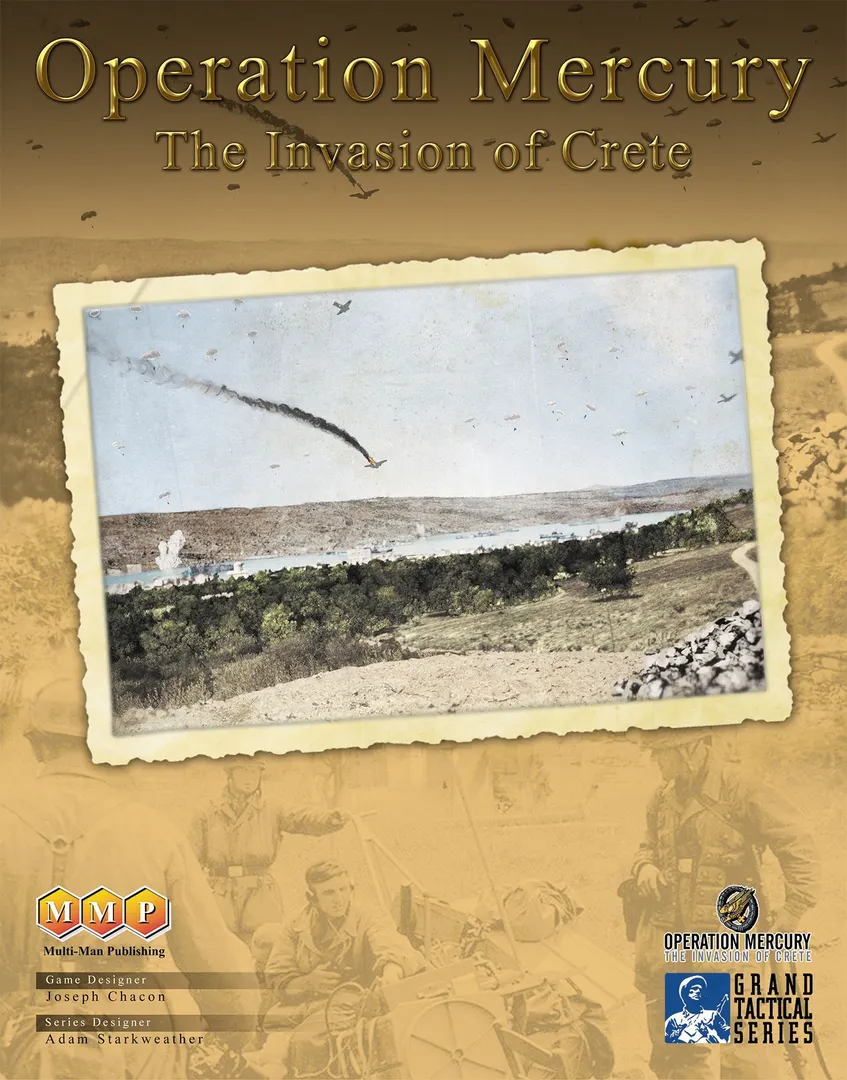
Operation Mercury: The Invasion of Crete
- 2 graczy
- 60–1710 min
- Złożoność 3,9/5
- 2017
2022
Pomoc w zasadach gry Race For Bastogne
Zrozumiałe wyjaśnienia tur, efektów kart i spornych sytuacji z odnośnikami do oficjalnych źródeł i zapisaną historią pytań.
Dla 2 graczy
Co chcesz wiedzieć?
Odpowiedzi pochodzą z oficjalnej instrukcji, ze stroną do sprawdzenia.
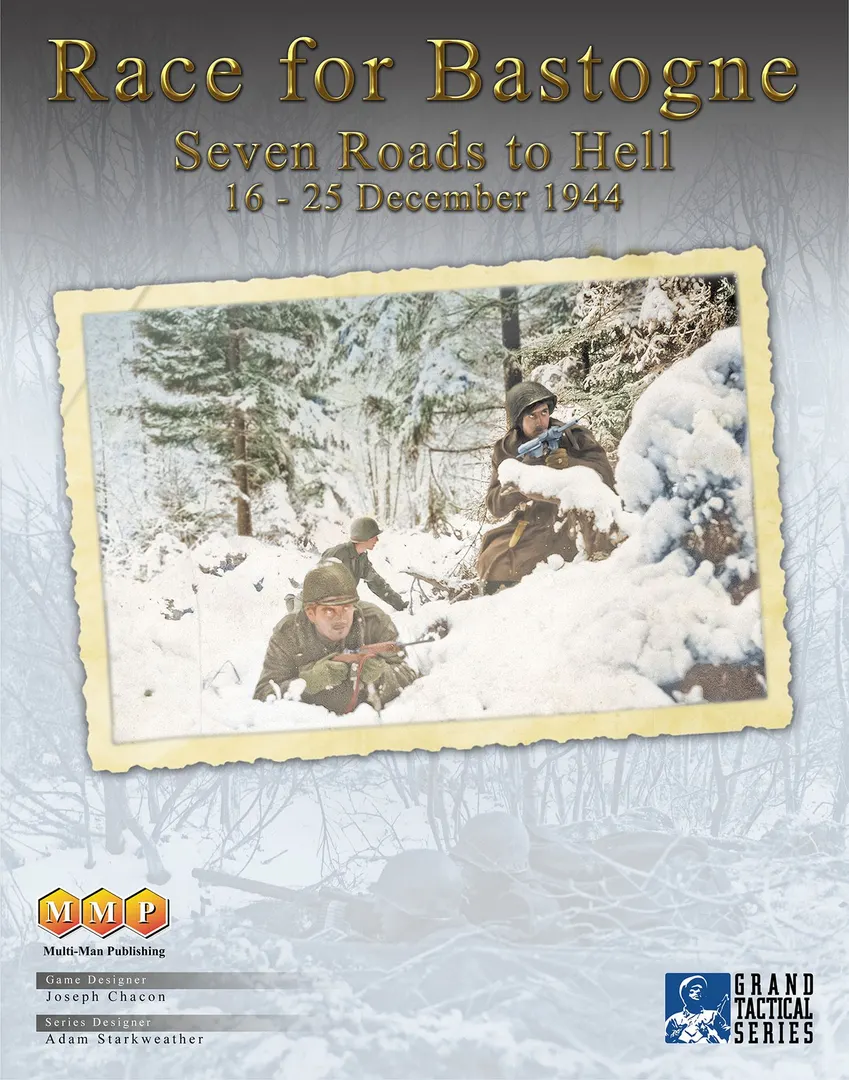
Race For Bastogne to gra planszowa wydana w 2022 roku dla 2 graczy. Projekt gry: Joe Chacon. Główne mechaniki: Dice Rolling, Hexagon Grid i Simulation.


Po angielsku
Race For Bastogne is a Grand Tactical Series (GTS) game that covers one sliver in the history of the Battle of the Bulge. On 16 December 1944, the Germans launched their great offensive through the Ardennes. The XLVII Panzer Corps attacked with the 2. Panzer Division and 26. Volksgrenadier Division, reinforced by the Panzer Lehr Division. Defending was part of the 110th Infantry Regiment of the 28th Infantry Division. It should have been a blitzkrieg through the thin defenses but stubborn resistance, the terrain, and the well-managed commitment of American reinforcements caused the German attack to fail to take Bastogne just as the 101st Airborne Division arrived. Even as German forces by-passed Bastogne to extend the “Bulge,” the 101st was hard pressed to defend the critical crossroads town. Race For Bastogne simulates the German XLVII Corps attack across the Our River through the 110th Infantry Regiment, the delaying actions by Combat Command Reserve, 9th Armored Division, and Combat Command B, 10th Armored Division, followed by the defense of Bastogne by the 101st Airborne Division. The game covers the night of 15 December to the night of 25 December 1944. The German initially commands three “divisions” and the American two “divisions” on two maps laid end to end. Race For Bastogne includes one Campaign Game and six scenarios; five of these use a single map (or portions of a single map), and the sixth uses both maps. Race For Bastogne components: • Grand Tactical Series (GTS) 2.0c Series Rules (40 pages, color) • Race For Bastogne Exclusive Rules (60 pages, color) • Rules Summary (8 pages, B&W) • Race For Bastogne TRC/TEC set (2 cards, color) • Race For Bastogne Divisional Charts set (5 cards, color) • Race For Bastogne Off-Map Display & Turn Record Chart (2 cards, color) • Two single-sided 22" x 34" maps • One double-sided 8-1/2" x 11" map • Eight countersheets (5/8") • Four 10-sided dice • One box and lid (*Note: this is our standard 3” box and is not the same style of box used for The Devil’s Cauldron, Where Eagles Dare, and The Greatest Day). Designer: Joe Chacon Developer: Nick Richardson Game Art: Nicolas Eskubi
Według katalogu Race For Bastogne obsługuje 2 graczy. To liczba graczy podana przez wydawcę, więc gra jest zaprojektowana dokładnie dla takiej liczby uczestników. Warianty dla grup innej wielkości, jeśli w ogóle istnieją, opisano w instrukcji twojego wydania; sprawdź ją uważnie, zanim przygotujesz inną konfigurację stołu.
Race For Bastogne ma ocenę złożoności 3,9 na 5 według graczy BoardGameGeek, co czyni ją grą ciężką. Ocena pokazuje, ile znajomości zasad, planowania i podejmowania decyzji wymaga typowa rozgrywka. Cięższe gry wymagają dłuższego pierwszego tłumaczenia, dlatego przed wieczorem z grami warto skorzystać z przewodnika przygotowania.
Race For Bastogne należy do tych kategorii: Wargame i World War II. Główne mechaniki to Dice Rolling, Hexagon Grid i Simulation. Kategorie opisują temat i świat gry, a mechaniki to, co gracze faktycznie robią w swojej turze. Każda mechanika prowadzi do strony katalogu z podobnymi grami, co pomaga znaleźć coś porównywalnego na kolejny wieczór.
Autorzy wymienieni przy Race For Bastogne to: Joe Chacon. Te informacje pochodzą z opublikowanych danych gry i wskazują osoby odpowiedzialne za jej projekt, a nie ilustratorów czy wydawców. Strony autorów w MeepleRules zbierają inne tytuły tych samych twórców, co pomaga, gdy gra ci się podoba i szukasz podobnych.
W katalogu Race For Bastogne figuruje jako gra podstawowa. Można w nią grać samodzielnie, korzystając z elementów z pudełka, bez żadnego innego tytułu. Dodatki, jeśli istnieją, dokładają nową zawartość lub zasady i są wymienione w katalogu osobno, z odnośnikiem do tej gry podstawowej.