
- Pozycja w BGG
- BGG #12 366
- Ocena BGG
- 7,7
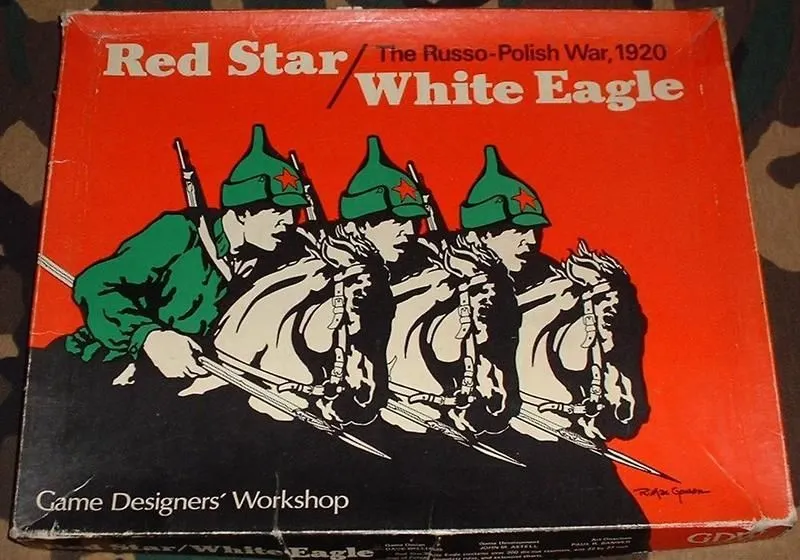
Red Star/White Eagle: The Russo-Polish War, 1920
- 2 graczy
- 180–480 min
- Złożoność 2,9/5
- 1979
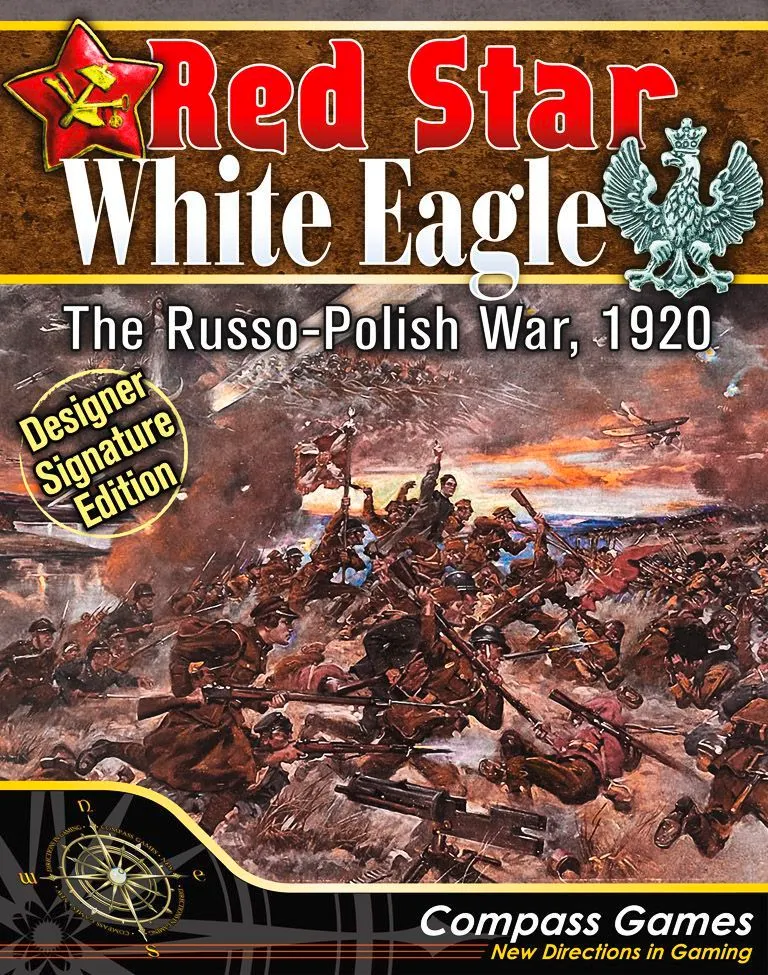
2018
Pomoc w zasadach gry Red Star/White Eagle: The Russo-Polish War, 1920 – Designer Signature Edition
Zrozumiałe wyjaśnienia tur, efektów kart i spornych sytuacji z odnośnikami do oficjalnych źródeł i zapisaną historią pytań.
Co chcesz wiedzieć?
Odpowiedzi pochodzą z oficjalnej instrukcji, ze stroną do sprawdzenia.
Red Star/White Eagle: The Russo-Polish War, 1920 – Designer Signature Edition to gra planszowa wydana w 2018 roku dla 1–3 graczy, z rozgrywką trwającą 180–480 minut i dla osób od 12 lat. Projekt gry: David Williams (I). Główne mechaniki: Dice Rolling, Hexagon Grid i Simulation.


Po angielsku
Red Star/White Eagle: The Russo-Polish War, 1920, Designer Signature Edition, marks the return of a true wargaming classic by David Williams, remastered and updated with this all-new edition. Celebrated by many as one of the finest and often sought-after game titles ever produced by Game Designers’ Workshop (GDW, 1979) on a fascinating, almost forgotten conflict that would determine the course of European history for the next twenty years or more. To the West, the First World War was “the war to end all wars”. To the submerged nationalities of Eastern Europe, this war removed the obstacles to their political aspirations– Tsarist Russia collapsed in 1917; Germany and Austria-Hungary were defeated in 1918. The disintegration of these empires sparked a chaotic period of struggles in Eastern Europe, as proponents of the old order, nationalists, and revolutionary socialists fought for supremacy. The conflict between the Poles and the Bolsheviks was the most important campaign in determining the borders of Eastern Europe. Red Star/White Eagle is an operational level simulation that faithfully recreates the 1920 conflict over the border areas of Eastern Europe. Game play is not for the faint of heart with open maneuvering creating a fast and fluid situation as both sides seek the opportunity to outflank and attack. Nearly any defensive line can be bypassed in the wide-open expanse of West Russia, forcing players to probe for vulnerabilities and seize the initiative. An exhaustive Order of Battle helps capture the key historically facets of the campaign including supply, cavalry charges, armored trains, loss of command, inter-front cooperation, rail nets, railroad reserve, flotillas and marines, border garrisons, numerous specialized units, and more. This Designer Signature Edition provides a fully updated treatment to the GDW 1979 release that honors the original game design. All aspects of the game are being enhanced, based on years of player experience and feedback. One example is adding initial set-up and reinforcement entry codes to all units to ease set-up and play. Play time can vary with three scenarios provided and the Campaign Game. While suitable for solitaire play and designed as a two-player game, the Campaign game is credited as allowing for up to three players (with two playing the Russian side). This edition serves as the ultimate treatment in paying homage and celebrating the original classic design by David Williams. All components are upgraded to include a larger playing surface () and to deliver an optimal play experience that can be completed in a single sitting. Components: two maps two countersheets (344 5/8” counters) five player aid cards one small deployment map one rule book (28 pages) (from the publisher and back of the box)
Według katalogu Red Star/White Eagle: The Russo-Polish War, 1920 – Designer Signature Edition obsługuje od 1 do 3 graczy. Ten zakres odpowiada liczbie graczy podanej przez wydawcę, więc grę można przygotować dla dowolnej grupy w jego granicach. Przygotowanie, niektóre zasady i punktacja mogą jednak różnić się w zależności od liczby graczy; dokładną konfigurację sprawdź w instrukcji swojego wydania.
Podany czas rozgrywki w Red Star/White Eagle: The Russo-Polish War, 1920 – Designer Signature Edition wynosi 180–480 minut. To szacunek wydawcy dla pełnej partii. Rzeczywisty czas zależy od grupy, liczby graczy i znajomości zasad: pierwsze partie zwykle trwają dłużej, a doświadczone grupy kończą szybciej. Przygotowanie gry i tłumaczenie zasad nie są wliczone w ten szacunek.
Katalog podaje dla Red Star/White Eagle: The Russo-Polish War, 1920 – Designer Signature Edition wiek od 12 lat. To zalecenie wydawcy, które uwzględnia wymagania dotyczące czytania, złożoność zasad i drobne elementy, a nie tylko tematykę. Młodsi gracze często mogą dołączyć z pomocą dorosłego; sprawdź zalecenie wiekowe swojego wydania i weź pod uwagę doświadczenie grupy z grami planszowymi.
Red Star/White Eagle: The Russo-Polish War, 1920 – Designer Signature Edition ma ocenę złożoności 2,7 na 5 według graczy BoardGameGeek, co czyni ją grą raczej lekką. Ocena pokazuje, ile znajomości zasad, planowania i podejmowania decyzji wymaga typowa rozgrywka. Cięższe gry wymagają dłuższego pierwszego tłumaczenia, dlatego przed wieczorem z grami warto skorzystać z przewodnika przygotowania.
Red Star/White Eagle: The Russo-Polish War, 1920 – Designer Signature Edition należy do tych kategorii: Wargame. Główne mechaniki to Dice Rolling, Hexagon Grid i Simulation. Kategorie opisują temat i świat gry, a mechaniki to, co gracze faktycznie robią w swojej turze. Każda mechanika prowadzi do strony katalogu z podobnymi grami, co pomaga znaleźć coś porównywalnego na kolejny wieczór.
Autorzy wymienieni przy Red Star/White Eagle: The Russo-Polish War, 1920 – Designer Signature Edition to: David Williams (I). Te informacje pochodzą z opublikowanych danych gry i wskazują osoby odpowiedzialne za jej projekt, a nie ilustratorów czy wydawców. Strony autorów w MeepleRules zbierają inne tytuły tych samych twórców, co pomaga, gdy gra ci się podoba i szukasz podobnych.
W katalogu Red Star/White Eagle: The Russo-Polish War, 1920 – Designer Signature Edition figuruje jako gra podstawowa. Można w nią grać samodzielnie, korzystając z elementów z pudełka, bez żadnego innego tytułu. Dodatki, jeśli istnieją, dokładają nową zawartość lub zasady i są wymienione w katalogu osobno, z odnośnikiem do tej gry podstawowej.