
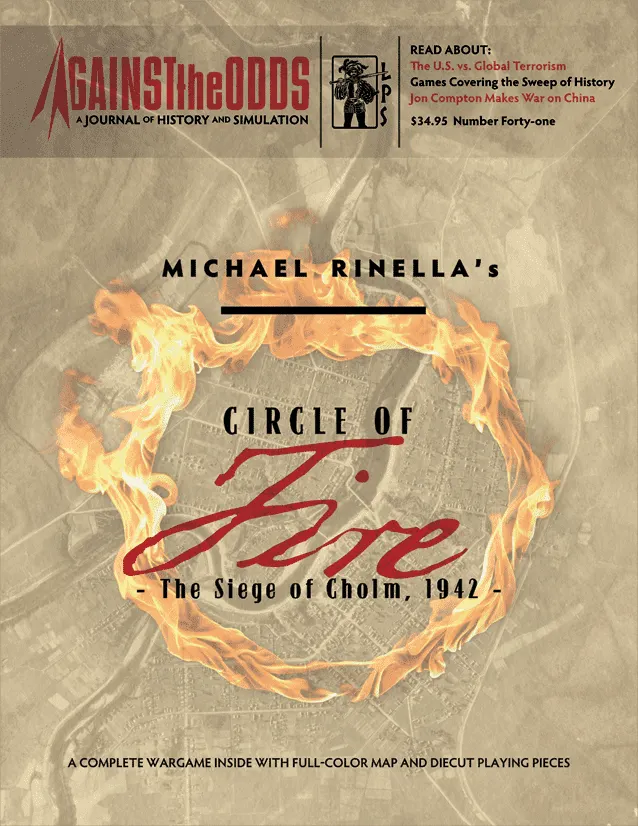
- Pozycja w BGG
- BGG #12 794
- Ocena BGG
- 7,4
Circle of Fire: The Siege of Cholm, 1942
- 1–2 graczy
- 180–240 min
- Złożoność 2,3/5
- 2014
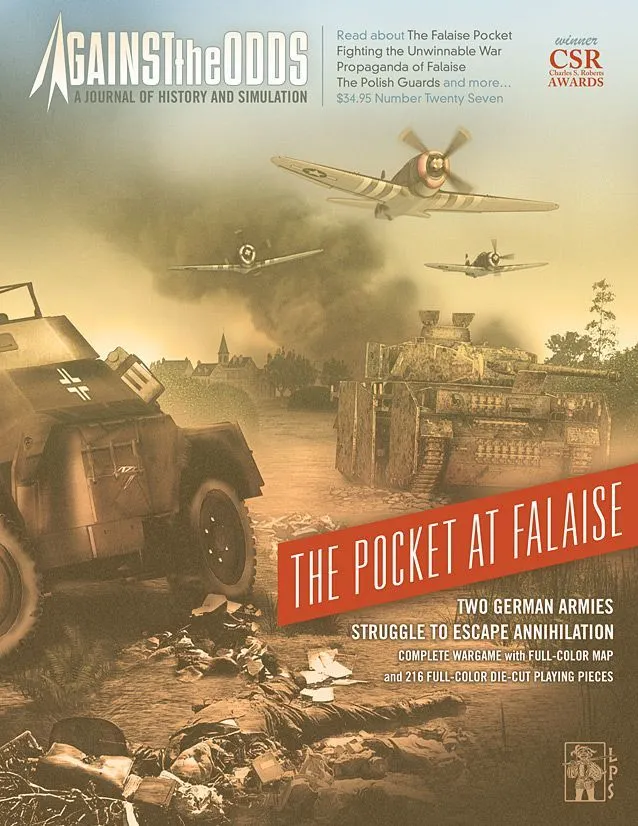
2009
Pomoc w zasadach gry The Pocket at Falaise
Zrozumiałe wyjaśnienia tur, efektów kart i spornych sytuacji z odnośnikami do oficjalnych źródeł i zapisaną historią pytań.
Dla 1 gracza
Co chcesz wiedzieć?
Odpowiedzi pochodzą z oficjalnej instrukcji, ze stroną do sprawdzenia.
The Pocket at Falaise to gra planszowa wydana w 2009 roku dla 1–2 graczy, z rozgrywką trwającą 240 minut i dla osób od 12 lat. Projekt gry: Ted Raicer, Paul Rohrbaugh i Lembit Tohver. Główne mechaniki: Hexagon Grid i Chit-Pull System.



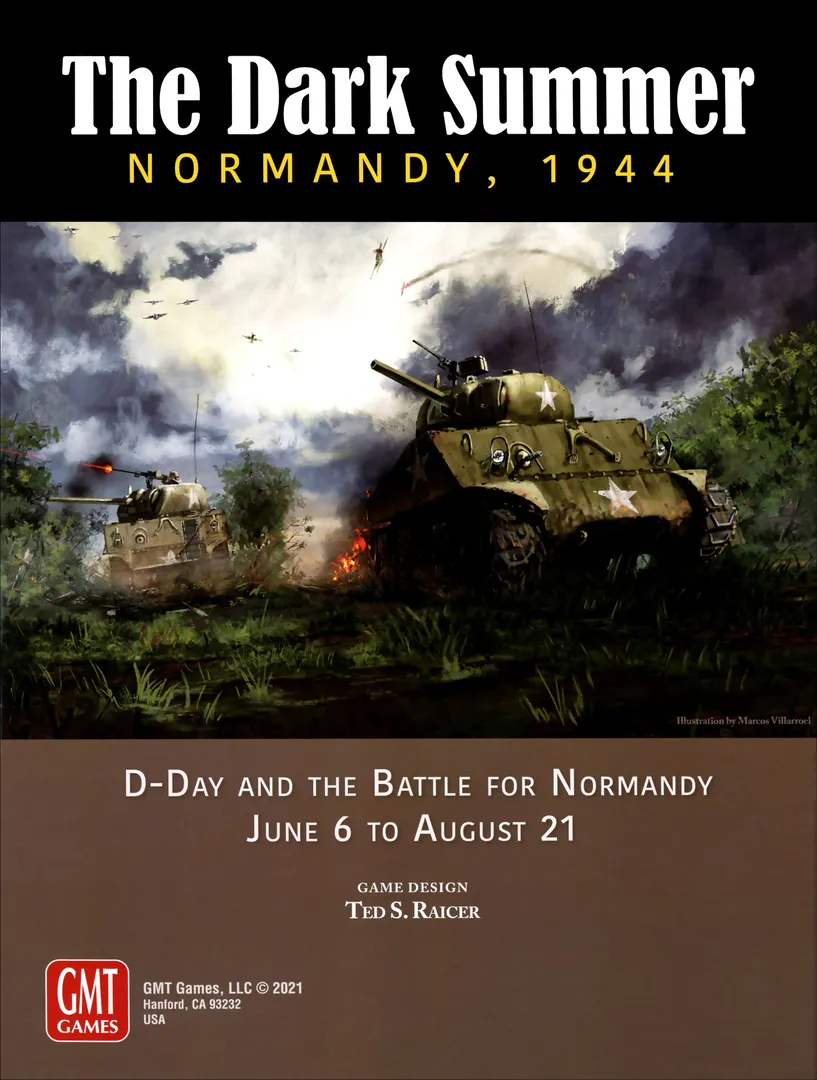
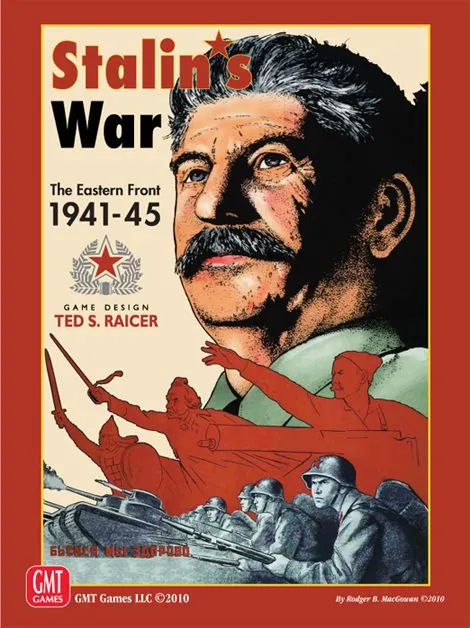
Po angielsku
The Pocket at Falaise is a game on the final phase of the Allied campaign in Normandy. After the failure of Hitler’s counterattack in early August to halt the Allied breakout from Normandy, the German 7th and 5th Panzer Armies found themselves on the verge of being pocketed by converging American and British pincers. On the evening of August 16th the Germans began to pull back behind the Orne and Dives rivers, hoping to regroup for a defense of the Seine, even as the Allies attempted to close the trap on some twentyfive German divisions. Ultimately, about half the German forces in the pocket escaped, leaving almost all their heavy equipment behind. It was a major Allied victory, but not a war-winning one. At the end of the Gulf War in '91, cable TV news was full of horrific photos from the "Highway of Death," the route back to Iraq from Kuwait that seemed, almost literally, to be "paved" with burnt-out vehicles. Those who study WWII remember similar destruction... on the road out of the Falaise Pocket... where 25 German divisions raced for survival, while the Allied armies aimed to turn Hitler's delayed counterattack on Normandy from failure to war-ending disaster. In one sense, neither side succeeded. But the devastation was something unprecedented. Now, you have a chance to do better. The Pocket at Falaise puts each player in the difficult position of trying to overcome the obstacles, both human and mechanical, tactical and operational, that interfered with success in 1944. Award-winning designer Ted Racier explains: The story of the Falaise battle is that of two German armies trying to escape a trap set for them by their own high command, and of the Allied armies trying to close the trap, despite the hesitations and divisions of their own higher commanders. While we may think of the Allies as having overwhelming forces, at the actual point of contact, there were relatively weak units trying to "plug the leak" against overwhelming numbers of intensely motivated Germans. The situation means that the "retreating" Germans are actually forced to do a lot of attacking, while the "advancing" allies found themselves in a desperate defense. The Pocket at Falaise uses a chit-pull activation system to capture some of the chaotic and uncoordinated efforts. Players are forced to juggle to make the best out of an increasingly difficult situation, and a combat scale that straddles "tactical" and "operational," aiming to capture the best of both without adding a lot of fiddly rules. A complete set of solitaire rules for the game completes the package. Eisenhower called it, "The Great Killing Ground." What the Germans called it cannot be printed. What you will call it depends on how well you do... Against the Odds. Published in Against the Odds Magazine #27, October 2009. Game Scale: Game Turn: 12 hours Hex: 0.75 miles / 1.2 kilometers Units: Battalion to Brigade Game Inventory: One 22 x 34" full color map Two dual-side printed countersheets (198 9/16" counters) One 12-page Pocket at Falaise rulebook Two dual-side printed Player Aid cards One 6-sided die Solitaire Playability: Medium Complexity Level: Medium Players: 2 or more Playing Time: 4-15 hours
Według katalogu The Pocket at Falaise obsługuje od 1 do 2 graczy. Ten zakres odpowiada liczbie graczy podanej przez wydawcę, więc grę można przygotować dla dowolnej grupy w jego granicach. Przygotowanie, niektóre zasady i punktacja mogą jednak różnić się w zależności od liczby graczy; dokładną konfigurację sprawdź w instrukcji swojego wydania.
Podany czas rozgrywki w The Pocket at Falaise wynosi 240 minut. To szacunek wydawcy dla pełnej partii. Rzeczywisty czas zależy od grupy, liczby graczy i znajomości zasad: pierwsze partie zwykle trwają dłużej, a doświadczone grupy kończą szybciej. Przygotowanie gry i tłumaczenie zasad nie są wliczone w ten szacunek.
Katalog podaje dla The Pocket at Falaise wiek od 12 lat. To zalecenie wydawcy, które uwzględnia wymagania dotyczące czytania, złożoność zasad i drobne elementy, a nie tylko tematykę. Młodsi gracze często mogą dołączyć z pomocą dorosłego; sprawdź zalecenie wiekowe swojego wydania i weź pod uwagę doświadczenie grupy z grami planszowymi.
The Pocket at Falaise ma ocenę złożoności 2,8 na 5 według graczy BoardGameGeek, co czyni ją grą raczej lekką. Ocena pokazuje, ile znajomości zasad, planowania i podejmowania decyzji wymaga typowa rozgrywka. Cięższe gry wymagają dłuższego pierwszego tłumaczenia, dlatego przed wieczorem z grami warto skorzystać z przewodnika przygotowania.
The Pocket at Falaise należy do tych kategorii: Wargame i World War II. Główne mechaniki to Hexagon Grid i Chit-Pull System. Kategorie opisują temat i świat gry, a mechaniki to, co gracze faktycznie robią w swojej turze. Każda mechanika prowadzi do strony katalogu z podobnymi grami, co pomaga znaleźć coś porównywalnego na kolejny wieczór.
Autorzy wymienieni przy The Pocket at Falaise to: Ted Raicer, Paul Rohrbaugh i Lembit Tohver. Te informacje pochodzą z opublikowanych danych gry i wskazują osoby odpowiedzialne za jej projekt, a nie ilustratorów czy wydawców. Strony autorów w MeepleRules zbierają inne tytuły tych samych twórców, co pomaga, gdy gra ci się podoba i szukasz podobnych.
W katalogu The Pocket at Falaise figuruje jako gra podstawowa. Można w nią grać samodzielnie, korzystając z elementów z pudełka, bez żadnego innego tytułu. Dodatki, jeśli istnieją, dokładają nową zawartość lub zasady i są wymienione w katalogu osobno, z odnośnikiem do tej gry podstawowej.