
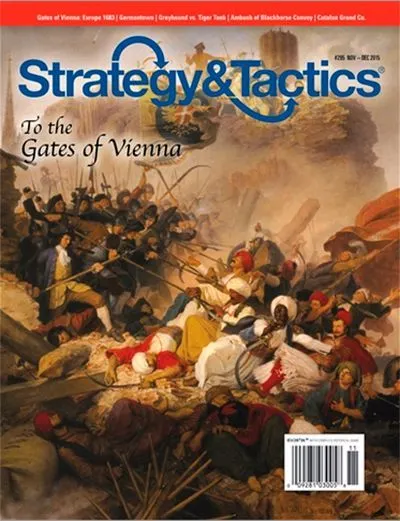
- Pozycja w BGG
- BGG #20 832
- Ocena BGG
- 6,6
Gates of Vienna: 1683
- 2 graczy
- 240–360 min
- Złożoność 2,5/5
- 2015
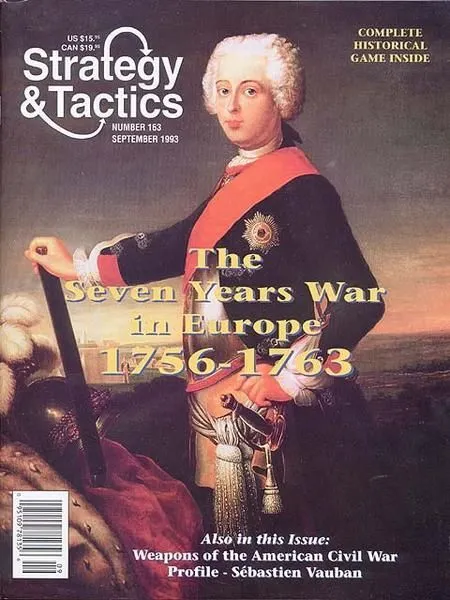
1993
Pomoc w zasadach gry The Seven Years War
Zrozumiałe wyjaśnienia tur, efektów kart i spornych sytuacji z odnośnikami do oficjalnych źródeł i zapisaną historią pytań.
Co chcesz wiedzieć?
Odpowiedzi pochodzą z oficjalnej instrukcji, ze stroną do sprawdzenia.
The Seven Years War to gra planszowa wydana w 1993 roku dla 2–6 graczy, z rozgrywką trwającą 240 minut i dla osób od 12 lat. Projekt gry: Joseph Miranda. Główne mechaniki: Dice Rolling i Hexagon Grid.


Po angielsku
Seven Years War is a simulation of the war between Prussia and a Coalition of European states, 1756-1764, published in Strategy & Tactics #163 (Sep 1993). While militarily a stalemate, the war consolidated Prussia's dominance of central Europe until its defeat at Jena and Auerstadt in 1806. The game is designed for two players or two teams. The Prussian Allied side, opposes the Coalition side. The objective is to gain control of as many central european fortress cities as possible without losing control of your own. The rules consist of a Standard Game that gives a relatively simple but historically valid game, and an Advanced Game providing a more complete historical simulation. Play centers around the operational activity of moving armies, fighting battles and besieging fortresses. However, this operational activity is heavily influenced by, and is intertwined with, the ever changing strategic choices and actions the players take as the game proceeds. This game is falling through the cracks in recent years. There is a reasonably good Cyberboard gamebox but it would be nice if someone would create a Vassal module as well. Operational aspects include leaders, a variable movement table, discipline classes for units, logistics with supply wagons and foraging, and limited intelligence. Forces are comprised of infantry, cavalry, light troops, pioneers and artillery. Combat is modified by battleplan chits, selected before the die is rolled, that allow a player to emphasize line infantry, or more elite units, or cavalry achieving strength bonuses or die roll modifiers. The combat table produces percentage loss and moral checks for one or both sides. One learns that strength is not always the deciding factor. Leadership, high discipline, moral and making use of unit specialization play a big roll. Fortresses can also be captured by siege combat. Strategically, the game makes use of random events, diplomacy, (the various European states get pushed in and out of neutrality and switch sides). Winning battles can give a player diplomatic options. As the game proceeds the progress of both sides is recorded on the Balance of Power track which can also modify victory. It is possible for both sides to achieve a victory. The two are then compared to give a final victory. Also, both sides can lose if the Balance of Power track moves too far toward one of the players. Restraint is part of a player's strategic considerations. The game is complete by magazine game standards. The errata is light. It is not a simple game and it requires players to be willing to roleplay the point of view of the leaders from that period. There is a four turn short scenario covering the first year of the conflict. A full campaign game can last as long as 28 turns if things are drawn out. It is a highly replayable game. Errata and Q&A for 7YW were published in Strategy & Tactics #s 165, 166, 167, and 169. Additional counters for 7YW were included in Strategy & Tactics #s 170 and 171. 7YW also received extensive coverage in Moves #79.
Według katalogu The Seven Years War obsługuje od 2 do 6 graczy. Ten zakres odpowiada liczbie graczy podanej przez wydawcę, więc grę można przygotować dla dowolnej grupy w jego granicach. Przygotowanie, niektóre zasady i punktacja mogą jednak różnić się w zależności od liczby graczy; dokładną konfigurację sprawdź w instrukcji swojego wydania.
Podany czas rozgrywki w The Seven Years War wynosi 240 minut. To szacunek wydawcy dla pełnej partii. Rzeczywisty czas zależy od grupy, liczby graczy i znajomości zasad: pierwsze partie zwykle trwają dłużej, a doświadczone grupy kończą szybciej. Przygotowanie gry i tłumaczenie zasad nie są wliczone w ten szacunek.
Katalog podaje dla The Seven Years War wiek od 12 lat. To zalecenie wydawcy, które uwzględnia wymagania dotyczące czytania, złożoność zasad i drobne elementy, a nie tylko tematykę. Młodsi gracze często mogą dołączyć z pomocą dorosłego; sprawdź zalecenie wiekowe swojego wydania i weź pod uwagę doświadczenie grupy z grami planszowymi.
The Seven Years War ma ocenę złożoności 2,9 na 5 według graczy BoardGameGeek, co czyni ją grą raczej lekką. Ocena pokazuje, ile znajomości zasad, planowania i podejmowania decyzji wymaga typowa rozgrywka. Cięższe gry wymagają dłuższego pierwszego tłumaczenia, dlatego przed wieczorem z grami warto skorzystać z przewodnika przygotowania.
The Seven Years War należy do tych kategorii: Wargame i Age of Reason. Główne mechaniki to Dice Rolling i Hexagon Grid. Kategorie opisują temat i świat gry, a mechaniki to, co gracze faktycznie robią w swojej turze. Każda mechanika prowadzi do strony katalogu z podobnymi grami, co pomaga znaleźć coś porównywalnego na kolejny wieczór.
Autorzy wymienieni przy The Seven Years War to: Joseph Miranda. Te informacje pochodzą z opublikowanych danych gry i wskazują osoby odpowiedzialne za jej projekt, a nie ilustratorów czy wydawców. Strony autorów w MeepleRules zbierają inne tytuły tych samych twórców, co pomaga, gdy gra ci się podoba i szukasz podobnych.
W katalogu The Seven Years War figuruje jako gra podstawowa. Można w nią grać samodzielnie, korzystając z elementów z pudełka, bez żadnego innego tytułu. Dodatki, jeśli istnieją, dokładają nową zawartość lub zasady i są wymienione w katalogu osobno, z odnośnikiem do tej gry podstawowej.