
- Pozycja w BGG
- BGG #14 743
- Ocena BGG
- 8,1
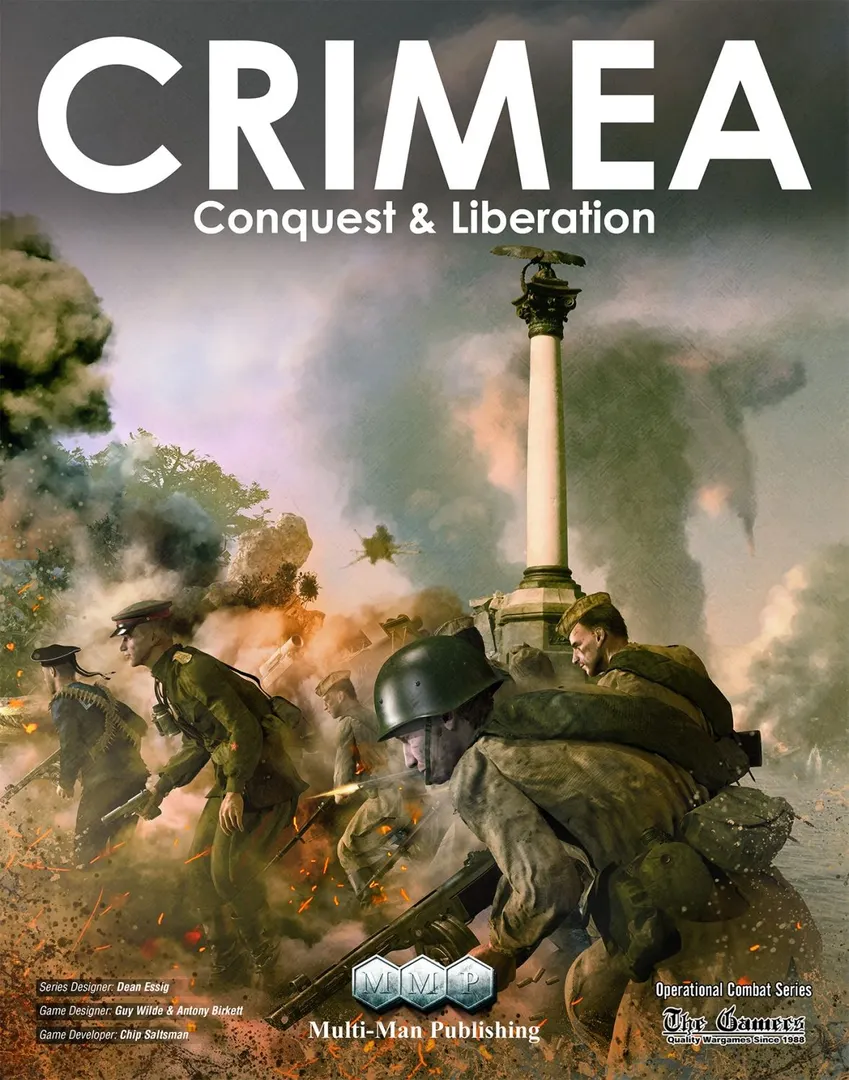
Crimea: Conquest & Liberation
- 2–4 graczy
- 120 min
- Złożoność 4,2/5
- 2023
2021
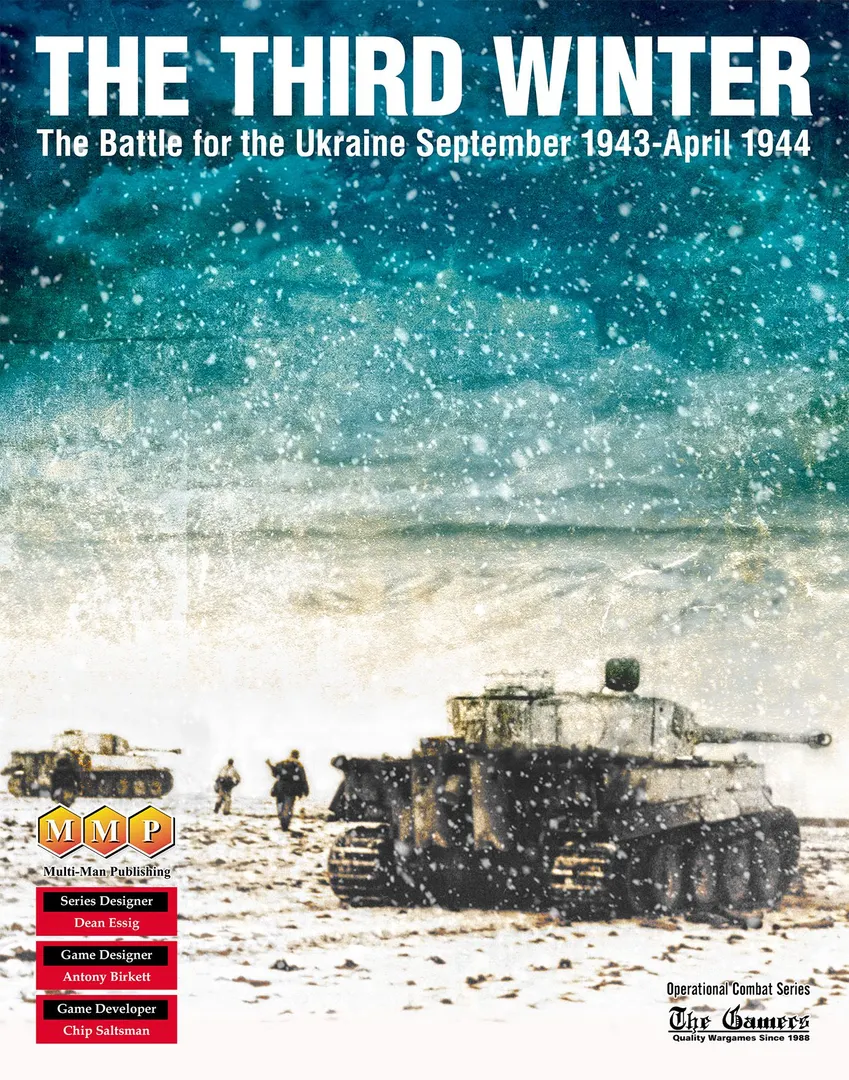
Pomoc w zasadach gry The Third Winter: The Battle for the Ukraine September 1943-April 1944
Zrozumiałe wyjaśnienia tur, efektów kart i spornych sytuacji z odnośnikami do oficjalnych źródeł i zapisaną historią pytań.
Dla 2 graczy
Co chcesz wiedzieć?
Odpowiedzi pochodzą z oficjalnej instrukcji, ze stroną do sprawdzenia.
The Third Winter: The Battle for the Ukraine September 1943-April 1944 to gra planszowa wydana w 2021 roku dla 2–6 graczy, z rozgrywką trwającą 3000–10000 minut i dla osób od 16 lat. Projekt gry: Chip Saltsman i Antony Birkett. Główne mechaniki: Dice Rolling, Grid Movement i Hexagon Grid.



Po angielsku
The Third Winter: The Campaign for the Ukraine, September 1943 - April 1944, begins with the “Race to the Dnepr,” as Army Group South rushed to a secure defensive position behind one of Europe’s largest rivers. Four powerful Soviet Fronts must be used in close cooperation to overcome the Axis forces, which include two Panzer Armies. The game contains 85% of the total Wehrmacht’s mechanized strength at this stage of the war and 75% of the Red Army’s. The Germans must hold the Dnepr barrier as long as possible, followed by a fighting retreat to the Carpathian Mountains to the west. The Soviets can crush the Axis invader with the advantage of their most reliable ally: General Winter. It is the Third Winter on the Russian Front. The Soviets have the initiative and a formidable force, but an equally challenging task. The Dnepr is a huge obstacle and the German panzer formations are wounded but dangerous. The German player has the challenge of active defense in the style of Army Group South Commander Erich von Manstein. Both sides are in for a challenging fight. The Third Winter is a big game, with 5-mile hexes, 3.5-day turns, and counters for units from battalions up to divisions. The battles from this campaign – the Race to the Dnepr, the Battle of Kiev, Korsun Pocket, the Kamenets-Podolsky pocket (“Hube’s Pocket”) and the splitting of Army Group South in two—merge into the dynamic of whole campaign. Special rules in this 19th game of the Operational Combat Series have been carefully designed to recreate this intense campaign. They include: • Soviet Front command structure is modeled by the four Fronts being either on Offensive or Paused posture. The Soviet player can switch one front “off” and another “on” to shift focus and force the Axis to deal with sudden threats in a different part of the map. When Soviet formations are burned out, they withdraw into the “RVGK” for rebuilding, and can reappear suddenly in a new area, enabling Maskirovka surprises. Each Front has a dedicated Air Army and Frontal Barrages to initiate offensives. The game shows the increasing strength and competency of the Red Army in both units and Action ratings. • German units in play include Kampfgruppe Divisions, German Remnants, German Army and Army Group HQs,Tiger Companies, Hartman and JG52 aces, Hans-Ulrich Rudel and his tank-busting aircraft, and the Romanian Home army • Random events similar to what are found in the award-winning Beyond the Rhine. These cover things like Soviet Patrol Boat Raids, Lend-Lease, Fuel Shortages, Heroes who affect combat, Arty Ammo Stockpiles, and Partisan Offensives. The 44 possible events add a lot of historical flavor but require very little rules overhead. • The importance and difficulty of the Dnepr crossings are distilled into rules allowing the bridges to be blown and repaired, and ferries to be emplaced, all leading to Soviet Bridgehead battles • Both sides were deploying more and more anti-aircraft assets, modeled with units that make air barrages more difficult. • Axis Fortress HQ units that enable cut-off units to continue to function and shows the decline of the Wehrmacht, from a mobile warfare army to a defensive army, with limited counterattack capability. KG HQs allow ad hoc mechanized formations to combine to simulate the desperate nature of the struggle. The Third Winter features two monster-sized campaigns that use a 44x66-inch map layout and over 1,500 combat units. Also included are several smaller scenarios, including four 1-map games. Scenario 1: The Dnepr Battles (Grand Campaign Game, 4 maps, 63 turns, 26 Sept 1943 to 26 April 1944) Scenario 2: Die Götterdämmerung (January Campaign Start, 4 maps, 27 turns, 26 Jan 44 to 26 April 44) Scenario 3: Red Thunder (April Campaign Start, 2 maps, 6 turns, 8 Apr 44 to 26 April 44) Scenario 4: Manstein’s Fire Brigades (Battle for Kiev, 1 map, 9 turns, 26 Dec 43 to 22 Jan 44) Scenario 5: II SS Pz Corps Strikes Back (Battle for Ternopol, 1 map, 6 turns, 8 Apr 44 to 26 April 44) Scenario 6: Rumanian Finish (Odessa and breaking into Rumania, 1 map, 6 turns, 8 Apr 44 to 26 April 44) Scenario 7: Hube’s Pocket (The “Moving Pocket” Battle, 1 map, 8 turns, 22 Mar 44 to 15 Apr 44) Game Scale: Turn: 1/2 Week (3 or 4 days) Hex: 5 miles / 8 km Units: Company to Corps Game Inventory: Four 22" X 34" mapsheets Eight countersheets (2,240 1/2" dual-side printed counters) One 48-page OCS rules booklet One Third Winter game rules booklet One Third Winter scenario booklet Two 4 page OCS Charts & Tables folders Three Player Aid Cards (1 sided) Two 6-sided dice (description from designer)
Według katalogu The Third Winter: The Battle for the Ukraine September 1943-April 1944 obsługuje od 2 do 6 graczy. Ten zakres odpowiada liczbie graczy podanej przez wydawcę, więc grę można przygotować dla dowolnej grupy w jego granicach. Przygotowanie, niektóre zasady i punktacja mogą jednak różnić się w zależności od liczby graczy; dokładną konfigurację sprawdź w instrukcji swojego wydania.
Podany czas rozgrywki w The Third Winter: The Battle for the Ukraine September 1943-April 1944 wynosi 3000–10000 minut. To szacunek wydawcy dla pełnej partii. Rzeczywisty czas zależy od grupy, liczby graczy i znajomości zasad: pierwsze partie zwykle trwają dłużej, a doświadczone grupy kończą szybciej. Przygotowanie gry i tłumaczenie zasad nie są wliczone w ten szacunek.
Katalog podaje dla The Third Winter: The Battle for the Ukraine September 1943-April 1944 wiek od 16 lat. To zalecenie wydawcy, które uwzględnia wymagania dotyczące czytania, złożoność zasad i drobne elementy, a nie tylko tematykę. Młodsi gracze często mogą dołączyć z pomocą dorosłego; sprawdź zalecenie wiekowe swojego wydania i weź pod uwagę doświadczenie grupy z grami planszowymi.
The Third Winter: The Battle for the Ukraine September 1943-April 1944 ma ocenę złożoności 3,9 na 5 według graczy BoardGameGeek, co czyni ją grą ciężką. Ocena pokazuje, ile znajomości zasad, planowania i podejmowania decyzji wymaga typowa rozgrywka. Cięższe gry wymagają dłuższego pierwszego tłumaczenia, dlatego przed wieczorem z grami warto skorzystać z przewodnika przygotowania.
The Third Winter: The Battle for the Ukraine September 1943-April 1944 należy do tych kategorii: Wargame i World War II. Główne mechaniki to Dice Rolling, Grid Movement i Hexagon Grid. Kategorie opisują temat i świat gry, a mechaniki to, co gracze faktycznie robią w swojej turze. Każda mechanika prowadzi do strony katalogu z podobnymi grami, co pomaga znaleźć coś porównywalnego na kolejny wieczór.
Autorzy wymienieni przy The Third Winter: The Battle for the Ukraine September 1943-April 1944 to: Chip Saltsman i Antony Birkett. Te informacje pochodzą z opublikowanych danych gry i wskazują osoby odpowiedzialne za jej projekt, a nie ilustratorów czy wydawców. Strony autorów w MeepleRules zbierają inne tytuły tych samych twórców, co pomaga, gdy gra ci się podoba i szukasz podobnych.
W katalogu The Third Winter: The Battle for the Ukraine September 1943-April 1944 figuruje jako gra podstawowa. Można w nią grać samodzielnie, korzystając z elementów z pudełka, bez żadnego innego tytułu. Dodatki, jeśli istnieją, dokładają nową zawartość lub zasady i są wymienione w katalogu osobno, z odnośnikiem do tej gry podstawowej.