
- Ocena BGG
- 6,4
Army Lists Book One: 3000 BC – 75 AD
- 2 graczy
- 120 min
- Złożoność 2,0/5
- 1981
1980
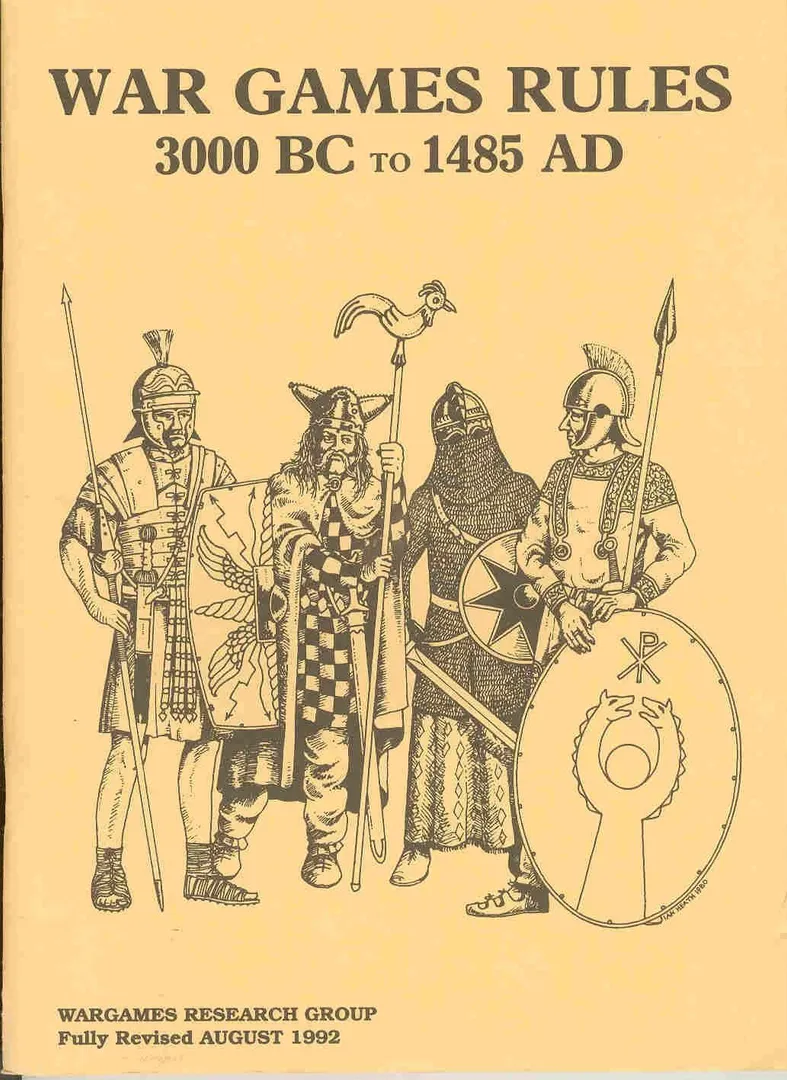
Pomoc w zasadach gry War Games Rules 3000 BC to 1485 AD
Zrozumiałe wyjaśnienia tur, efektów kart i spornych sytuacji z odnośnikami do oficjalnych źródeł i zapisaną historią pytań.
Dla 2 graczy
Co chcesz wiedzieć?
Odpowiedzi pochodzą z oficjalnej instrukcji, ze stroną do sprawdzenia.
War Games Rules 3000 BC to 1485 AD to gra planszowa wydana w 1980 roku dla 2 graczy, z rozgrywką trwającą 120–180 minut i dla osób od 12 lat. Projekt gry: Philip C. Barker. Główne mechaniki: Dice Rolling, Paper-and-Pencil i Simulation.
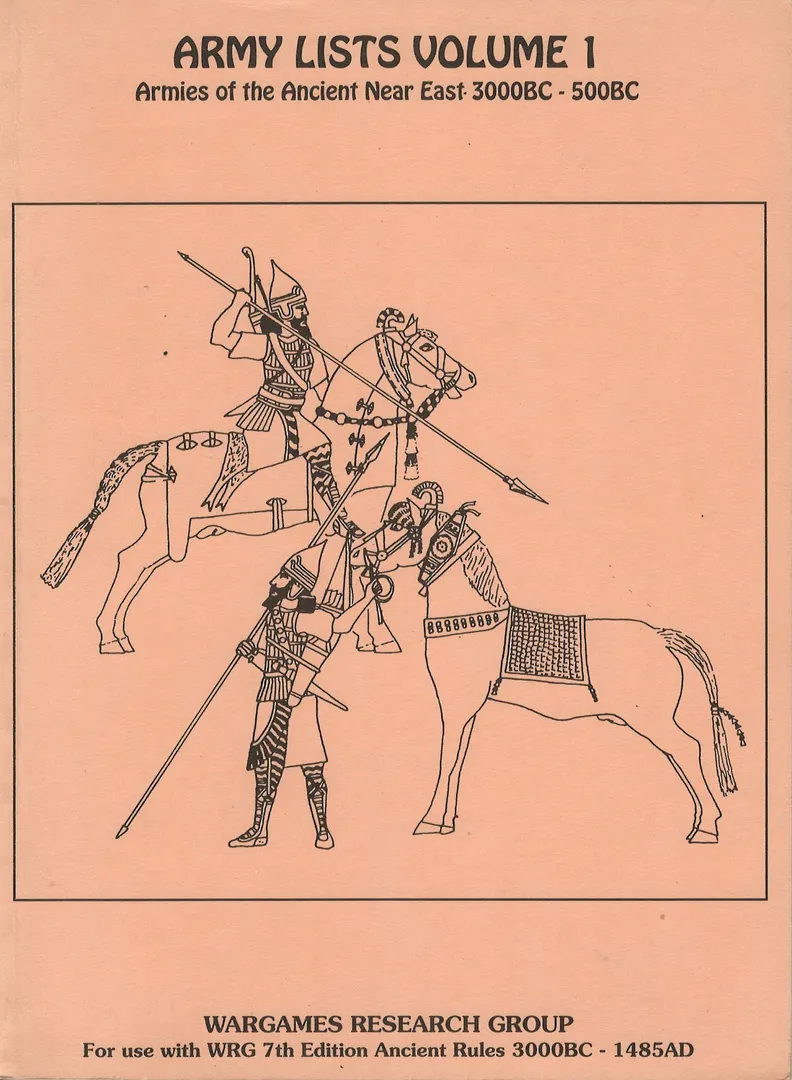
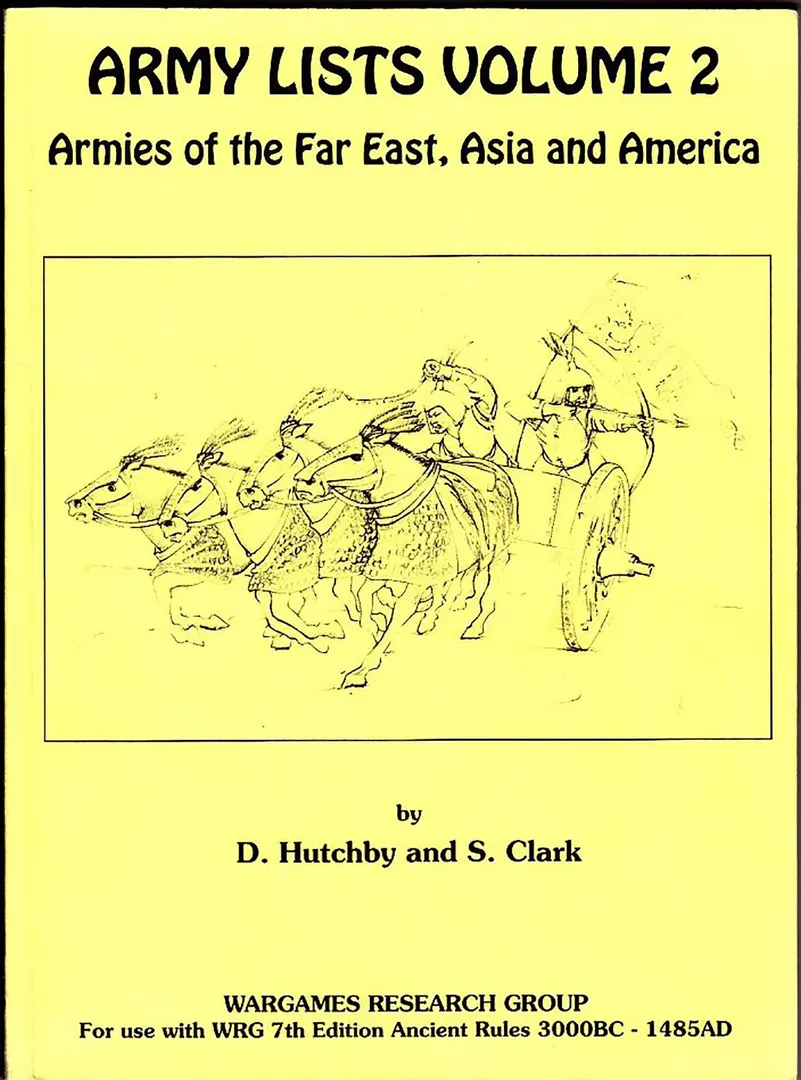

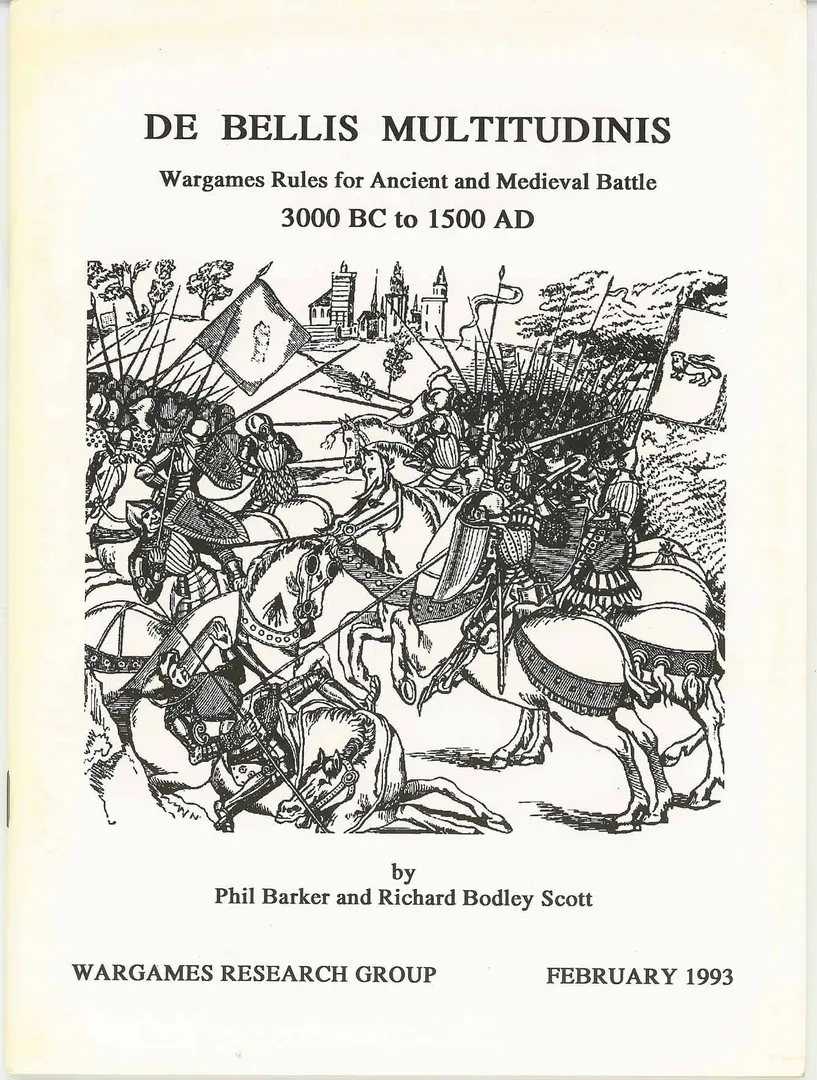
Po angielsku
From the Intro to the 7th edition rules The first edition of our original ancient rules appeared in 1969, and their adopted for the British National Wargames Championships of that year. Despite competition from many would be rival sets, succeeding editions have been used in every important convention worldwide since then, and are used by an overwhelming majority of ancient wargamers. Their mechanisms have become a wargames standard used for every conceivable historical period, including some for which WE consider then unsuitable! The seventh edition went to the printers in late 1985, and in the seven years since has almost completely taken over from previous editions. Feedback from play by several thousand customers has made it possible to provide free update sheets available in return for a stamped addressed envelope or international reply coupon. A few of the amendments blocked minor loopholes, most clarify meanings and some incorporate goal ideas for improvements suggested and justified by players. All such changes to date are incorporated into the text of this printing of the rule book as Version 7.5. Seventh was a revolutionary, rather than evolutionary, change from previous editions. It places much more emphasis on realism, the problems of command, terrain and natural conditions, and seeks to distract players from excessive pre—occupation with weapon and amour differences important only if “all things are equal”. It is the function of the general to ensure that things are NEVER equal! We also take the view that a putative difference in weapon characteristics that cannot be shown to have influenced tactics in, or the result of, at least one historical battle is likely to be spurious. The tendency sung rule writers to show off their knowledge rather than produce the simplest realistic simulation is natural but unhelpful. The unanimous conclusion of the users is that seventh is far more realistic than other sets and greatly widens the gap between good and poor tacticians. They applaud the end of the "fire work display” with units whizzing off in all directions without getting in each other’s way the increased mobility out of and the reduced maneuverability in proximity to the enemy the need to take conditions, terrain and the chance of a surprise into account when planning, the way the fatigue rules force a proper use of reserves, the way rebased troops no longer fall over in the box, and not least, the discomfiture of rule lawyers. Since its introduction, seventh has been used in the great majority of tournaments around the world, and even passed the fearsome test of the Milton Keynes 36 hour sleepless marathon event. Tournaments normally use the full rules with terrain choice, weather, unusual deployments and unreliable generals without these causing any difficulty or complaint of unfairness. A public demonstration game at Northern Militaire with one player per side each using 3,600 points of 25mm figures on a 6 foot x 4 foot table with plenty of terrain finished with a decisive win in something over two hours. This implies that increased realism has not been achieved at the cost of “playability”. Gums now play ‘inch quicker. The major difficulty faced by players transferring from the previous editions is one of imagination. It DOES help to plan as if you wore commanding a real army rather than trying to analyze the rules to deduce goal tactics. Cannon mistakes are to leave cavalry at the rear of a marching column instead of scouting in front, keeping the general safe instead of in a position to see, letting an unreliable general continue disobedience instead of correcting him, ignoring terrain difficulties when deploying, with consequent traffic jams when moving out, accepting waver tests instead of avoiding then like the plague, deploying front and rear lines too close so that they became entangled, and leaving front line units to become exhausted or be overwhelmed instead of reinforcing or withdrawing then in goal tine. Victory with seventh edition goes to the player who has best learned the skills of real historical generals, not he with most grasp of the minutiae of the rules. Finally, although 7th is simpler than its predecessor and much simpler than its rivals, it is necessarily complex and needs large numbers of figures, a full sized table, and two or mare hours to play. For those occasions for which it will not suit, we recommend our other rule set for the period, the very successful “De Bellis Antiquitatis”. DBA allows much quicker games with far fewer figures on a 24” square terrain, incorporates a campaign systen and army lists, and is especially suitable for beginners, the young, jaded elders, large multi-player gases and odd moments
Według katalogu War Games Rules 3000 BC to 1485 AD obsługuje 2 graczy. To liczba graczy podana przez wydawcę, więc gra jest zaprojektowana dokładnie dla takiej liczby uczestników. Warianty dla grup innej wielkości, jeśli w ogóle istnieją, opisano w instrukcji twojego wydania; sprawdź ją uważnie, zanim przygotujesz inną konfigurację stołu.
Podany czas rozgrywki w War Games Rules 3000 BC to 1485 AD wynosi 120–180 minut. To szacunek wydawcy dla pełnej partii. Rzeczywisty czas zależy od grupy, liczby graczy i znajomości zasad: pierwsze partie zwykle trwają dłużej, a doświadczone grupy kończą szybciej. Przygotowanie gry i tłumaczenie zasad nie są wliczone w ten szacunek.
Katalog podaje dla War Games Rules 3000 BC to 1485 AD wiek od 12 lat. To zalecenie wydawcy, które uwzględnia wymagania dotyczące czytania, złożoność zasad i drobne elementy, a nie tylko tematykę. Młodsi gracze często mogą dołączyć z pomocą dorosłego; sprawdź zalecenie wiekowe swojego wydania i weź pod uwagę doświadczenie grupy z grami planszowymi.
War Games Rules 3000 BC to 1485 AD ma ocenę złożoności 3,6 na 5 według graczy BoardGameGeek, co czyni ją grą średnio złożoną. Ocena pokazuje, ile znajomości zasad, planowania i podejmowania decyzji wymaga typowa rozgrywka. Cięższe gry wymagają dłuższego pierwszego tłumaczenia, dlatego przed wieczorem z grami warto skorzystać z przewodnika przygotowania.
War Games Rules 3000 BC to 1485 AD należy do tych kategorii: Wargame, Miniatures i Medieval. Główne mechaniki to Dice Rolling, Paper-and-Pencil i Simulation. Kategorie opisują temat i świat gry, a mechaniki to, co gracze faktycznie robią w swojej turze. Każda mechanika prowadzi do strony katalogu z podobnymi grami, co pomaga znaleźć coś porównywalnego na kolejny wieczór.
Autorzy wymienieni przy War Games Rules 3000 BC to 1485 AD to: Philip C. Barker. Te informacje pochodzą z opublikowanych danych gry i wskazują osoby odpowiedzialne za jej projekt, a nie ilustratorów czy wydawców. Strony autorów w MeepleRules zbierają inne tytuły tych samych twórców, co pomaga, gdy gra ci się podoba i szukasz podobnych.
W katalogu War Games Rules 3000 BC to 1485 AD figuruje jako gra podstawowa. Można w nią grać samodzielnie, korzystając z elementów z pudełka, bez żadnego innego tytułu. Dodatki, jeśli istnieją, dokładają nową zawartość lub zasady i są wymienione w katalogu osobno, z odnośnikiem do tej gry podstawowej.