
- Pozycja w BGG
- BGG #19 137
- Ocena BGG
- 7,3
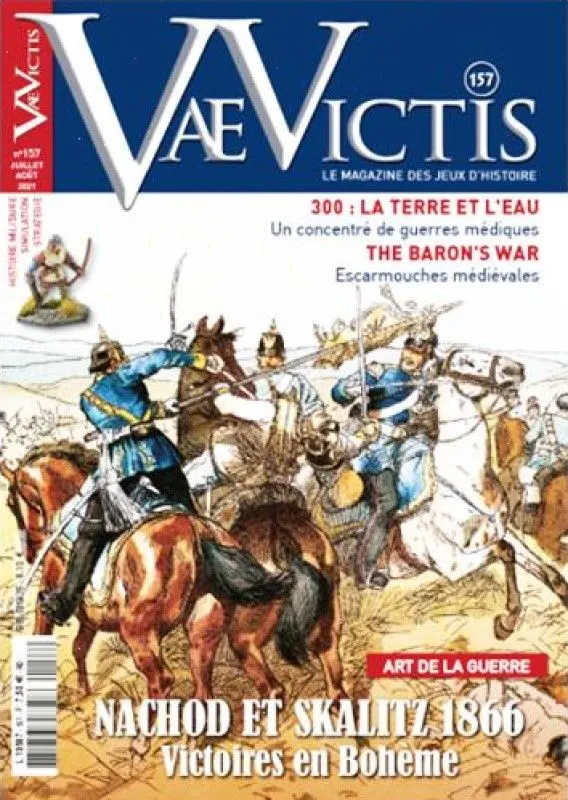
Nachod et Skalitz 1866
- 1–2 graczy
- 120–240 min
- Złożoność 2,7/5
- 2021
2018
Pomoc w zasadach gry Wissembourg & Spicheren 1870
Zrozumiałe wyjaśnienia tur, efektów kart i spornych sytuacji z odnośnikami do oficjalnych źródeł i zapisaną historią pytań.
Co chcesz wiedzieć?
Odpowiedzi pochodzą z oficjalnej instrukcji, ze stroną do sprawdzenia.
Wissembourg & Spicheren 1870 to gra planszowa wydana w 2018 roku dla 1–2 graczy, z rozgrywką trwającą 90–270 minut i dla osób od 12 lat. Projekt gry: Luc Olivier i Arnold Giraud-Moser. Główne mechaniki: Dice Rolling, Grid Movement i Hexagon Grid.
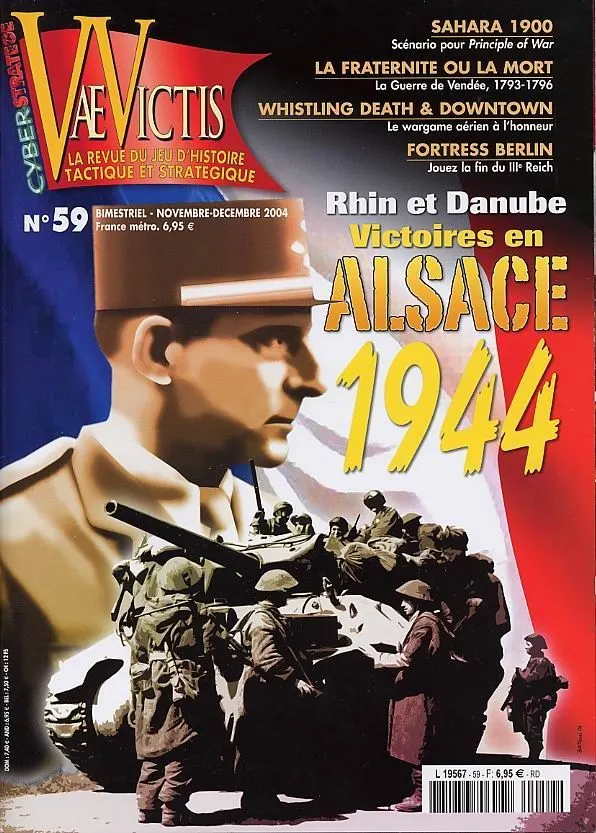
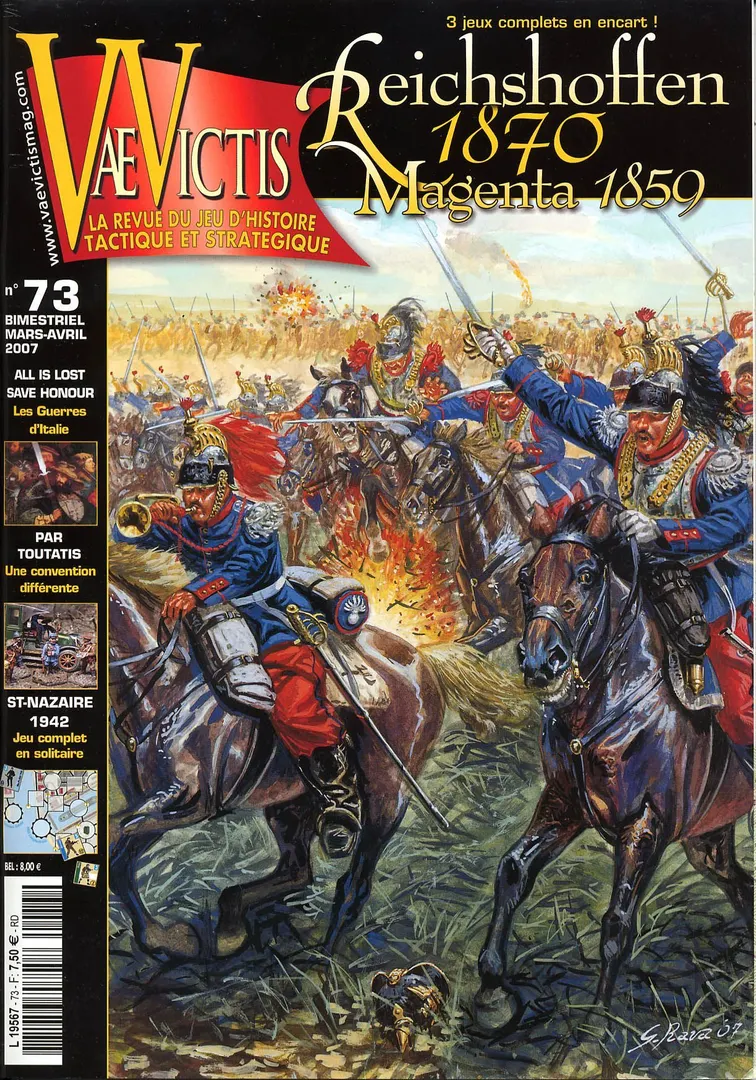


Po angielsku
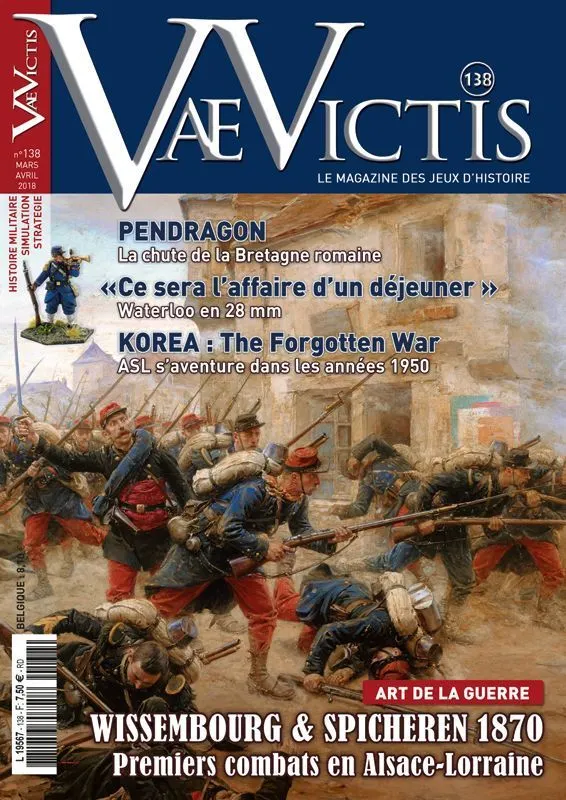
Wissembourg et Spicheren 1870: Premiers combats en Alsace-Lorraine (First battles in Alsace-Lorraine) is a wargame published in "Vae Victis" issue #138 which simulate two battles from the beginning of the 1870 French-Prussian War: the Battle of Wissembourg (or Battle of Weissenburg), on 4 August 1870, was the first of the Franco-Prussian War and the first French defeat of 1870. It opposed three German army corps (one Bavarian and two Prussian) and the small French garrison under General Douay at Wissembourg. Douay's division held the town and the heights of Geisberg until early afternoon before yielding to the mass. the Battle of Spicheren (also known as the Battle of Forbach), on 5 August 1870, was the second of three critical French defeats. The third was The Battle of Wörth (also known as Fröschwiller or Reichshoffen). The French II Corps under General Frossard had a good position, a fortified line between Spicheren and Forbach, and tried to block the Prussian troops under General Karl Friedrich von Steinmetz. Their retreat was ill-prepared and caused the rest of the Lorraine army to retreat to the walls of Metz. (sources : rulebook and description from the Publisher)
Według katalogu Wissembourg & Spicheren 1870 obsługuje od 1 do 2 graczy. Ten zakres odpowiada liczbie graczy podanej przez wydawcę, więc grę można przygotować dla dowolnej grupy w jego granicach. Przygotowanie, niektóre zasady i punktacja mogą jednak różnić się w zależności od liczby graczy; dokładną konfigurację sprawdź w instrukcji swojego wydania.
Podany czas rozgrywki w Wissembourg & Spicheren 1870 wynosi 90–270 minut. To szacunek wydawcy dla pełnej partii. Rzeczywisty czas zależy od grupy, liczby graczy i znajomości zasad: pierwsze partie zwykle trwają dłużej, a doświadczone grupy kończą szybciej. Przygotowanie gry i tłumaczenie zasad nie są wliczone w ten szacunek.
Katalog podaje dla Wissembourg & Spicheren 1870 wiek od 12 lat. To zalecenie wydawcy, które uwzględnia wymagania dotyczące czytania, złożoność zasad i drobne elementy, a nie tylko tematykę. Młodsi gracze często mogą dołączyć z pomocą dorosłego; sprawdź zalecenie wiekowe swojego wydania i weź pod uwagę doświadczenie grupy z grami planszowymi.
Wissembourg & Spicheren 1870 ma ocenę złożoności 3,0 na 5 według graczy BoardGameGeek, co czyni ją grą średnio złożoną. Ocena pokazuje, ile znajomości zasad, planowania i podejmowania decyzji wymaga typowa rozgrywka. Cięższe gry wymagają dłuższego pierwszego tłumaczenia, dlatego przed wieczorem z grami warto skorzystać z przewodnika przygotowania.
Wissembourg & Spicheren 1870 należy do tych kategorii: Wargame i Post-Napoleonic. Główne mechaniki to Dice Rolling, Grid Movement i Hexagon Grid. Kategorie opisują temat i świat gry, a mechaniki to, co gracze faktycznie robią w swojej turze. Każda mechanika prowadzi do strony katalogu z podobnymi grami, co pomaga znaleźć coś porównywalnego na kolejny wieczór.
Autorzy wymienieni przy Wissembourg & Spicheren 1870 to: Luc Olivier i Arnold Giraud-Moser. Te informacje pochodzą z opublikowanych danych gry i wskazują osoby odpowiedzialne za jej projekt, a nie ilustratorów czy wydawców. Strony autorów w MeepleRules zbierają inne tytuły tych samych twórców, co pomaga, gdy gra ci się podoba i szukasz podobnych.
W katalogu Wissembourg & Spicheren 1870 figuruje jako gra podstawowa. Można w nią grać samodzielnie, korzystając z elementów z pudełka, bez żadnego innego tytułu. Dodatki, jeśli istnieją, dokładają nową zawartość lub zasady i są wymienione w katalogu osobno, z odnośnikiem do tej gry podstawowej.