
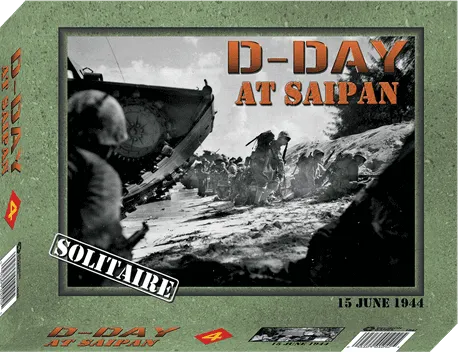
- BGG-Rang
- BGG #22.330
- BGG-Bewertung
- 6,5
D-Day at Saipan
- 1 Spieler
- Komplexität 3,8/5
- 2022
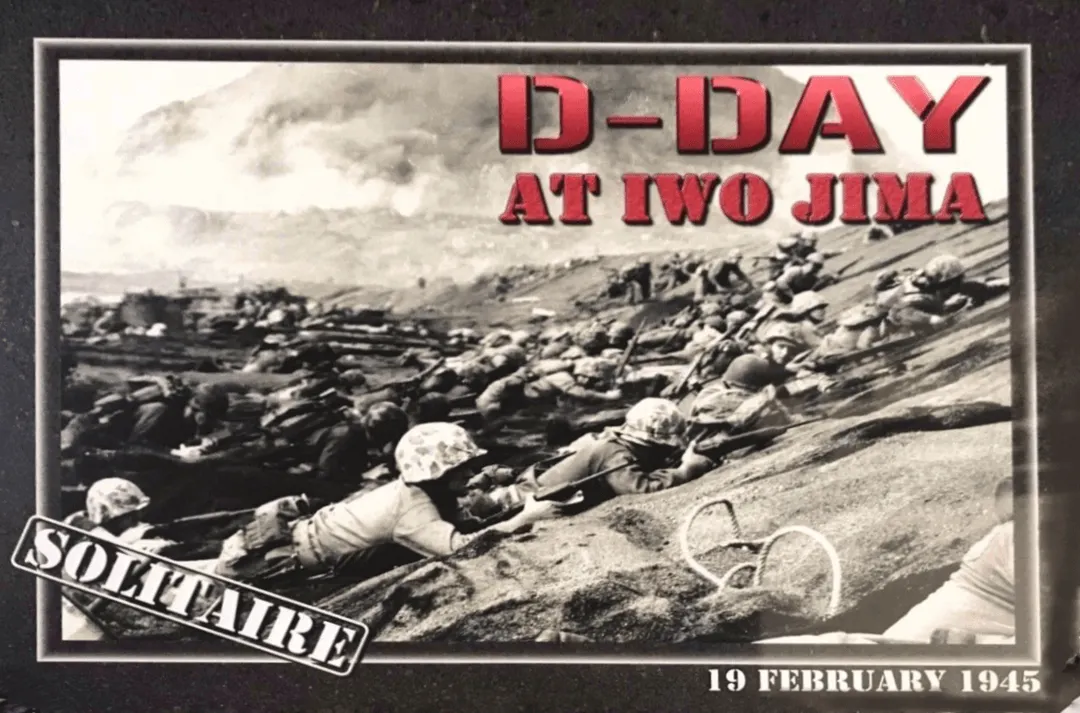
2018
Regelhilfe für D-Day at Iwo Jima
Verständliche Erklärungen zu Spielzügen, Karteneffekten und strittigen Situationen mit Verweisen auf offizielle Quellen und gespeichertem Fragenverlauf.

Was möchtest du wissen?
Antworten stammen aus dem offiziellen Regelheft, mit Seitenangabe zum Nachprüfen.
D-Day at Iwo Jima ist ein Brettspiel aus dem Jahr 2018 für 1–2 Personen und mit 90–360 Minuten pro Partie. Entwickelt wurde es von Joe Youst; die wichtigsten Mechaniken sind Dice Rolling, Grid Movement und Hexagon Grid.





Auf Englisch
Description from the publisher: D-Day at Iwo Jima is a Solitaire wargame simulating the amphibious invasion of Iwo Jima. The five-week battle was some of the bloodiest fighting in the Pacific. In one of the costliest intelligence failures of the war, the planners had completely misjudged the situation that would face the Marines. The beaches had been described as excellent and the advance inland was expected to be easy. Instead, the Marines were faced with 15-foot-high slopes of soft black volcanic ash that brought the normally rapidly moving Marines down to a slow plod. In addition, the lack of a vigorous response led the Marines to believe that the bombardment had completely suppressed the defenses. However, Gen. Kuribayashi was far from beaten. Understanding that his forces were insufficient to defeat the massive American invasion force, he had decided to defend the island in-depth. In D-Day at Iwo Jima, designer Joe Youst builds on John Butterfield’s award winning solitaire game system. The player controls three US Marine divisions against a determined Japanese defense. The no-dice combat system highlights the unknown enemy deployments and coordination of the right weapon systems and tactics. Players familiar with the previous three games in the system will be able to quickly set up and play this latest version. New features include a random fortification generation system that simulates the ability of the Japanese forces to “re-fortify” supposedly weakened positions and an updated infiltration system that encourages the player to maintain a continuous line. Scenarios: D-Day (19 February) – Covers the first day in six turns. Surabachi (20 to 24 February) – The 28th Marine Regiment’s capture of Surabachi. Drive to the North (20 to 24 February) – The attack on Airfield One and advance by the 4th and 5th Marine Divisions. Hot Rocks (25 February to 4 March) – The attack to clear the Motoyama Plateau. Drive to the Sea (6 to 10 March) – The final attack on the plateau and the end of organized Japanese resistance. Sands of Iwo Jima Campaign (19 February to 11 March) – The campaign combines all aspects of the previous scenarios into one look at the entire campaign. Game Contents: 528 Die-cut counters One 34” x 22” Mounted Game Board One 11” x 17” Set-Up Map Player Aid Cards Color Rules booklet Color Campaign Analysis 55 Event cards
Laut Katalog unterstützt D-Day at Iwo Jima 1–2 Personen. Diese Spanne entspricht der vom Verlag angegebenen Spielerzahl, das Spiel lässt sich also für jede Gruppengröße innerhalb dieser Spanne aufbauen. Aufbau, einzelne Regeln und Wertungsdetails können je nach Personenzahl trotzdem abweichen; prüfe daher die genaue Konfiguration in der Anleitung deiner Ausgabe.
Die angegebene Spieldauer für D-Day at Iwo Jima beträgt 90–360 Minuten. Das ist die Schätzung des Verlags für eine vollständige Partie. Die tatsächliche Dauer hängt von der Gruppe, der Personenzahl und der Regelkenntnis ab: Erste Partien dauern meist länger, erfahrene Gruppen sind oft schneller fertig. Aufbau und Regelerklärung sind in dieser Schätzung nicht enthalten.
D-Day at Iwo Jima hat bei BoardGameGeek eine Komplexitätswertung von 4,3 von 5 und gilt damit als schweres Spiel. Die Wertung zeigt, wie viel Regelwissen, Planung und Entscheidungen eine typische Partie verlangt. Schwerere Spiele brauchen bei der ersten Erklärung mehr Zeit, daher hilft vor dem Spieleabend eine Vorbereitungsanleitung.
D-Day at Iwo Jima gehört zu diesen Kategorien: Wargame und World War II. Die wichtigsten Mechaniken sind Dice Rolling, Grid Movement und Hexagon Grid. Kategorien beschreiben Thema und Setting eines Spiels, Mechaniken dagegen, was die Spielenden in ihrem Zug tatsächlich tun. Jede Mechanik führt zu einer Katalogseite mit ähnlichen Spielen, falls du etwas Vergleichbares suchst.
Als Autoren von D-Day at Iwo Jima sind angegeben: Joe Youst. Diese Angaben stammen aus den veröffentlichten Spieldaten und nennen die für das Spieldesign verantwortlichen Personen, nicht die Illustratoren oder Verlage. Die Autorenseiten auf MeepleRules sammeln weitere Titel derselben Autoren – praktisch, wenn dir ein Spiel gefällt und du ähnliche Spiele suchst.
Im Katalog ist D-Day at Iwo Jima als Grundspiel aufgeführt. Es lässt sich eigenständig mit dem Material aus der Schachtel spielen und benötigt keinen weiteren Titel. Erweiterungen, sofern es welche gibt, ergänzen neues Material oder neue Regeln und sind im Katalog separat mit einem Verweis auf dieses Grundspiel aufgeführt.