
- BGG-Rang
- BGG #6.543
- BGG-Bewertung
- 7,5
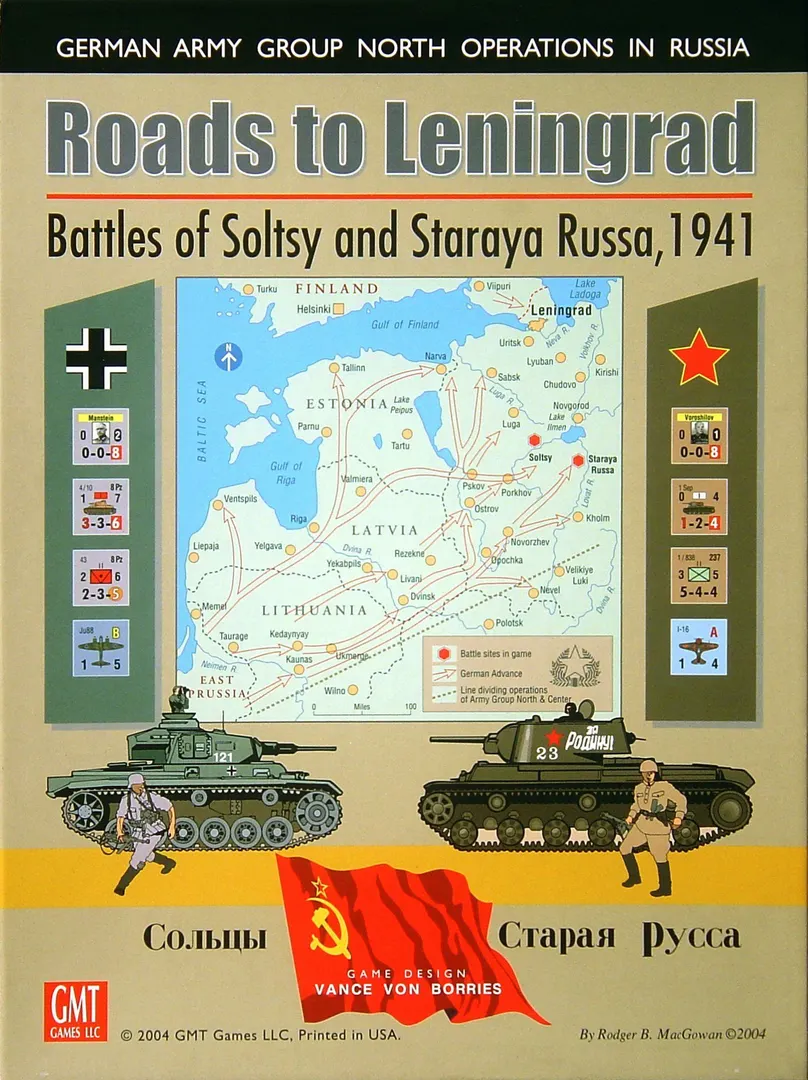
Roads to Leningrad: Battles of Soltsy and Staraya Russa, 1941
- 1–2 Spieler
- Komplexität 3,4/5
- 2004
2024
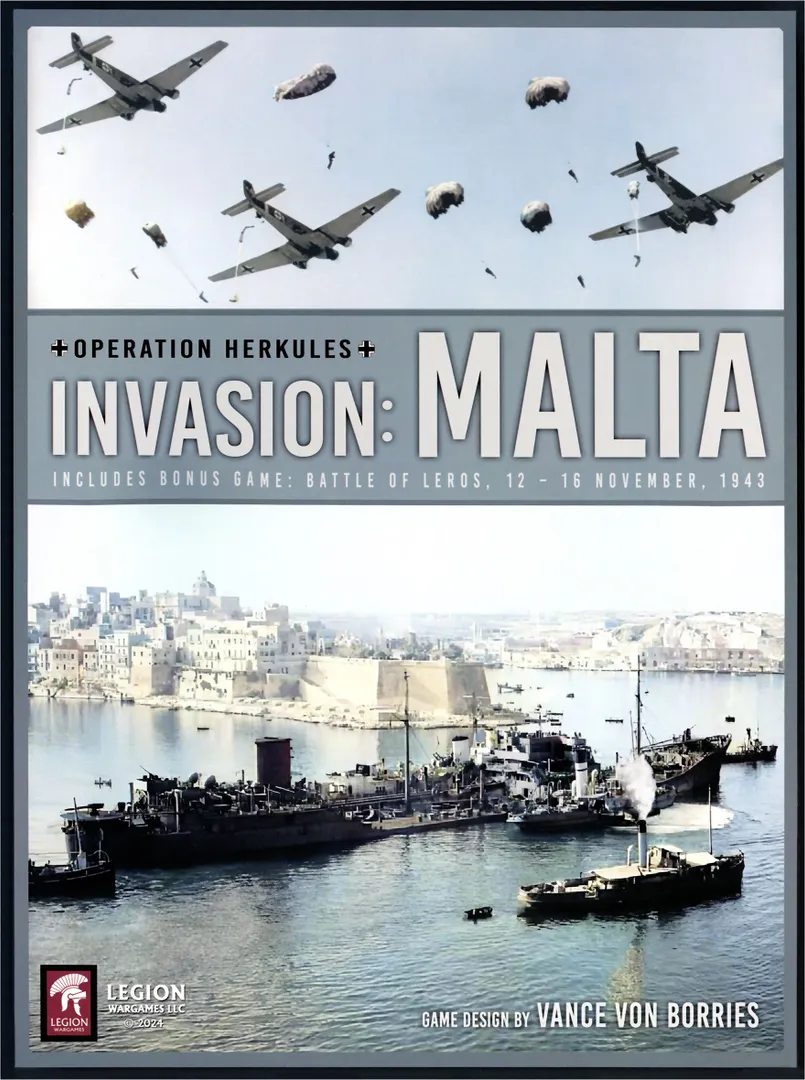
Regelhilfe für Invasion: Malta
Verständliche Erklärungen zu Spielzügen, Karteneffekten und strittigen Situationen mit Verweisen auf offizielle Quellen und gespeichertem Fragenverlauf.
Für 2 Personen
Was möchtest du wissen?
Antworten stammen aus dem offiziellen Regelheft, mit Seitenangabe zum Nachprüfen.
Invasion: Malta ist ein Brettspiel aus dem Jahr 2024 für 2 Personen. Entwickelt wurde es von Vance von Borries; die wichtigsten Mechaniken sind Dice Rolling, Hexagon Grid und Chit-Pull System.
Auf Englisch
Invasion: Malta uses many familiar game mechanics found in similar scale wargames. Featured here are chit draws for activation of formations and individual unit efficiency ratings. The Axis player uses amphibious landings and airdrops to bring his units into the battle while the Allied player defends with artillery bombardment from behind heavy fortifications. As you might expect, the game includes the highest quality OoB for both sides for each scenarios; we really dug into various national archives for this game. All scenarios stop after only a few days of campaigning as it is during this time that the battle would be decided. Our hobby has perhaps a unique ability to explore the great questions of events in history. Here, what if during WWII the Axis actually invaded Malta. Who would win? The answer turns on many additional questions and circumstances. This two-player game explores several of these in three scenarios plus the bonus game covering the historical invasion of Leros. Fall 1940: The Italians had big talk and many objectives during the war but not enough realistic plans. Perhaps the best time for their invasion would be in the fall, and perhaps timed along with the German invasion of Britain; or, if the Germans do not invade, then perhaps in place of the actual Italian invasion of Greece. Operational plans for Malta were poor but British defenses are weak. Perhaps the Italians could catch the British not reacting in time. Spring 1941: In April 1941 the Axis had a choice, either occupy Crete or attack Malta. On April 21st Gen. Student, chief of the paratroopers, overcame opposition from the Wehrmacht Operations Staff, and others, in Berlin and persuaded Hitler to attack Crete. But, what if Hitler accepted the alternative recommendation to attack Malta? The Germans and Italians would now have to prepare for a combined operation, air, land, and sea, and do this quickly. The forces arrayed against Malta would have been huge, but the British were far better prepared than a year before and well fortified. The bloody issue would have been in doubt from the start. Summer 1942: After a over year of preparation and study and agreement on the need to invade, the combined German and Italian staffs had put together an extensive and complex plan for invasion. Its success depended on many factors and lessons had been learned from the battle for Crete the year before had been put into effect. All was as ready as it could be, yet they did not invade. The British were stronger in numbers and weapons but their efficiency was down due to the long siege. Was it just Hitler’s nervousness about such an unusual Axis operation, or was it the allure of bigger victories elsewhere? November 1943, Leros: The possibility of invading Malta had passed but the British had put themselves out on a small island in the Aegean, Leros. Incredibly, a large part of the British garrison consisted of the former Malta garrison, now well rested. In effect, it was a miniature Malta. This time the Germans did not hesitate, they invaded by sea and air. This tough little infantry fight shows just what grit was involved and how the experience of fighting on Malta would have been. The British lost, but the battle was close. All the flavor of the Malta battle is here but at only one-third of the size. TIME SCALE: 8 hours per turn (each day has AM-PM-Night turns) MAP SCALE: 600 yards per hex (0.54 km) UNIT SCALE: Companies and a few platoons (from publisher's website and BGG user)
Laut Katalog unterstützt Invasion: Malta 2 Personen. Das ist die vom Verlag angegebene Spielerzahl, das Spiel ist also genau für diese Anzahl von Mitspielenden ausgelegt. Varianten für andere Gruppengrößen sind, sofern vorhanden, in der Anleitung deiner Ausgabe beschrieben; prüfe sie, bevor du eine andere Konfiguration aufbaust.
Invasion: Malta hat bei BoardGameGeek eine Komplexitätswertung von 2,8 von 5 und gilt damit als eher leichtes Spiel. Die Wertung zeigt, wie viel Regelwissen, Planung und Entscheidungen eine typische Partie verlangt. Schwerere Spiele brauchen bei der ersten Erklärung mehr Zeit, daher hilft vor dem Spieleabend eine Vorbereitungsanleitung.
Invasion: Malta gehört zu diesen Kategorien: Wargame und World War II. Die wichtigsten Mechaniken sind Dice Rolling, Hexagon Grid und Chit-Pull System. Kategorien beschreiben Thema und Setting eines Spiels, Mechaniken dagegen, was die Spielenden in ihrem Zug tatsächlich tun. Jede Mechanik führt zu einer Katalogseite mit ähnlichen Spielen, falls du etwas Vergleichbares suchst.
Als Autoren von Invasion: Malta sind angegeben: Vance von Borries. Diese Angaben stammen aus den veröffentlichten Spieldaten und nennen die für das Spieldesign verantwortlichen Personen, nicht die Illustratoren oder Verlage. Die Autorenseiten auf MeepleRules sammeln weitere Titel derselben Autoren – praktisch, wenn dir ein Spiel gefällt und du ähnliche Spiele suchst.
Im Katalog ist Invasion: Malta als Grundspiel aufgeführt. Es lässt sich eigenständig mit dem Material aus der Schachtel spielen und benötigt keinen weiteren Titel. Erweiterungen, sofern es welche gibt, ergänzen neues Material oder neue Regeln und sind im Katalog separat mit einem Verweis auf dieses Grundspiel aufgeführt.