

- BGG rank
- BGG #3,965
- BGG rating
- 6.9
A Brief History of the World
- 3–6 players
- 90–180 min
- Complexity 2.9/5
- 2009
1988
Rules assistance for Angola
Plain-language explanations of turns, card effects and disputed situations, with official source references and saved question history.
For 2 players
What would you like to know?
Answers come from the official rulebook, with the page to check.
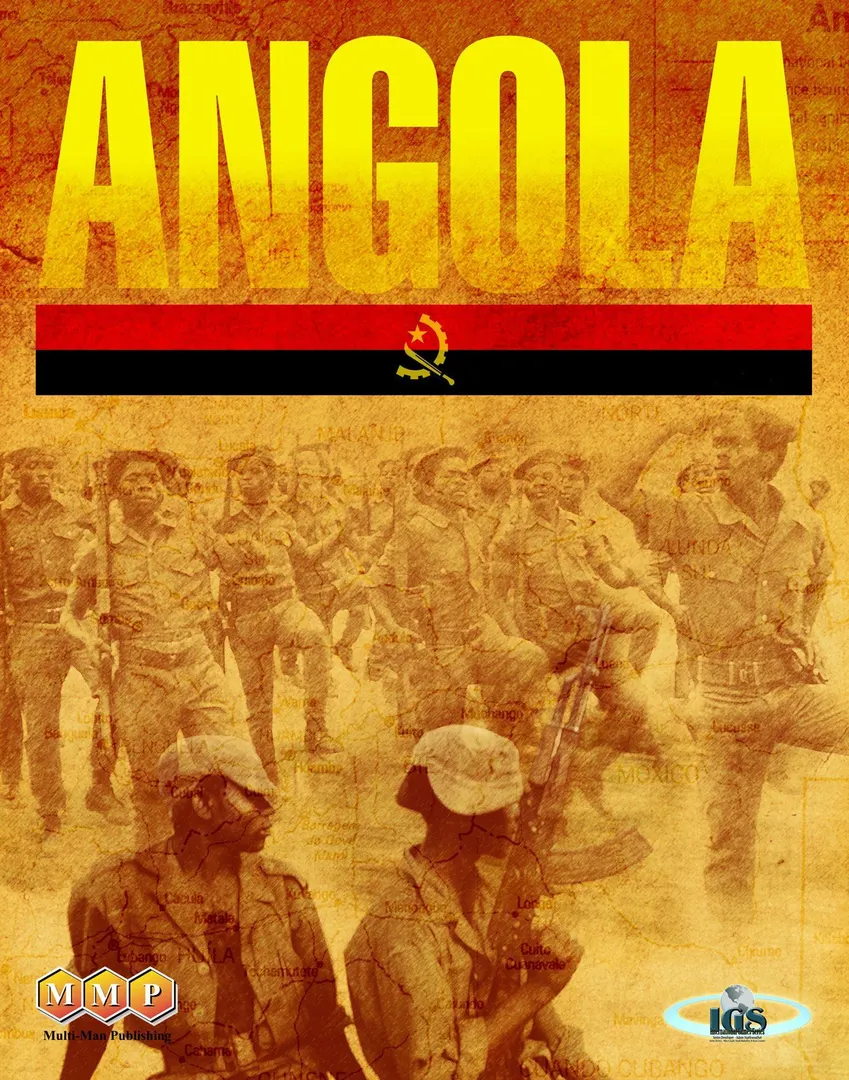
Angola is a board game released in 1988 for 2–4 players and 480 minutes per game. It was designed by Phil Kendall and its main mechanics are Area Majority / Influence, Secret Unit Deployment, and Simulation.



(from MMP's webpage:) Angola recreates a brief portion of the violent, decades-long Angolan civil war that began in the 1970s with the fall of a colonial power and dragged its bloody way into the 21st century thanks in part to cold war politics. Angola is a multi-player game in which players control the various Soviet- and US-backed factions that vied for control of Angola from 1975 to 1976. Originally released in limited quantities by Ragnar Brothers of the UK, Angola quickly became a rare and highly sought after game of almost cult status. Why? Angola features a number of innovative game systems that keep players guessing, create plenty of tension, and reward the right balance of boldness and caution. MMP is now updating this classic with the fabulous graphics of the IGS line of games and bringing it to a wider audiences. The map is divided into areas, and units represent military formations and also special weapons, such as artillery, rockets, tanks, and airplanes. A unique command and activation system has players committing in secret to the order in which they will activate a limited number of their units for the turn. The players then take turns activating their units in the determined order. The result is like a tense game of poker, with players trying to analyze the map and out guess their enemies. The game is finely balanced, and all players frequently feel as if they are simultaneously on the verge of victory or defeat thanks to an ingenious victory point system that rewards good play for both sides and allows players to absorb reversals and strike back with the right countermove. Angola contains: 2 decks of cards (110 total) 32 page full-color rulebook 2 player aid cards 22" by 34" inch map 3 countersheets 4 six-sided dice Developer: Adam Starkweather
Angola supports 2–4 players according to the catalogue. This range comes from the publisher’s listed player count, so the game can be set up for any group size within it. Some setups, rules and scoring details may still vary by player count, so check your edition’s rulebook for the exact configuration.
The listed playing time for Angola is 480 minutes. This is the publisher’s estimate for a full game. The actual duration depends on the group, the player count and familiarity with the rules: first sessions usually run longer, while experienced groups often finish faster. Setup and teaching time are not included in this estimate.
Angola has a complexity rating of 3.2 out of 5 from BoardGameGeek players, which makes it a medium-weight game. The rating reflects how much rules knowledge, planning and decision-making a typical game demands. Expect a longer first teach for heavier games, and use a preparation guide before game night.
Angola belongs to these categories: Wargame, Modern Warfare, and Civil War. Its main mechanics are Area Majority / Influence, Secret Unit Deployment, and Simulation. Categories describe the theme and setting of a game, while mechanics describe what players actually do on their turns. Each mechanic links to a catalogue hub with similar games, which helps when you want something comparable.
The credited designers of Angola are: Phil Kendall. These credits come from the published game data and name the people responsible for the game’s design, not its illustrators or publishers. Designer pages on MeepleRules collect other titles by the same designers, which helps when you enjoy a game and want to find similar ones.
The catalogue lists Angola as a base game. It can be played on its own with the components in the box and does not require any other title. Expansions, if any exist, add new content or rules on top of it and are listed separately in the catalogue with a link back to this base game.