- BGG rating
- 8.1
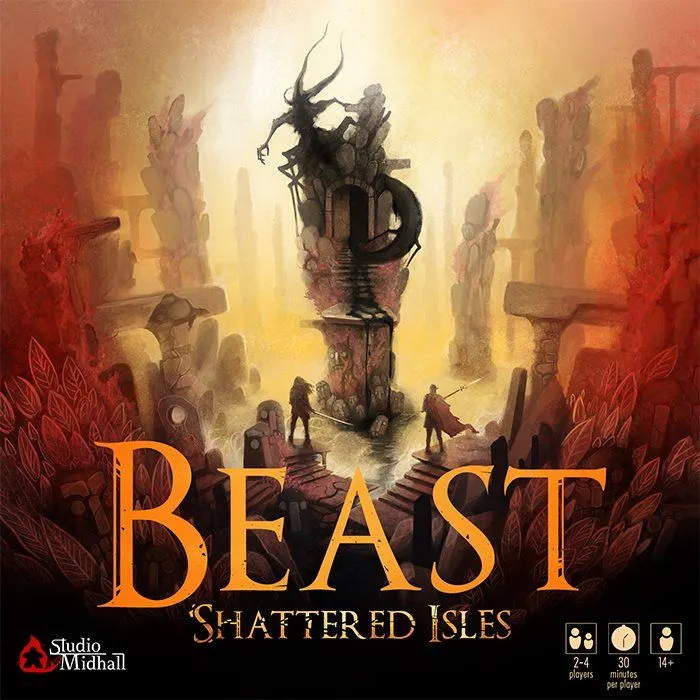
Beast: Shattered Isles
- 2–5 players
- 60–120 min
- Complexity 3.4/5
- 2025
2023
Rules assistance for Beast
Plain-language explanations of turns, card effects and disputed situations, with official source references and saved question history.
For 2 players
What would you like to know?
Answers come from the official rulebook, with the page to check.
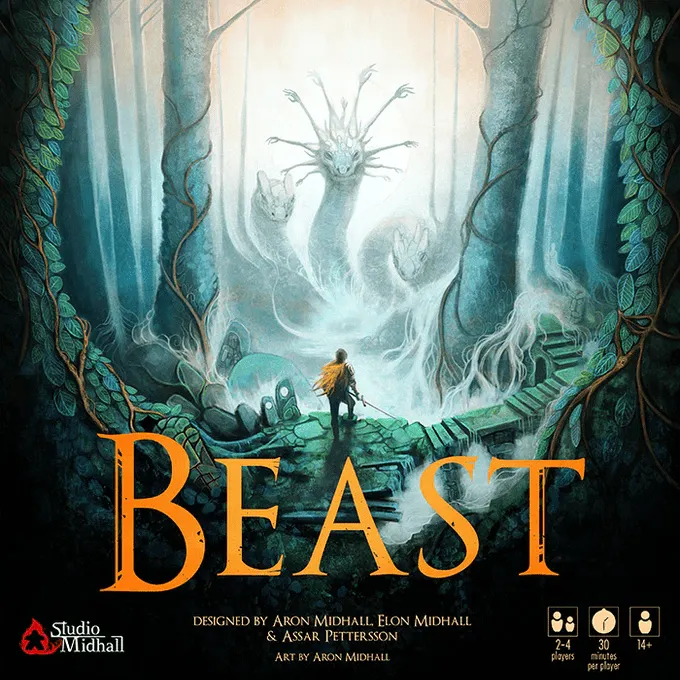
Beast is a board game released in 2023 for 2–4 players, 60–120 minutes per game, and ages 14 and up. It was designed by Aron Midhall, Elon Midhall, and Assar Pettersson and its main mechanics are Variable Player Powers, Hand Management, and Point to Point Movement.





Welcome to the Northern Expanse, a place where nature is still unexplored, mystical and dangerous. When the humans first arrived, they thought they found an unspoiled paradise, filled with bountiful forests, lakes swimming with fish and cold freshwater flowing from the mountains. But as their settlements expanded and the surrounding forests grew thinner, nature itself pushed back. Great creatures known as Beasts emerged, and with their fangs, claws and mystical powers, they proved an incredible threat to the humans. In order to protect the settlements, humans enlisted specialised hunters, tasked with tracking and killing the Beasts before too many of their kin perish. The Beast uses a deck of direction cards to move over forests, swamps and caverns, using guile and deceit to hide its track from the hunters. However, whenever a hunter moves over a location where the Beast has previously been, a trail appears. Only when a hunter searches a location or the Beast itself attacks an unsuspecting target is the Beast's actual position revealed. More so, each hunter has but one chance of searching each round, making it a tense and difficult decision. Hunters seldom have full information whether the trail they’re pursuing contains the Beast’s actual location, or if the trail has already gone cold. Each action you perform in this game is done by playing a card from your hand (up to a maximum of two cards per turn). This means that if a player wants to search, attack or move, they need to have a card in their hand that lets them do that. Before each round, both hunters and Beast participate in a draft for the most important cards. All action cards can be used by both Beast and hunters alike. In order to win this game, you either need to cooperate every step of the way if you play as a hunter, or skillfully outmaneuver your opponents if you play as Beast. On their own, hunters are never stronger than the Beast. Only when hunters communicate, strategize and combine their actions can they bring down the Beast before it’s too late. —description from the designer
Beast supports 2–4 players according to the catalogue. This range comes from the publisher’s listed player count, so the game can be set up for any group size within it. Some setups, rules and scoring details may still vary by player count, so check your edition’s rulebook for the exact configuration.
The listed playing time for Beast is 60–120 minutes. This is the publisher’s estimate for a full game. The actual duration depends on the group, the player count and familiarity with the rules: first sessions usually run longer, while experienced groups often finish faster. Setup and teaching time are not included in this estimate.
The catalogue lists Beast for ages 14 and up. This is the publisher’s recommendation and reflects reading demands, rule complexity and small components rather than theme alone. Younger players can often join with help from an adult, so check the age guidance on your edition and consider your group’s experience with board games.
Beast has a complexity rating of 3.1 out of 5 from BoardGameGeek players, which makes it a medium-weight game. The rating reflects how much rules knowledge, planning and decision-making a typical game demands. Expect a longer first teach for heavier games, and use a preparation guide before game night.
Beast belongs to these categories: Fantasy, Fighting, and Deduction. Its main mechanics are Variable Player Powers, Hand Management, and Point to Point Movement. Categories describe the theme and setting of a game, while mechanics describe what players actually do on their turns. Each mechanic links to a catalogue hub with similar games, which helps when you want something comparable.
The credited designers of Beast are: Aron Midhall, Elon Midhall, and Assar Pettersson. These credits come from the published game data and name the people responsible for the game’s design, not its illustrators or publishers. Designer pages on MeepleRules collect other titles by the same designers, which helps when you enjoy a game and want to find similar ones.
The catalogue lists Beast as a base game. It can be played on its own with the components in the box and does not require any other title. Expansions, if any exist, add new content or rules on top of it and are listed separately in the catalogue with a link back to this base game.