- BGG rating
- 8.2
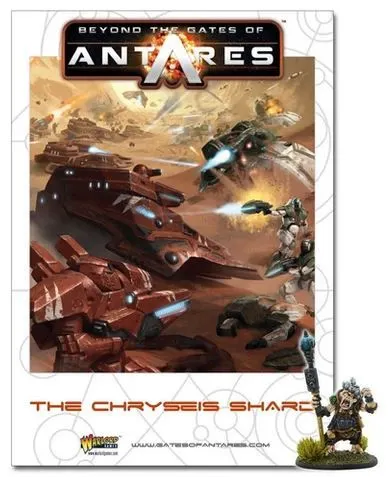
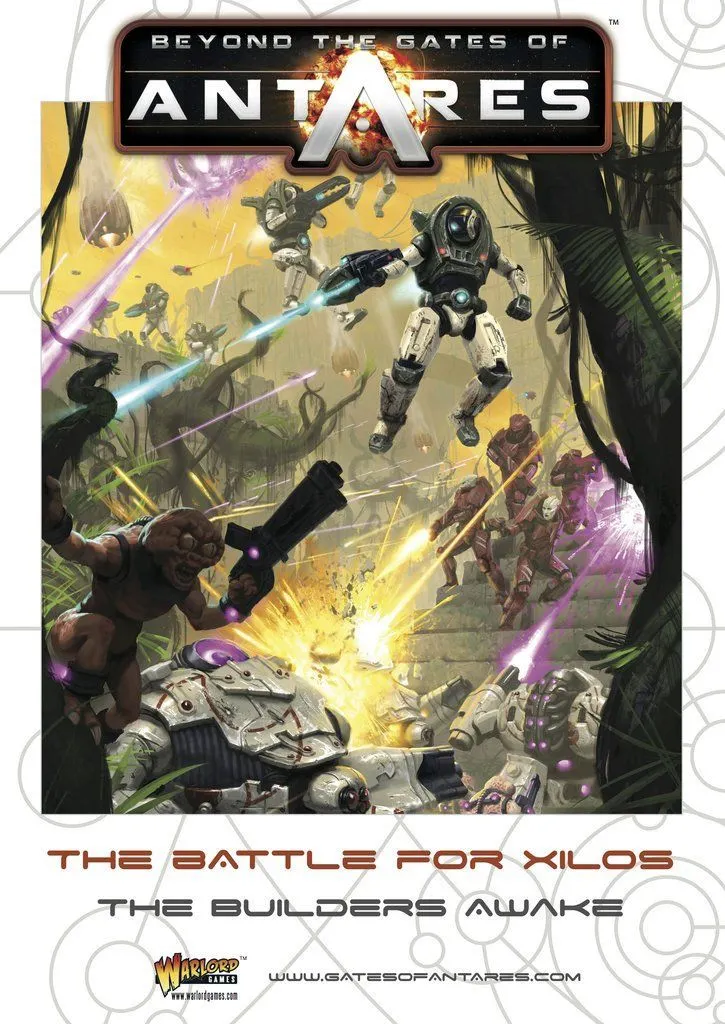
Beyond the Gates of Antares: The Battle for Xilos
- 2 players
- 2016
2014
Rules assistance for Beyond the Gates of Antares
Plain-language explanations of turns, card effects and disputed situations, with official source references and saved question history.
For 2 players
What would you like to know?
Answers come from the official rulebook, with the page to check.
Beyond the Gates of Antares is a board game released in 2014 for 2–6 players and 90–180 minutes per game. It was designed by Rick Priestley and its main mechanics are Variable Player Powers, Dice Rolling, and Simulation.



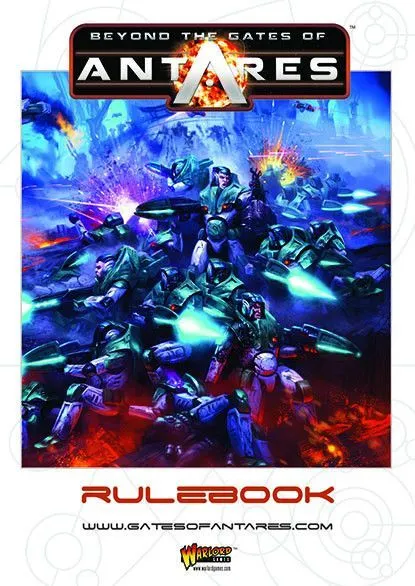
Beyond the Gates of Antares invites us to a time when mankind has evolved into new and diverse species: the strangely powerful NuHumans, masters of the Panhuman Concord; the ape-like Pansimians, the greatest warriors in the whole Galactic Spill; and feral Revers primitive Humans driven by a irrepressible lust for adventure and danger. It is a universe where technology and humanity intermix indistinguishably, where human knowledge and endeavour has long since been supplanted by integrated machine intelligence IMTel. Where humans go their technology goes also, protectors, workers, and fighting machines in the form of WarDrones armed with deadly weapons and shielded by energy fields a thousand times more resilient than steel. Beyond the Gates of Antares is a wargame designed anew for the twenty-first century – a fresh look at the raw mechanics of tabletop wargaming featuring a fluid combat status system and interleaved turn sequence that facilitates continuous play for both sides. Rival forces act and react in a series of triggered actions that quickly draw both sides into simultaneous fire fights and close quarter fighting. The mechanics are designed to enable rapid progress using forces of around fifty or so models a side, including futuristic fighting machines, vehicles and point-defence weaponry as well as human troopers – the game is infinitely scalable to facilitate battles as large as can possibly be imagined and is detailed enough to facilitate skirmish gameplay, too. Game Features Fluid Combat Status – units act and react according to their combat status. Real-time Dynamic Gaming Universe – build and benefit from the evolution of the game background as you play. Backer Development Program – backers can participate in the development and creation of the game rules, universe and campaigns. Decimal Mechanics - based on D10 and D100's allowing the same stats to be used for battle games, skirmishes and role-playing games as we expand the scope of our game for years to come.
Beyond the Gates of Antares supports 2–6 players according to the catalogue. This range comes from the publisher’s listed player count, so the game can be set up for any group size within it. Some setups, rules and scoring details may still vary by player count, so check your edition’s rulebook for the exact configuration.
The listed playing time for Beyond the Gates of Antares is 90–180 minutes. This is the publisher’s estimate for a full game. The actual duration depends on the group, the player count and familiarity with the rules: first sessions usually run longer, while experienced groups often finish faster. Setup and teaching time are not included in this estimate.
Beyond the Gates of Antares has a complexity rating of 3.0 out of 5 from BoardGameGeek players, which makes it a medium-weight game. The rating reflects how much rules knowledge, planning and decision-making a typical game demands. Expect a longer first teach for heavier games, and use a preparation guide before game night.
Beyond the Gates of Antares belongs to these categories: Wargame, Miniatures, and Science Fiction. Its main mechanics are Variable Player Powers, Dice Rolling, and Simulation. Categories describe the theme and setting of a game, while mechanics describe what players actually do on their turns. Each mechanic links to a catalogue hub with similar games, which helps when you want something comparable.
The credited designers of Beyond the Gates of Antares are: Rick Priestley. These credits come from the published game data and name the people responsible for the game’s design, not its illustrators or publishers. Designer pages on MeepleRules collect other titles by the same designers, which helps when you enjoy a game and want to find similar ones.
The catalogue lists Beyond the Gates of Antares as a base game. It can be played on its own with the components in the box and does not require any other title. Expansions, if any exist, add new content or rules on top of it and are listed separately in the catalogue with a link back to this base game.