
- BGG rank
- BGG #9,223
- BGG rating
- 6.3
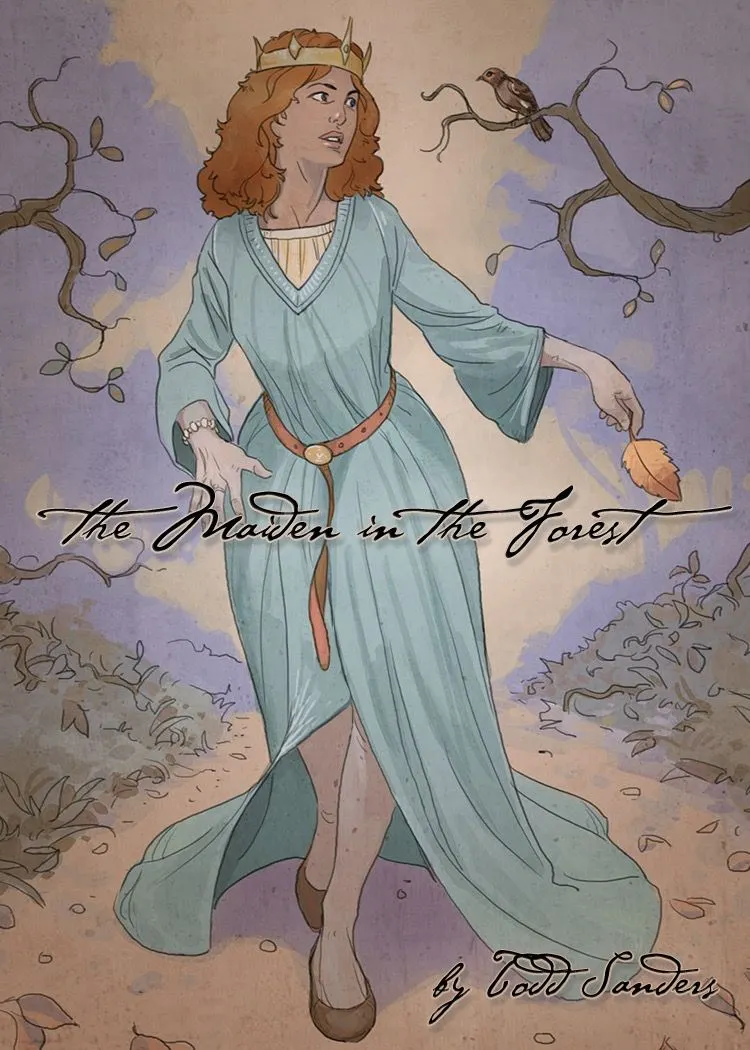
The Maiden in the Forest
- 1 player
- 15 min
- Complexity 1.7/5
- 2015
2011
Rules assistance for Bibliogamo
Plain-language explanations of turns, card effects and disputed situations, with official source references and saved question history.
For 1 player
What would you like to know?
Answers come from the official rulebook, with the page to check.
Bibliogamo is a board game released in 2011 for 1 player, 20 minutes per game, and ages 10 and up. It was designed by Todd Sanders and its main mechanics are Hand Management, Set Collection, and Area Majority / Influence.

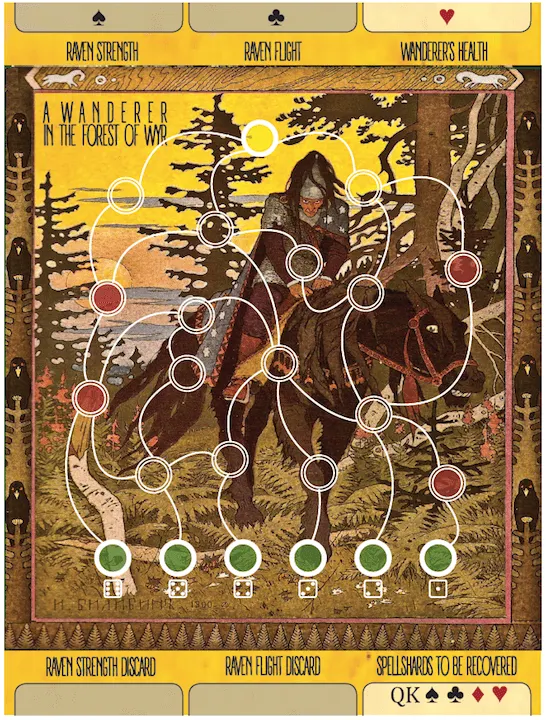





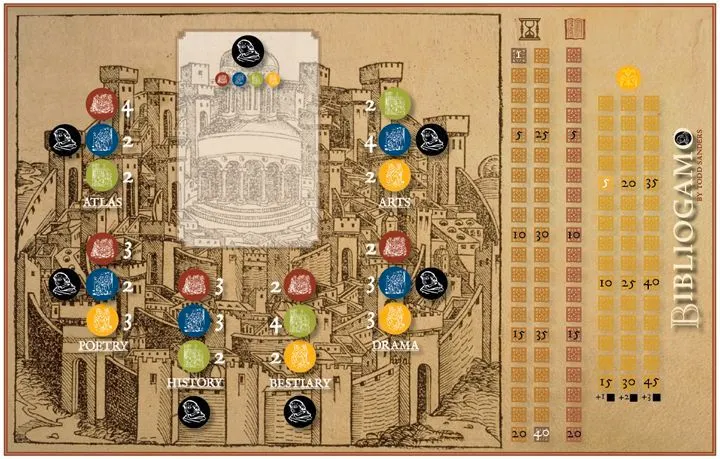
Bibliogamo is a solitaire game of book production and libraries. In this game you will play the role of a publisher in the city of Bibliogamo. Using cards to hire artisans, you will put them to work in six city tower workshops, each devoted to a different kind of book. The Chief Librarian of the City will, in turn, tour the city buying books at what he considers their proper value. Prestige Collection cards generate victory points depending on how well you can fulfill the requirements of the Chief Librarian’s collection. Needed to play: the game board showing the city of Bibliogamo, the 47 Artisan cards, the 7 Prestige Collection cards, 26 black eurocubes representing your Artisans, and 16 red eurocubes to act as track markers in the game. Additionally you’ll need one pawn to represent the Librarian. Win: The game is over when the Time Track eurocube reaches [40] and you complete your turn. For each book you produce, you gain 1VP. For each 5 Florins you have, you gain 1 VP. Prestige VP is awarded as indicated on the Prestige Collection card chosen at the start of the game. Your total VP is your score for the game. The Five Turn Phases: 1. Move the time track eurocube forward one day closer to [40]. 2. Move the Librarian Pawn clockwise 3 spaces, then turn over the top Artisan card from the draw pile on to the discard pile and move the Librarian accordingly as indicated by the Librarian icon on the left-hand side of the card. 3. Look at the small Artisan icon below the Librarian icon on this same card. You may not play any card with that Artisan symbol on it this turn unless you discard a card from your hand with a matching small Artisan icon. 4. You may now do any of the following, but in order: a. Pay 1 Florin to move the Librarian forward or backward one space. You may pay 1 Florin for each space you wish to move the Librarian. b. Sell a book, if completed, in the Tower the Librarian is currently standing on. Turn over the next 2 Artisan cards from the draw deck. Place the second card to the right of the first and look at the florin value on the second card as indicated by the Florin icon at on the first card. This is the amount the Librarian is willing to pay for this book. You may pay extra 1 day of time to turn over another card replacing the current Florin amount. You may continue to do this, paying 1 day of time per card turned over, until you are satisfied with the price. Mark this amount on your Florin Track and return all Artisan eurocubes from the completed book to your pool. Then mark the production of a book on your Book track, moving the red eurocube forward one space, and if the book is one of those needed for a Prestige Collection, mark that book on the Prestige Collection card as well with a red eurocube. Note: you may pay extra days of time only if they remain on the Time Track. Lastly, place all drawn cards used to calculate the Florin value on the discard pile. c. Discard one Artisan card from your hand to the discard pile and place that number of black eurocubes on the Artisans indicated by the card, on any one Tower. Then discard one more card from your hand to pay for those Artisans. You may do this action twice if you wish. You do not receive any surplus Artisans from the discarded card. Nor do you receive any surplus Artisans if your tower already has the number required for that Artisan type. The second time you do this action you may add Artisans to the same tower or a different one. 5. Draw back to a hand of 5 cards. If the draw deck is exhausted, shuffle the discard cards for a new draw deck.
Bibliogamo supports 1 player according to the catalogue. This is the publisher’s listed player count, so the game is designed for exactly that number of participants. Variants for other group sizes, if any, are described in the rulebook of your edition, so check it before setting up a different configuration.
The listed playing time for Bibliogamo is 20 minutes. This is the publisher’s estimate for a full game. The actual duration depends on the group, the player count and familiarity with the rules: first sessions usually run longer, while experienced groups often finish faster. Setup and teaching time are not included in this estimate.
The catalogue lists Bibliogamo for ages 10 and up. This is the publisher’s recommendation and reflects reading demands, rule complexity and small components rather than theme alone. Younger players can often join with help from an adult, so check the age guidance on your edition and consider your group’s experience with board games.
Bibliogamo has a complexity rating of 1.3 out of 5 from BoardGameGeek players, which makes it a light game. The rating reflects how much rules knowledge, planning and decision-making a typical game demands. Expect a longer first teach for heavier games, and use a preparation guide before game night.
Bibliogamo belongs to these categories: Print & Play, Medieval, and Renaissance. Its main mechanics are Hand Management, Set Collection, and Area Majority / Influence. Categories describe the theme and setting of a game, while mechanics describe what players actually do on their turns. Each mechanic links to a catalogue hub with similar games, which helps when you want something comparable.
The credited designers of Bibliogamo are: Todd Sanders. These credits come from the published game data and name the people responsible for the game’s design, not its illustrators or publishers. Designer pages on MeepleRules collect other titles by the same designers, which helps when you enjoy a game and want to find similar ones.
The catalogue lists Bibliogamo as a base game. It can be played on its own with the components in the box and does not require any other title. Expansions, if any exist, add new content or rules on top of it and are listed separately in the catalogue with a link back to this base game.