
- BGG rank
- BGG #10,933
- BGG rating
- 7.3
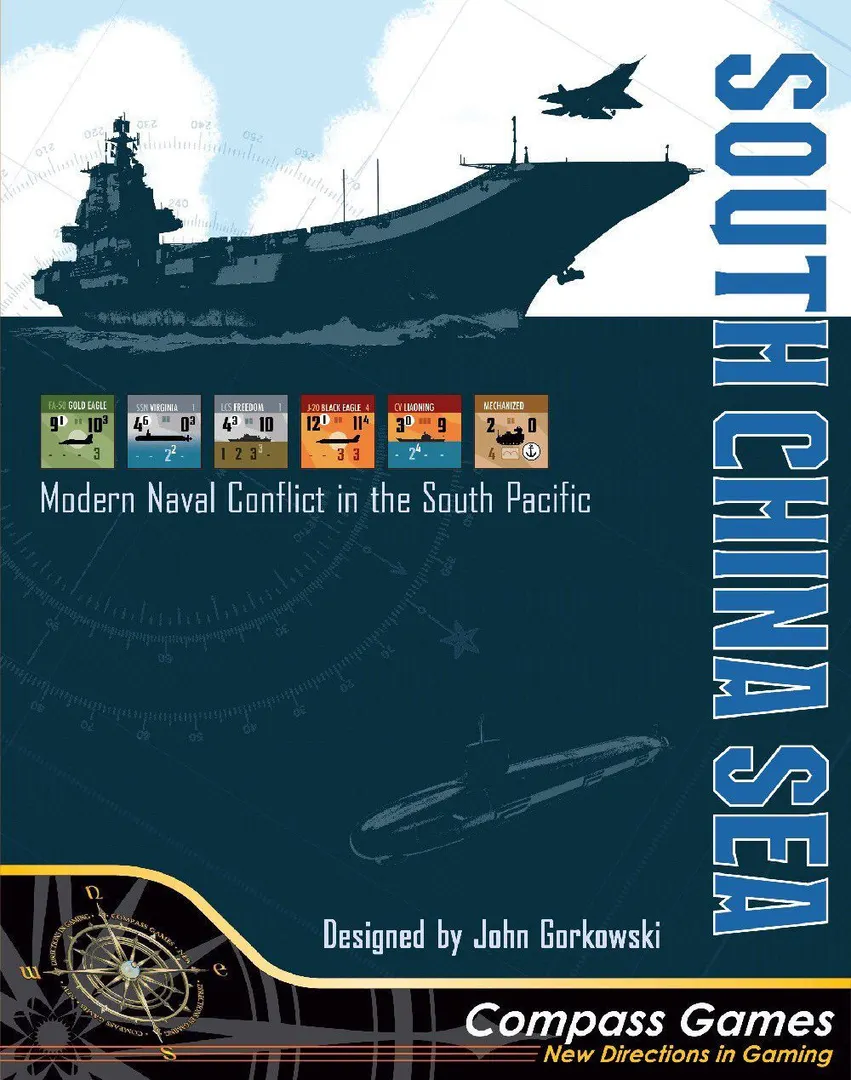
South China Sea: Modern Naval Conflict in the South Pacific
- 2–3 players
- 120–240 min
- Complexity 2.9/5
- 2017
Rules assistance for Breaking the Chains: Supplements
Plain-language explanations of turns, card effects and disputed situations, with official source references and saved question history.
What would you like to know?
Answers come from the official rulebook, with the page to check.
Breaking the Chains: Supplements is an expansion for Breaking the Chains: War in the South China Sea released in 2014 for 1–2 players. It was designed by John Gorkowski and its main mechanics are Hexagon Grid.

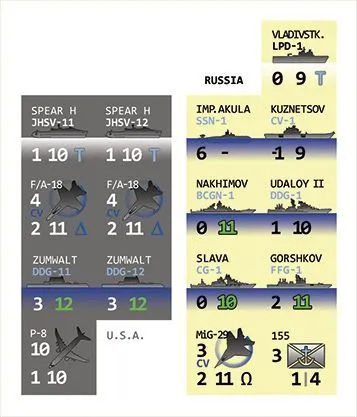
From the publisher: Upset about the absence of the Russian Pacific Fleet in the BtC countermix? Fret no more. The BtC: Supplements package adds new counters and a new scenario, the East is Red, to your Breaking the Chains game to showcase the capabilities of the Russian Pacific Fleet. BtC: Supplements also adds projected Zumwalt class US destroyers to the mix as well. Putin called last night. He was upset about the absence of Russian units in the BtC counter mix. He bragged about naval reforms, new missiles, and new ships. My eyes rolled, (he couldn’t see that over the phone) but he did make some good points. For example, Russian anti-ship missiles can outrange their U.S. and Chinese counterparts. He explained how missile technology is integral to Russian ship design by citing his aircraft carrier, the Kuznetsov. That CV allocates precious deck space to missile launchers. So, it carries fewer planes, but has an impressive anti-ship missile capability! Indeed, when the Chinese bought the Varyag from Ukraine they covered some of those missile slots to add deck space to support more aircraft. Hence, the Liaoning can carry more aircraft than the Kuznetsov even though those two ships are of the same class. And, Russian submarines are different too. Those Akulas don’t carry land attack cruise missiles (no LACM capability), but they have more torpedoes. The man reminded me that one of those boats patrolled the Gulf of Mexico for a full month before we detected it; they are quiet. So we made new counters to represent Russia’s Pacific fleet as it might appear around 2020. WE also added some U.S. units such as the Zumwalt class destroyer; the press expects us to have three of them by 2020. Of course, we're also designing a new scenario, The East is Red, to feature these units in combat around the East China Sea although they can be also be used in the already existing campaign game. Components: One scenario: The East is Red 12 counters (5/8")
Breaking the Chains: Supplements supports 1–2 players according to the catalogue. This range comes from the publisher’s listed player count, so the game can be set up for any group size within it. Some setups, rules and scoring details may still vary by player count, so check your edition’s rulebook for the exact configuration.
Breaking the Chains: Supplements belongs to these categories: Wargame, Modern Warfare, and Expansion for Base-game. Its main mechanics are Hexagon Grid. Categories describe the theme and setting of a game, while mechanics describe what players actually do on their turns. Each mechanic links to a catalogue hub with similar games, which helps when you want something comparable.
The credited designers of Breaking the Chains: Supplements are: John Gorkowski. These credits come from the published game data and name the people responsible for the game’s design, not its illustrators or publishers. Designer pages on MeepleRules collect other titles by the same designers, which helps when you enjoy a game and want to find similar ones.
The catalogue lists Breaking the Chains: Supplements as an expansion for Breaking the Chains: War in the South China Sea. Expansions add new content, rules or scenarios to the base game and usually cannot be played on their own, so you need Breaking the Chains: War in the South China Sea to use it. Check that your edition of Breaking the Chains: War in the South China Sea is compatible, as some expansions were revised between editions.