

- BGG rating
- 5.9
Cheesonomics: Extra Sharp Expansion
- 2–5 players
- 20 min
- 2014
2014
Rules assistance for Cheesonomics
Plain-language explanations of turns, card effects and disputed situations, with official source references and saved question history.
For 2 players
What would you like to know?
Answers come from the official rulebook, with the page to check.
Cheesonomics is a board game released in 2014 for 2–5 players, 20 minutes per game, and ages 8 and up. It was designed by Dale Tolley and its main mechanics are Hand Management, Take That, and Set Collection.


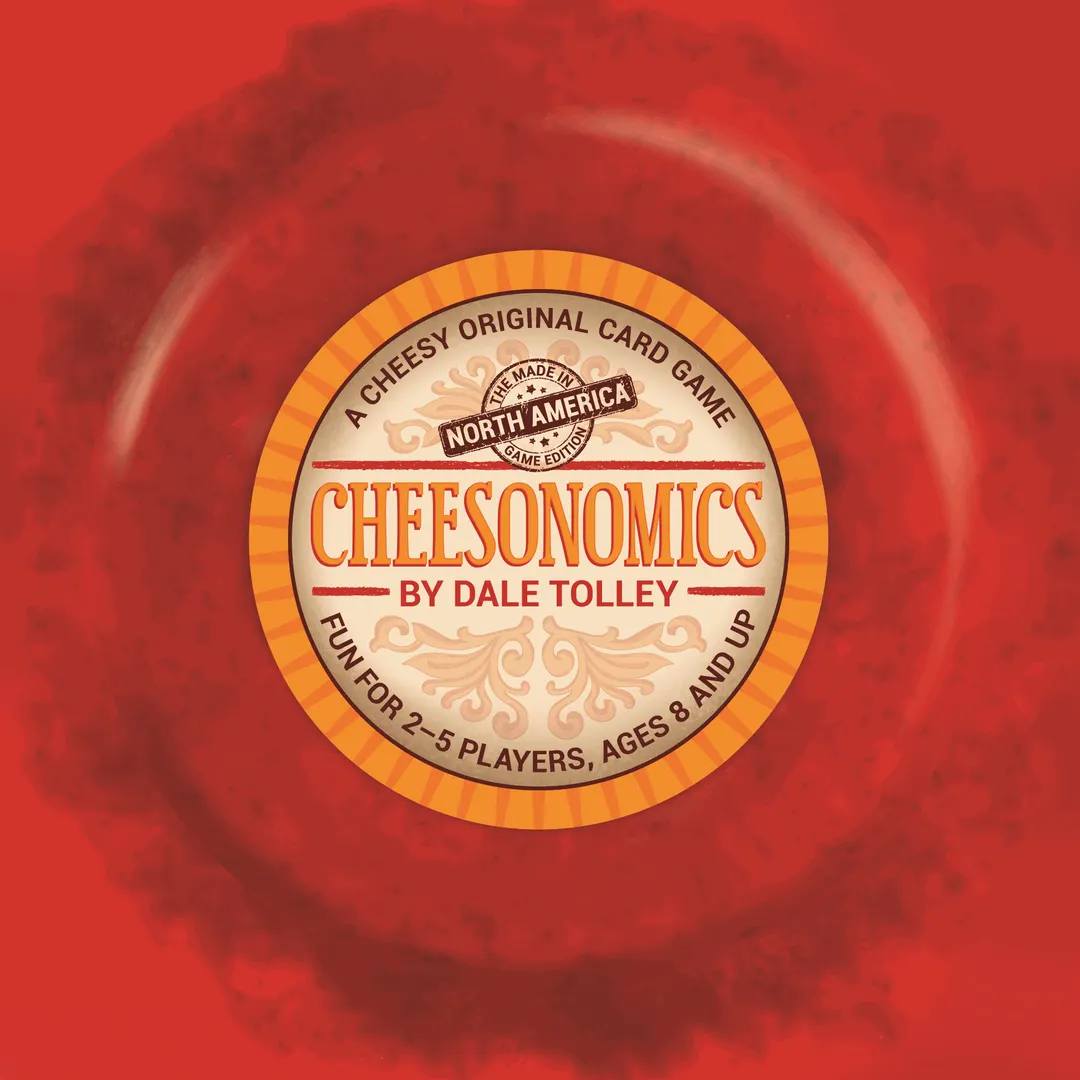
Cheesonomics is a cheesy original card game for 2-5 players ages 8 and up that takes about 20-30 minutes to play. It is a strategic set collecting, memory-based, hand management card game based on controlling and manipulating the supply and demand of various types of cheese from cheese markets throughout North America or Europe. The European edition of Cheesonomics features cheese from France, Germany, Italy, The Netherlands and Scandinavia. The North American edition of Cheesonomics features cheese from Wisconsin, California, New York, Oregon and Canada. The overall goal of Cheesonomics is to manage your cheese supply, churn the right colors or animal types from your opponents' hands, produce the market's most demanded colors of cheese to milk the most profit, and earn the most curd cash by selling different colors of cheese at high market prices. Cheesonomics can be played at three different skill levels - mild, sharp and extra sharp - allowing gamers to adjust the game according to their own playing palate. Each game starts with three market wheels made up of 5 market wedges, and each player receives five cheese wedges and a cheese knife marked with either cheddar, edam, feta, gouda or parmesan. On each turn, the active player begins by retrieving his cheese knife from the serving tray - if it was placed there on a previous turn - and then chooses one of three different culinary actions: Churn Cheese, Produce Cheese or Sell Cheese. Churning cheese allows a player to collect cheese wedges from opponents. When churning, the active player asks for one color or animal type. The colors are red, orange, yellow, green or blue, and animals are cow, sheep, goat, yak, and reindeer. If an opponent has that type of cheese card, he must give the active player one card of that type. If he does not have that card type, the opponent must show his hand and give the active player one wedge of the active player's choice. The active player then protects his product by placing his cheese knife over that color or animal type on the provided serving tray. No other player can churn for that type of cheese until the knife is removed on that player's next turn. Instead of Churning, a player could Produce cheese. To do this, the active player simply plays all cheese wedges of one color or animal type from his hand face up onto the table into a cheese wheel. These wedges will be available for sale in future turns. The player then draws cheese wedges until he has five total wedges in his hand. Instead of Churning or Producing cheese, the active player could Sell Cheese. To sell, a player chooses up to three wedges of one color or animal type from previously-formed cheese and gains curd cash depending on the market, which is the sum of face-up, matching color market wedges. After selling cheese, the active player now "Mooves" the market, choosing one market wedge representing the color of the cheese sold in the transaction and flipping that wedge to the opposite side. The game ends when the cheese wedge draw pile is exhausted during a player's turn. The cheesemonger who has the most curd cash is the cheesy champion! Cheesonomics has even more to offer players who wish to try out the Sharp and Extra Sharp flavors of the game. In the Sharp game, players can now further manipulate the market. Whenever a Sell Cheese action is taken, that player now also chooses a wedge in the market to completely replace with one from his personal supply of market wedges. There are also certain cheese wedges with market symbols that may be activated during a Sell Cheese action that can allow a player to discard one of their market wedges and gain another or give a market wedge to one of the other players and take one of theirs. The Extra Sharp game is for the truly adventurous Cheeseheads! As an expansion to Cheesonomics, players can add in the Extra Sharp cheese wedge cards that introduce growth hormone, organic and smelly cheese wedges. Each of these new cheese wedge types have special rules that affect a Sell Cheese action, allowing players the choice to boost their production with growth hormones, earn more curds at game end with quality organic cheeses, or use pungent aromas to prevent players from flipping or removing market wedges.
Cheesonomics supports 2–5 players according to the catalogue. This range comes from the publisher’s listed player count, so the game can be set up for any group size within it. Some setups, rules and scoring details may still vary by player count, so check your edition’s rulebook for the exact configuration.
The listed playing time for Cheesonomics is 20 minutes. This is the publisher’s estimate for a full game. The actual duration depends on the group, the player count and familiarity with the rules: first sessions usually run longer, while experienced groups often finish faster. Setup and teaching time are not included in this estimate.
The catalogue lists Cheesonomics for ages 8 and up. This is the publisher’s recommendation and reflects reading demands, rule complexity and small components rather than theme alone. Younger players can often join with help from an adult, so check the age guidance on your edition and consider your group’s experience with board games.
Cheesonomics has a complexity rating of 1.7 out of 5 from BoardGameGeek players, which makes it a light game. The rating reflects how much rules knowledge, planning and decision-making a typical game demands. Expect a longer first teach for heavier games, and use a preparation guide before game night.
Cheesonomics belongs to these categories: Card Game, Economic, and Memory. Its main mechanics are Hand Management, Take That, and Set Collection. Categories describe the theme and setting of a game, while mechanics describe what players actually do on their turns. Each mechanic links to a catalogue hub with similar games, which helps when you want something comparable.
The credited designers of Cheesonomics are: Dale Tolley. These credits come from the published game data and name the people responsible for the game’s design, not its illustrators or publishers. Designer pages on MeepleRules collect other titles by the same designers, which helps when you enjoy a game and want to find similar ones.
The catalogue lists Cheesonomics as a base game. It can be played on its own with the components in the box and does not require any other title. Expansions, if any exist, add new content or rules on top of it and are listed separately in the catalogue with a link back to this base game.