
- BGG rank
- BGG #9,316
- BGG rating
- 7.6
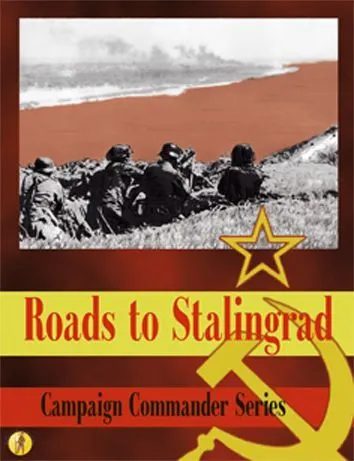
Roads to Stalingrad: Campaign Commander Series
- 2 players
- 180 min
- Complexity 2.5/5
- 2009
2010
Rules assistance for Coral Sea: Campaign Commander Series
Plain-language explanations of turns, card effects and disputed situations, with official source references and saved question history.
For 2 players
What would you like to know?
Answers come from the official rulebook, with the page to check.
Coral Sea: Campaign Commander Series is a board game released in 2010 for 2 players, 180 minutes per game, and ages 10 and up. It was designed by Francisco Ronco and its main mechanics are Area Movement, Dice Rolling, and Simultaneous Action Selection.

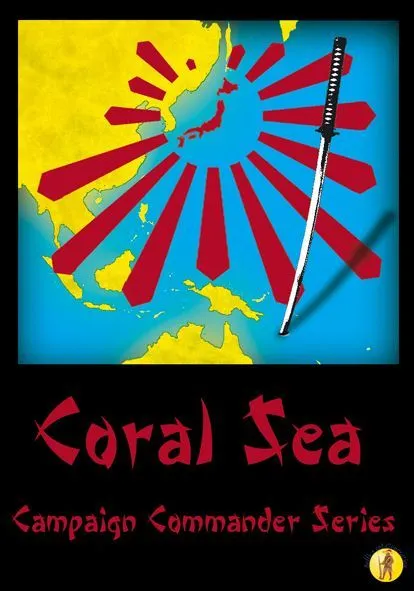
Campaign Commander Volume II: Coral Sea Coral Sea is a new volume in the Campaign Commander series and simulates the campaign in the South Seas of the Pacific between the spring of 1942 and the spring of 1943. The Japanese expansion reaches its limit in the archipelago of the Solomon Islands and New Guinea. The Japanese initial force, the Army of the South Seas, began to expand reducing the boundaries of the Australian defenses from its base in Rabaul, the logistic center of Japanese control in the zone. The naval-air battle of the Coral Sea was a hard blow for the Japanese force since the Soho, their light aircraft carrier, was sunk, and the amphibious invasion force destined to take Port Moresby had to return to Rabaul without fulfilling their mission. Afterwards the imperial forces tried to take Port Moresby by a ground assault, extending their way along the Solomon Islands creating air bases and observation stations throughout the archipelago. The Japanese forces were thus threatening naval communications between the United States and Australia. In response, the Allies reinforced Australia and the New Caledonia zone looking for an opportunity to counterattack and to stop the imperial tide extending through the region. The return to Australia of veteran units from the Middle East allowed the Allies to initiate an offensive in Papua/New Guinea that would last six bloody months and result in the Allied recovery of the enclaves of Buna and Gona on the North coast of New Guinea. In the Solomon Islands the North American counterattack began August 8th, 1942 and led to a lasting and bloody campaign through February 1943, with successive attacks and counterattacks of both sides resulting in Guadalcanal Island back in American hands. In addition to the ground forces, the region saw much use of air and naval operations. Both navies accomplished herculean tasks to support their respective ground forces and supply them. Their importance was noticeable, so air attacks on navies were numerous, and expensive in lives, planes and ships. The last of them in this period was the battle of the Sea of Bismarck, which resulted in Allied air supremacy in the region. The Japanese Imperial navy based on the island of Truk made several raids in the region to support the small naval forces in the South Seas. But eventually the Japanese had to yield the initiative to the allies in the region as they exhausted their resources, fighting on two fronts. The Allies exhausted the Japanese offensive, and they prepare to take their own offensive. The game is developed in an operational scale – area-based map with a scale 1:300,000. It is designed for two players with one running the JAPANESE forces and the other the ALLIED forces. The game lasts approximately 3-4 hours and uses a two sided system to handle the mechanics of play: cards and counters. The players will have to use their troops and their resources to obtain victory points while eliminating enemy forces and occupying cities in the map. It is not a card driven game as the cards are used to bring about events that influence battles, secure reinforcements, and provide resources with which to carry on the fight. In the beginning of the game the JAPANESE player will take the Initiative and will have to expand throughout the map to secure Victory Points. The ALLIED player is on the defensive, and will have to strength his forces as the game progresses. He will have to take advantage of every opportunity to inflict damage on the advancing Japanese forces. The island of Guadalcanal will be crucial as the game develops, as are the results of actions in Papua/New Guinea. The JAPANESE player must face the historical dilemma of concentrating on taking the Solomon Islands, Papua or both simultaneously. The ALLIED player will have to be patient and force his opponent to extend himself, by accumulating forces and to committing lethal offensives that put the forces of the Empire of the Rising Sun in check. Like all the games of this Series, the rules are simple and straight forward. Our objective was to create games that are very interactive, and offer players a pleasant creative experience. We aim for solid games for players who do not have the time or the space to leave a game setup and in place over a long period of play.
Coral Sea: Campaign Commander Series supports 2 players according to the catalogue. This is the publisher’s listed player count, so the game is designed for exactly that number of participants. Variants for other group sizes, if any, are described in the rulebook of your edition, so check it before setting up a different configuration.
The listed playing time for Coral Sea: Campaign Commander Series is 180 minutes. This is the publisher’s estimate for a full game. The actual duration depends on the group, the player count and familiarity with the rules: first sessions usually run longer, while experienced groups often finish faster. Setup and teaching time are not included in this estimate.
The catalogue lists Coral Sea: Campaign Commander Series for ages 10 and up. This is the publisher’s recommendation and reflects reading demands, rule complexity and small components rather than theme alone. Younger players can often join with help from an adult, so check the age guidance on your edition and consider your group’s experience with board games.
Coral Sea: Campaign Commander Series has a complexity rating of 2.6 out of 5 from BoardGameGeek players, which makes it a medium-light game. The rating reflects how much rules knowledge, planning and decision-making a typical game demands. Expect a longer first teach for heavier games, and use a preparation guide before game night.
Coral Sea: Campaign Commander Series belongs to these categories: Wargame, Nautical, and World War II. Its main mechanics are Area Movement, Dice Rolling, and Simultaneous Action Selection. Categories describe the theme and setting of a game, while mechanics describe what players actually do on their turns. Each mechanic links to a catalogue hub with similar games, which helps when you want something comparable.
The credited designers of Coral Sea: Campaign Commander Series are: Francisco Ronco. These credits come from the published game data and name the people responsible for the game’s design, not its illustrators or publishers. Designer pages on MeepleRules collect other titles by the same designers, which helps when you enjoy a game and want to find similar ones.
The catalogue lists Coral Sea: Campaign Commander Series as a base game. It can be played on its own with the components in the box and does not require any other title. Expansions, if any exist, add new content or rules on top of it and are listed separately in the catalogue with a link back to this base game.