
- BGG rank
- BGG #11,560
- BGG rating
- 7.0
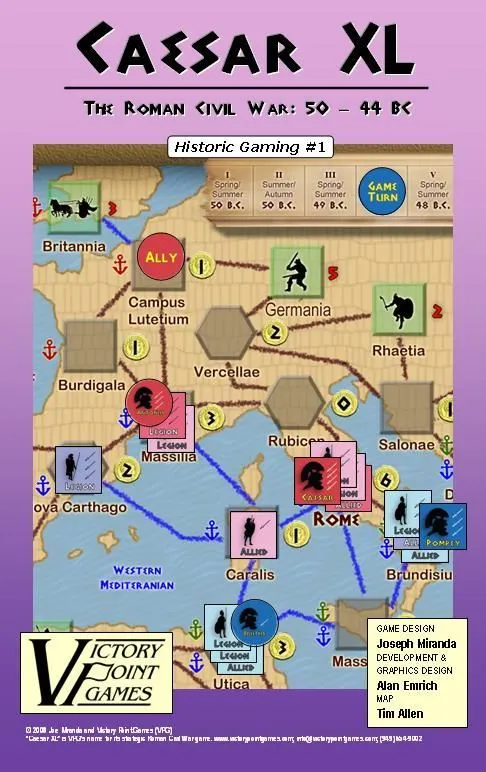
Caesar XL: The Roman Civil War 50 - 44 BC
- 1–2 players
- 45 min
- Complexity 2.1/5
- 2008
2012
Rules assistance for Custer's Final Campaign: 7th Cavalry at Little Bighorn
Plain-language explanations of turns, card effects and disputed situations, with official source references and saved question history.
For 2 players
What would you like to know?
Answers come from the official rulebook, with the page to check.
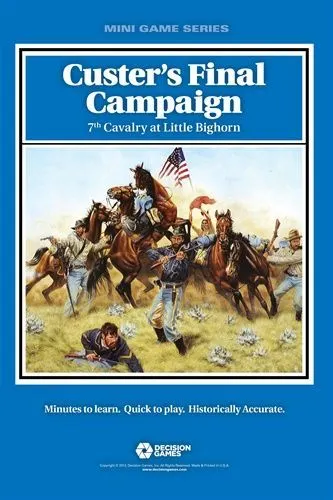
Custer's Final Campaign: 7th Cavalry at Little Bighorn is a board game released in 2012 for 2 players and 30 minutes per game. It was designed by Joseph Miranda and its main mechanics are Dice Rolling and Point to Point Movement.


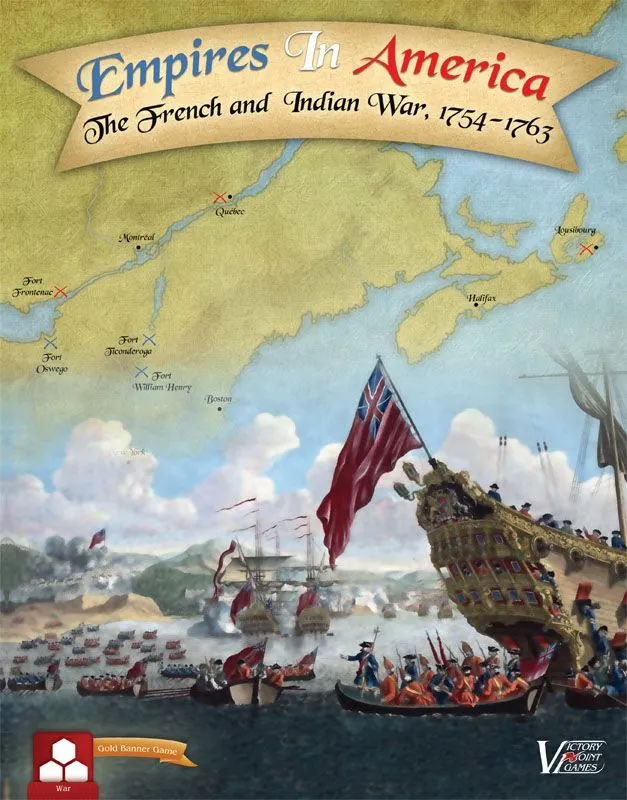

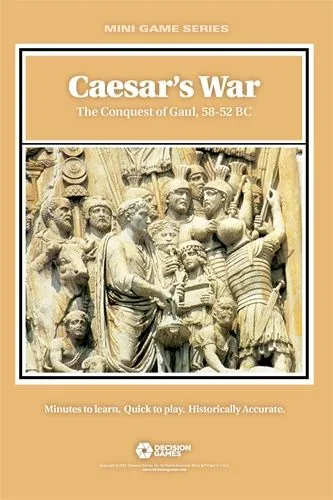
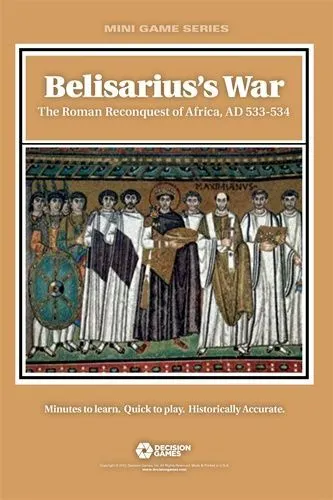
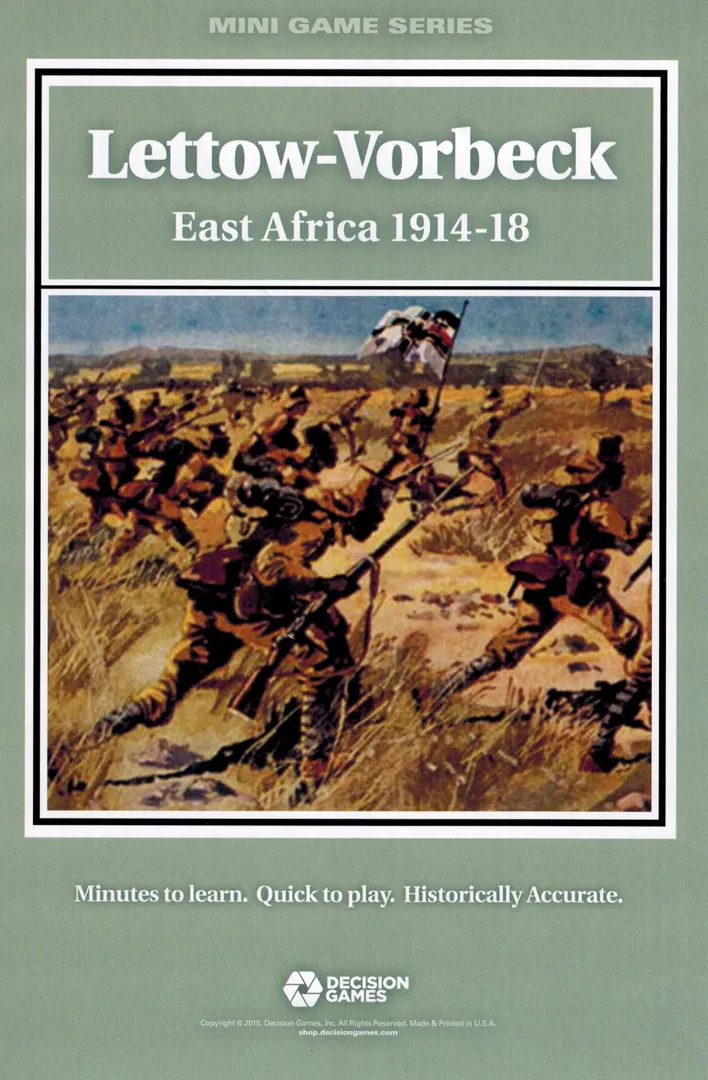
From DecisionGames.com: "7th Cavalry at Little Bighorn In 1876 the US Army engaged the Indians of the northern Great Plains in a campaign that culminated in the destruction of Gen. George Armstrong Custer and most of his command at the Battle of the Little Bighorn. This two-player game covers that entire campaign. One player commands Army forces, including the regiments and battalions forming the three commands that participated in the original campaign: Crook’s, Gibbon’s and Terry’s. The other player controls various Indian tribes, each rated for its fighting strength in warriors. The point-to-point map stretches from Fort Abraham Lincoln in the Dakotas to Helena, Montana. In between are famous historic battle sites such as Powder River, the Rosebud, and the Little Bighorn. Custer’s Final Campaign is part of the Hand of Destiny mini-game series. Each player has a unique deck of Campaign Cards. They generate movement abilities, combat bonuses and historical events. Accessing the right card at the right time lets the player concentrate forces to win that great victory against all odds—or perhaps go down to inglorious defeat. Some of the cards include: Tribal Raiding, Indians Leave Reservation, and Gary Owen. Combat is resolved via a quasi-tactical procedure. There are special rules for: Gatling guns, “dog soldiers,” Army riverboats, and leaders such as Crazy Horse, Nelson Miles, Sitting Bull and Custer himself.
Custer's Final Campaign: 7th Cavalry at Little Bighorn supports 2 players according to the catalogue. This is the publisher’s listed player count, so the game is designed for exactly that number of participants. Variants for other group sizes, if any, are described in the rulebook of your edition, so check it before setting up a different configuration.
The listed playing time for Custer's Final Campaign: 7th Cavalry at Little Bighorn is 30 minutes. This is the publisher’s estimate for a full game. The actual duration depends on the group, the player count and familiarity with the rules: first sessions usually run longer, while experienced groups often finish faster. Setup and teaching time are not included in this estimate.
Custer's Final Campaign: 7th Cavalry at Little Bighorn has a complexity rating of 1.9 out of 5 from BoardGameGeek players, which makes it a light game. The rating reflects how much rules knowledge, planning and decision-making a typical game demands. Expect a longer first teach for heavier games, and use a preparation guide before game night.
Custer's Final Campaign: 7th Cavalry at Little Bighorn belongs to these categories: Wargame and American Indian Wars. Its main mechanics are Dice Rolling and Point to Point Movement. Categories describe the theme and setting of a game, while mechanics describe what players actually do on their turns. Each mechanic links to a catalogue hub with similar games, which helps when you want something comparable.
The credited designers of Custer's Final Campaign: 7th Cavalry at Little Bighorn are: Joseph Miranda. These credits come from the published game data and name the people responsible for the game’s design, not its illustrators or publishers. Designer pages on MeepleRules collect other titles by the same designers, which helps when you enjoy a game and want to find similar ones.
The catalogue lists Custer's Final Campaign: 7th Cavalry at Little Bighorn as a base game. It can be played on its own with the components in the box and does not require any other title. Expansions, if any exist, add new content or rules on top of it and are listed separately in the catalogue with a link back to this base game.