
- BGG rank
- BGG #476
- BGG rating
- 7.2
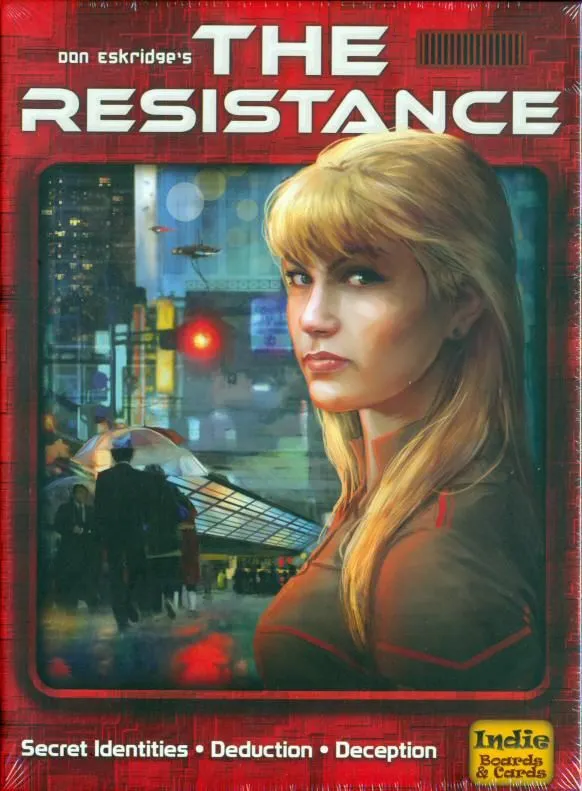
The Resistance
- 5–10 players
- 30 min
- Complexity 1.6/5
- 2009
2020
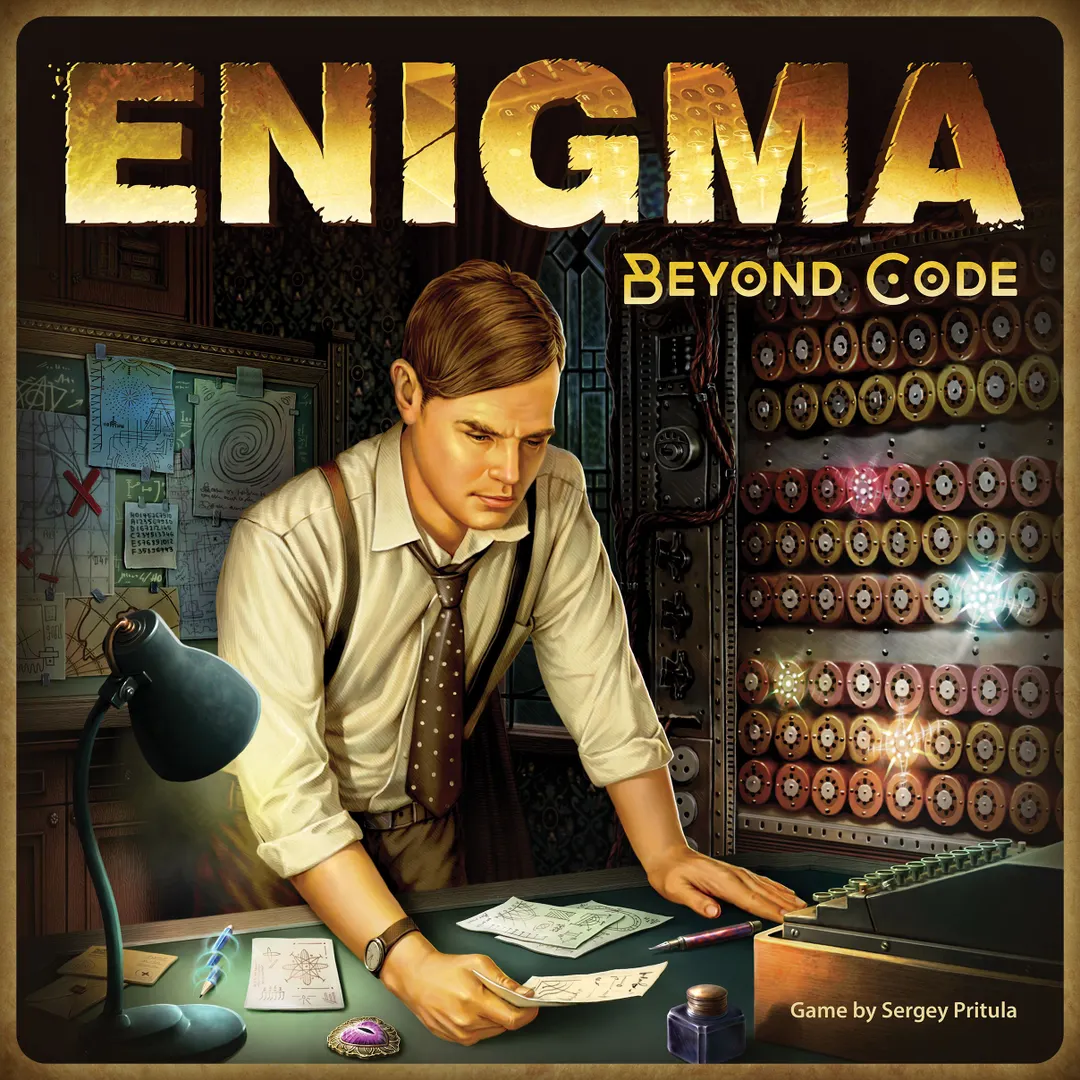
Rules assistance for Enigma: Beyond Code
Plain-language explanations of turns, card effects and disputed situations, with official source references and saved question history.
For 1 player
What would you like to know?
Answers come from the official rulebook, with the page to check.
Enigma: Beyond Code is a board game released in 2020 for 1–5 players, 15–60 minutes per game, and ages 12 and up. It was designed by Sergey Pritula and its main mechanics are Memory, Hidden Roles, and Scenario / Mission / Campaign Game.



World War II is ongoing. Germany broadly uses Enigma rotor cipher machines. The breaking of the Enigma code gives the Allies an advantage in the war — but this is just one side of the coin because the Enigma code is based on chaos, a non-measurable force lurking beyond the boundaries of our world and eager to consume all its flesh. The code decryption would stop the chaos invasion into our world. An "Agency" operates in a secret heavily-guarded Victorian mansion somewhere in London suburbs; it has been opposing the supernatural for centuries. To break the Enigma code, the Agency has gathered the world's best decrypters together. You are one of them. Your mission is to break the Enigma code as soon as possible while wandering inside the mansion with an ever-changing layout. At least, you tell others so. In fact, you might pursue completely different goals... Enigma: Beyond Code is a game of deduction. Victory depends on your ability to understand the motives of other players and locate the cards you need — while keeping others away from the cards they are looking for. Each play takes 5-10 minutes, and it is best to play Enigma: Beyond Code up to three victories. In the beginning, each player receives a character card featuring a cryptology expert who has arrived at the Agency's mansion to break the Enigma code. But only one of them is the true decrypter; the others are just masterfully posing as cryptologists. Each of them has a unique secret mission. To accomplish the missions of their characters, the players view mansion cards in turns; each of these cards represents a room or an object inside the mansion. The invited experts work as a team, which means that upon looking at a mansion card, you must tell others what is there. You may either lie or tell the truth — that depends on your goals. Lying is always a risk, while telling the truth may allow your opponents to win. The player who first accomplishes their character's mission wins the game. If no one does so within the game's time limit, chaos breaks into our world, and all players lose!
Enigma: Beyond Code supports 1–5 players according to the catalogue. This range comes from the publisher’s listed player count, so the game can be set up for any group size within it. Some setups, rules and scoring details may still vary by player count, so check your edition’s rulebook for the exact configuration.
The listed playing time for Enigma: Beyond Code is 15–60 minutes. This is the publisher’s estimate for a full game. The actual duration depends on the group, the player count and familiarity with the rules: first sessions usually run longer, while experienced groups often finish faster. Setup and teaching time are not included in this estimate.
The catalogue lists Enigma: Beyond Code for ages 12 and up. This is the publisher’s recommendation and reflects reading demands, rule complexity and small components rather than theme alone. Younger players can often join with help from an adult, so check the age guidance on your edition and consider your group’s experience with board games.
Enigma: Beyond Code has a complexity rating of 1.8 out of 5 from BoardGameGeek players, which makes it a light game. The rating reflects how much rules knowledge, planning and decision-making a typical game demands. Expect a longer first teach for heavier games, and use a preparation guide before game night.
Enigma: Beyond Code belongs to these categories: Deduction, Bluffing, and World War II. Its main mechanics are Memory, Hidden Roles, and Scenario / Mission / Campaign Game. Categories describe the theme and setting of a game, while mechanics describe what players actually do on their turns. Each mechanic links to a catalogue hub with similar games, which helps when you want something comparable.
The credited designers of Enigma: Beyond Code are: Sergey Pritula. These credits come from the published game data and name the people responsible for the game’s design, not its illustrators or publishers. Designer pages on MeepleRules collect other titles by the same designers, which helps when you enjoy a game and want to find similar ones.
The catalogue lists Enigma: Beyond Code as a base game. It can be played on its own with the components in the box and does not require any other title. Expansions, if any exist, add new content or rules on top of it and are listed separately in the catalogue with a link back to this base game.