
- BGG rank
- BGG #4,396
- BGG rating
- 6.4
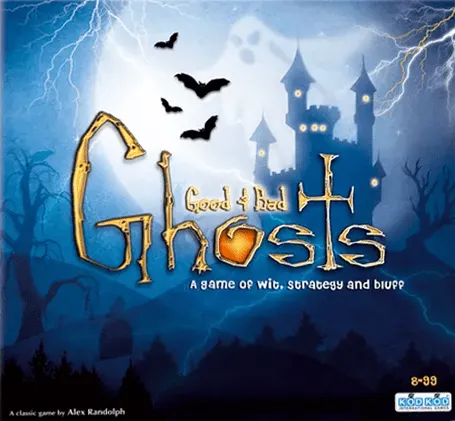
Good & Bad Ghosts
- 2 players
- 15 min
- Complexity 1.3/5
- 1980
1971
Rules assistance for Evade
Plain-language explanations of turns, card effects and disputed situations, with official source references and saved question history.
For 2 players
What would you like to know?
Answers come from the official rulebook, with the page to check.
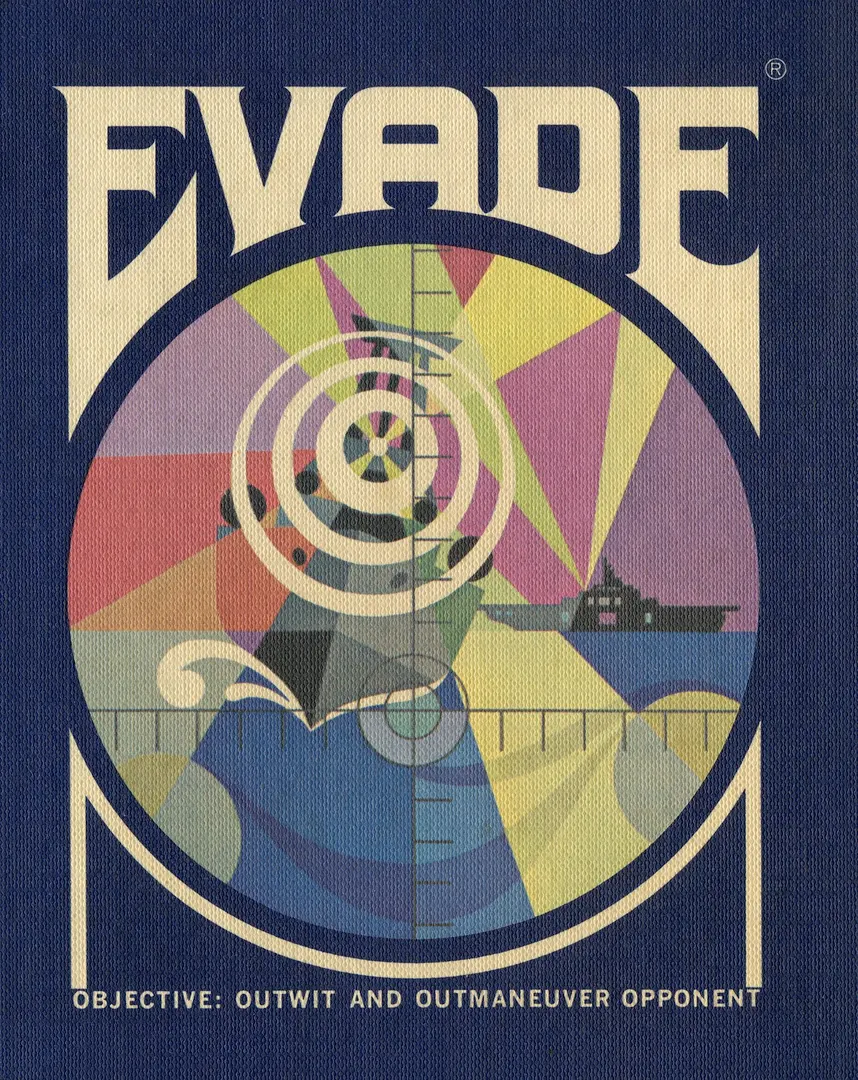
Evade is a board game released in 1971 for 2 players, 10 minutes per game, and ages 12 and up. It was designed by Alex Randolph and its main mechanics are Square Grid and Secret Unit Deployment.

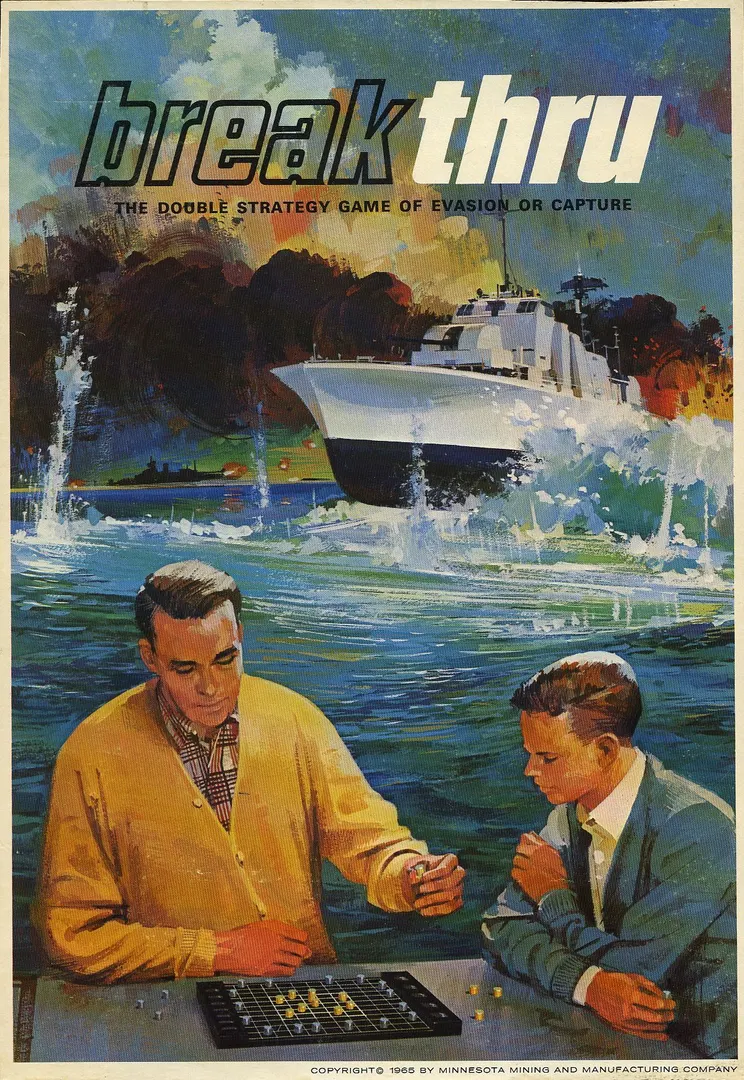
Evade is an old (1971) 3M game, part of their series of 'Gamettes', games which were released in very small, fold-over bookcase type boxes. There were 9 games in this series, which were released near the end of the 3M venture into the gaming market. The game is extremely simple, yet requires quite a bit of 'bluffing' in order to win. Each player begins with six metal pawns along the back row of a 6x6 grid. The board fits snuggly into the box itself and is quite sturdy. The game is, as is the entire Gamette series, ideal for bringing along while traveling. Each player secretly places a teeny magnet under two of his pawns. The object is to be the first player to maneuver one of these 'magnet-bearing' pawns to the opposite side of the board. If you manage to accomplish this feat, you win. Movement is simple. You simply move one of your pawns one space to an adjacent space ... vertically, horizontally or diagonally. If this lands you atop an opponent's pawn, you are both 'frozen' and can no longer move. If you make the mistake of moving one of your 'magnet' pawns onto an opponent, he instantly wins. "Well", you say, "Why wouldn't I just check the pawn to make sure it wasn't carrying a magnet before making such a questionable move?". The rules allow for this, but if you do check, you are prohibited from 'freezing' an opponent that round. So, it's best to remember which two of your pawns are carrying magnets. As mentioned, the game ends as soon as one player manages to get a magnet-bearing pawn to the opposite side of the board. If both players fail to accomplish this, the game is a draw. The game is very simple and the primary tactic is 'bluff'. Are you going to be bold and move one of your 'magnet' pawns to the front, figuring your opponent will guess that this cannot possibly be your magnet pawn as he could freeze it too easily? Or, do you protect your magnet pawns and try to create a path that it can squeeze by your opponent's pawns and scoot to the opposite side? As with most bluff-style games, there's some guesswork and plain old luck involved, but there is still enough maneuvering and tactics to keep it interesting.
Evade supports 2 players according to the catalogue. This is the publisher’s listed player count, so the game is designed for exactly that number of participants. Variants for other group sizes, if any, are described in the rulebook of your edition, so check it before setting up a different configuration.
The listed playing time for Evade is 10 minutes. This is the publisher’s estimate for a full game. The actual duration depends on the group, the player count and familiarity with the rules: first sessions usually run longer, while experienced groups often finish faster. Setup and teaching time are not included in this estimate.
The catalogue lists Evade for ages 12 and up. This is the publisher’s recommendation and reflects reading demands, rule complexity and small components rather than theme alone. Younger players can often join with help from an adult, so check the age guidance on your edition and consider your group’s experience with board games.
Evade has a complexity rating of 1.4 out of 5 from BoardGameGeek players, which makes it a light game. The rating reflects how much rules knowledge, planning and decision-making a typical game demands. Expect a longer first teach for heavier games, and use a preparation guide before game night.
Evade belongs to these categories: Abstract Strategy. Its main mechanics are Square Grid and Secret Unit Deployment. Categories describe the theme and setting of a game, while mechanics describe what players actually do on their turns. Each mechanic links to a catalogue hub with similar games, which helps when you want something comparable.
The credited designers of Evade are: Alex Randolph. These credits come from the published game data and name the people responsible for the game’s design, not its illustrators or publishers. Designer pages on MeepleRules collect other titles by the same designers, which helps when you enjoy a game and want to find similar ones.
The catalogue lists Evade as a base game. It can be played on its own with the components in the box and does not require any other title. Expansions, if any exist, add new content or rules on top of it and are listed separately in the catalogue with a link back to this base game.