
- BGG rating
- 8.1
Fort Sumter: Solo Opponent
- 1 player
- Complexity 2.5/5
- 2021
2018
Rules assistance for Fort Sumter: The Secession Crisis, 1860-61
Plain-language explanations of turns, card effects and disputed situations, with official source references and saved question history.
For 2 players
What would you like to know?
Answers come from the official rulebook, with the page to check.
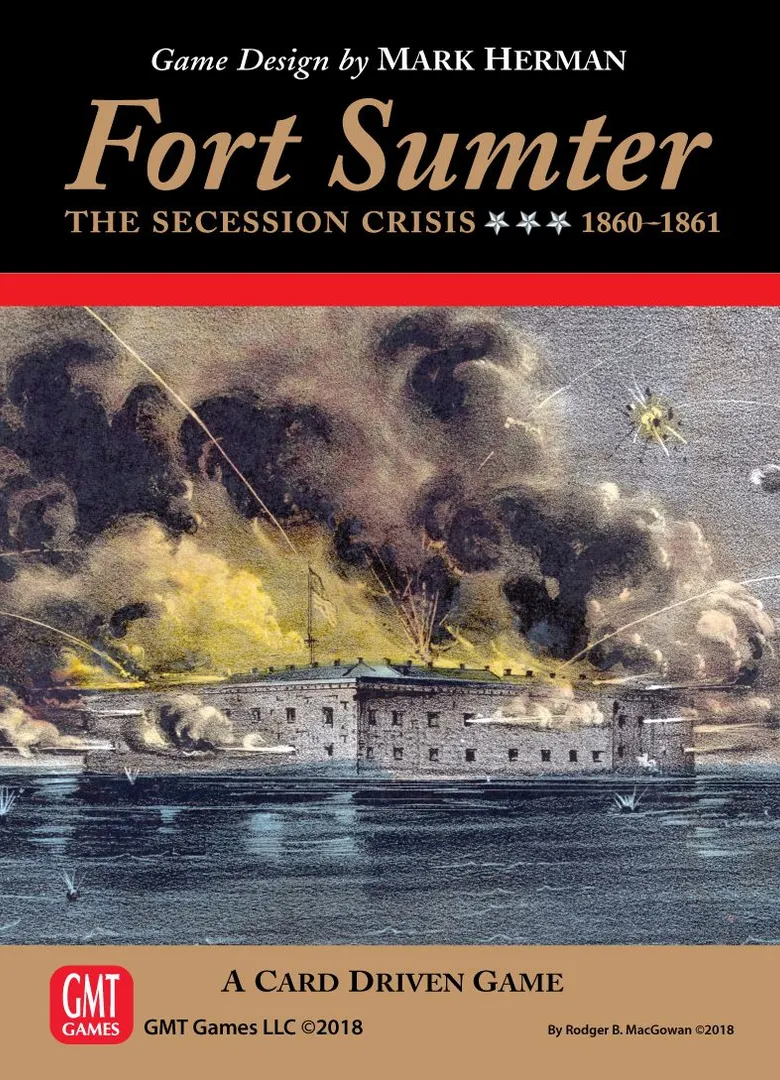
Fort Sumter: The Secession Crisis, 1860-61 is a board game released in 2018 for 2 players, 20–40 minutes per game, and ages 14 and up. It was designed by Mark Herman and its main mechanics are Hand Management, Area Majority / Influence, and Simulation.


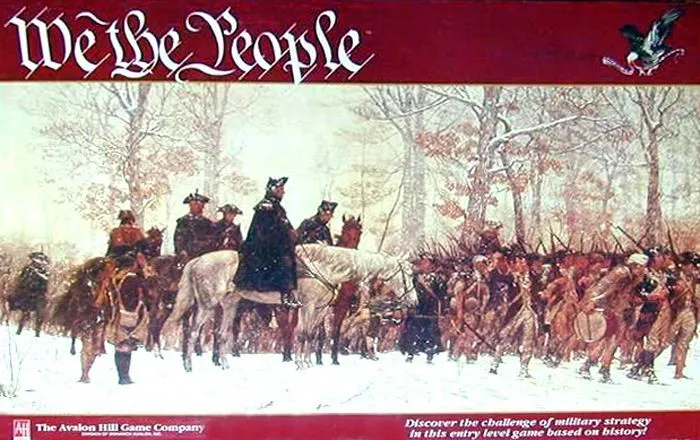
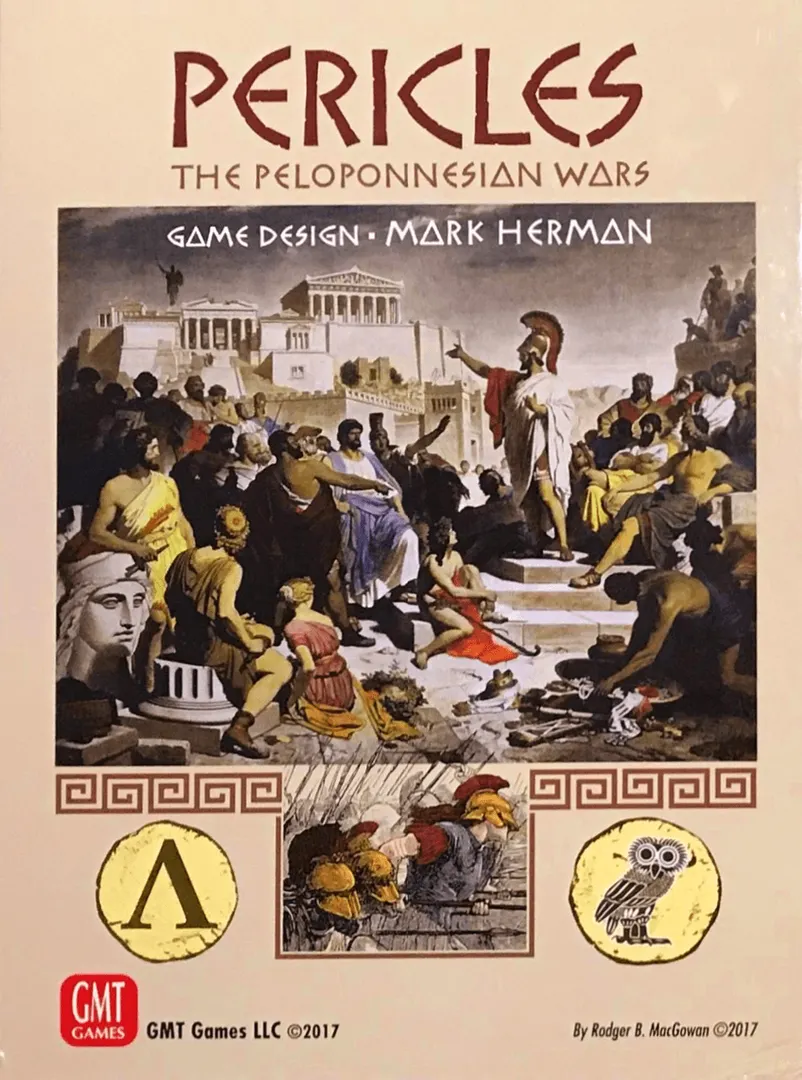





Description from the publisher: Fort Sumter is a two-player Card Driven Game (CDG) portraying the 1860 secession crisis that led to the bombardment of Fort Sumter and the American Civil War. Fort Sumter is a small footprint game (11x17” mounted map) that takes approximately 25-40 minutes to play. The game pits a Unionist versus a Secessionist player. Each player uses the area control mechanic pioneered in Mark Herman's We The People design and immortalized in Twilight Struggle to place, move, and remove political capital. The location of political capital determines who controls each of the four crisis dimensions (Political, Secession, Public Opinion, and Armaments). After three rounds of play, the game culminates in a Final Crisis confrontation to determine the winner. The heart of the Fort Sumter design is Mark's CDG system where you use Strategy cards for their value or historic event to acquire political capital from the crisis track. Political capital tokens are used to compete for control of the twelve map spaces. Here the likes of William Lloyd Garrison, Sam Houston, Jefferson Davis, and Harriet Beecher Stowe walk on stage, while the Southern states dissolve the Union. The twelve map spaces are grouped into the four dimensions of the crisis. You gain a victory point each round that you control a dimension’s three spaces. For example, the Armaments dimension is characterized by Federal Arsenals, Fort Pickens, and of course, Fort Sumter. In addition, each round you score a victory point for controlling your secret objective space. But beware; either player can score active objective spaces. At the end of the dual Presidential inaugurations (round three) a new Final Crisis mechanic drives the game to its hotly contested conclusion. Utilizing a new Final Crisis Series mechanic, you may accelerate the crisis by breaching zones (escalation, tension, final crisis) that yield bonus political capital. However, beware, as the first person to breach the final crisis zone gains political advantage, yet loses victory point ground. Each game ends with a Final Crisis, where cards set-aside during the three rounds complete your final political maneuvers that determine the winner.
Fort Sumter: The Secession Crisis, 1860-61 supports 2 players according to the catalogue. This is the publisher’s listed player count, so the game is designed for exactly that number of participants. Variants for other group sizes, if any, are described in the rulebook of your edition, so check it before setting up a different configuration.
The listed playing time for Fort Sumter: The Secession Crisis, 1860-61 is 20–40 minutes. This is the publisher’s estimate for a full game. The actual duration depends on the group, the player count and familiarity with the rules: first sessions usually run longer, while experienced groups often finish faster. Setup and teaching time are not included in this estimate.
The catalogue lists Fort Sumter: The Secession Crisis, 1860-61 for ages 14 and up. This is the publisher’s recommendation and reflects reading demands, rule complexity and small components rather than theme alone. Younger players can often join with help from an adult, so check the age guidance on your edition and consider your group’s experience with board games.
Fort Sumter: The Secession Crisis, 1860-61 has a complexity rating of 1.8 out of 5 from BoardGameGeek players, which makes it a light game. The rating reflects how much rules knowledge, planning and decision-making a typical game demands. Expect a longer first teach for heavier games, and use a preparation guide before game night.
Fort Sumter: The Secession Crisis, 1860-61 belongs to these categories: Card Game, Wargame, and Political. Its main mechanics are Hand Management, Area Majority / Influence, and Simulation. Categories describe the theme and setting of a game, while mechanics describe what players actually do on their turns. Each mechanic links to a catalogue hub with similar games, which helps when you want something comparable.
The credited designers of Fort Sumter: The Secession Crisis, 1860-61 are: Mark Herman. These credits come from the published game data and name the people responsible for the game’s design, not its illustrators or publishers. Designer pages on MeepleRules collect other titles by the same designers, which helps when you enjoy a game and want to find similar ones.
The catalogue lists Fort Sumter: The Secession Crisis, 1860-61 as a base game. It can be played on its own with the components in the box and does not require any other title. Expansions, if any exist, add new content or rules on top of it and are listed separately in the catalogue with a link back to this base game.