- BGG rating
- 6.9
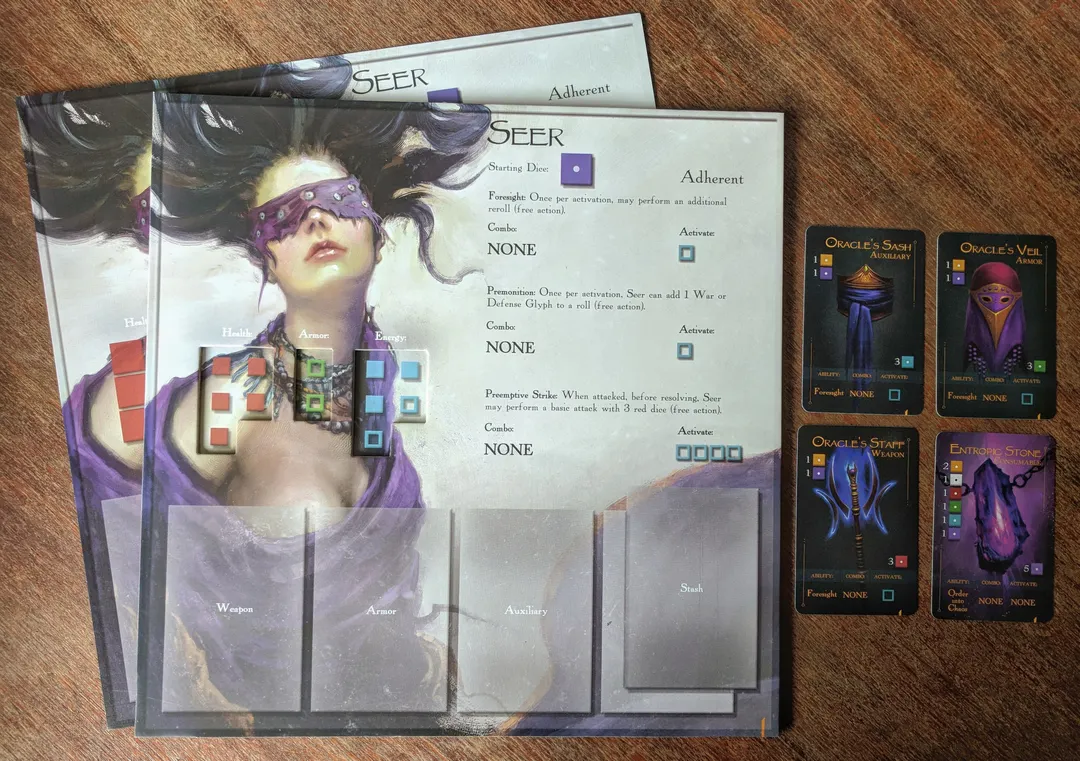
Glyph: Seer Champion
- 2–6 players
- 90–120 min
- 2017
2018
Rules assistance for Glyph
Plain-language explanations of turns, card effects and disputed situations, with official source references and saved question history.
For 2 players
What would you like to know?
Answers come from the official rulebook, with the page to check.
Glyph is a board game released in 2018 for 2–6 players, 90–120 minutes per game, and ages 12 and up. It was designed by Justin Potter and its main mechanics are Variable Player Powers, Dice Rolling, and Deck, Bag, and Pool Building.
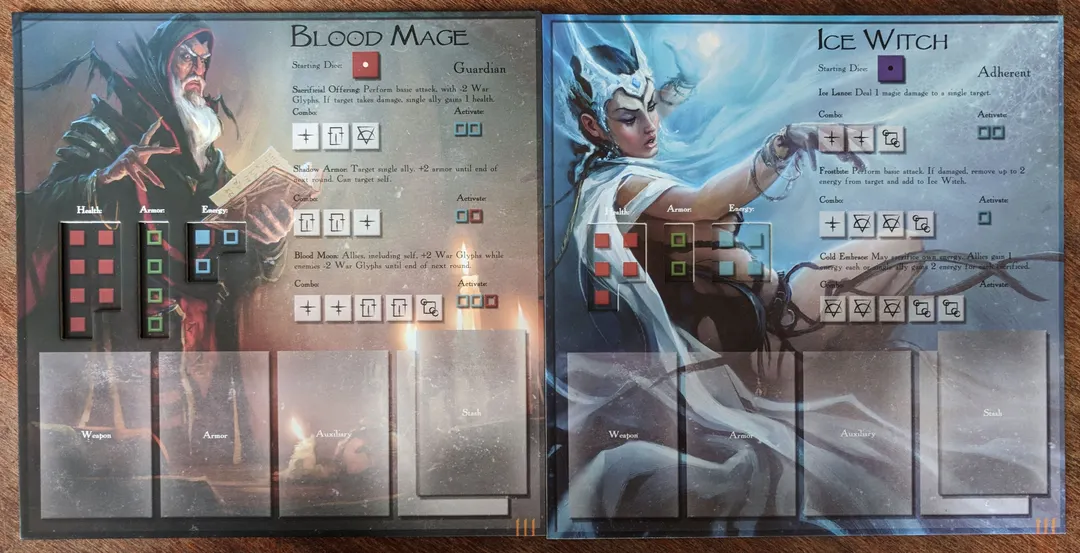
Glyph is a dice-building combat strategy game for 2-6 players. Players are tasked with forming a team of three champions and defeat their opponent. These Champions are broken up into three distinct classes--Strikers, Guardians, and Adherents--with each Champion having his or her own strengths, weaknesses, and unique abilities which you will use by harnessing the power of mystical glyphs. As the game progresses, your Champions will have the opportunity to acquire new items which will enhance their capabilities as well as perhaps give them even more skills to use to defeat your enemy. Glyph utilizes an intriguing dice-building and card-drafting mechanic, which rewards tactical thought as well as provides exciting gameplay. The dice in the game represent ancient powers, which each color of dice having a unique face structure tailored to specific Glyphs. Each Glyph serves a specific purpose and, through rolling and manipulating the dice, your Champions will be able to perform actions ranging from devastating attacks, to fortified defensive stances, to supportive aid. Each Champion also has various item slots available and you will be able to acquire unique weapons and armor to aid you in combat. Some items are rather simple and provide minor boosts to your champion's dice pool, while others have their own unique abilities that only the wearer of the item can perform. These items come at a cost, however: you may be required to spend [read: trash] dice from your own champion's pool in order to acquire these powerful items. This makes item acquisition much more than merely taking an available card--you will need to weigh the costs and benefits of these items and determine if sacrificing the requisite dice is worth it. The decisions you make each round will have a lasting influence on the tide of battle. Do you take advantage of a weakened Champion and attack or try to accumulate wealth to purchase a suit of armor to protect you in subsequent rounds? Battle will rage until there is but one side left standing. Will you bring honor or disgrace to your tribe?
Glyph supports 2–6 players according to the catalogue. This range comes from the publisher’s listed player count, so the game can be set up for any group size within it. Some setups, rules and scoring details may still vary by player count, so check your edition’s rulebook for the exact configuration.
The listed playing time for Glyph is 90–120 minutes. This is the publisher’s estimate for a full game. The actual duration depends on the group, the player count and familiarity with the rules: first sessions usually run longer, while experienced groups often finish faster. Setup and teaching time are not included in this estimate.
The catalogue lists Glyph for ages 12 and up. This is the publisher’s recommendation and reflects reading demands, rule complexity and small components rather than theme alone. Younger players can often join with help from an adult, so check the age guidance on your edition and consider your group’s experience with board games.
Glyph has a complexity rating of 2.8 out of 5 from BoardGameGeek players, which makes it a medium-light game. The rating reflects how much rules knowledge, planning and decision-making a typical game demands. Expect a longer first teach for heavier games, and use a preparation guide before game night.
Glyph belongs to these categories: Fantasy, Fighting, and Dice. Its main mechanics are Variable Player Powers, Dice Rolling, and Deck, Bag, and Pool Building. Categories describe the theme and setting of a game, while mechanics describe what players actually do on their turns. Each mechanic links to a catalogue hub with similar games, which helps when you want something comparable.
The credited designers of Glyph are: Justin Potter. These credits come from the published game data and name the people responsible for the game’s design, not its illustrators or publishers. Designer pages on MeepleRules collect other titles by the same designers, which helps when you enjoy a game and want to find similar ones.
The catalogue lists Glyph as a base game. It can be played on its own with the components in the box and does not require any other title. Expansions, if any exist, add new content or rules on top of it and are listed separately in the catalogue with a link back to this base game.