
- BGG rating
- 8.4
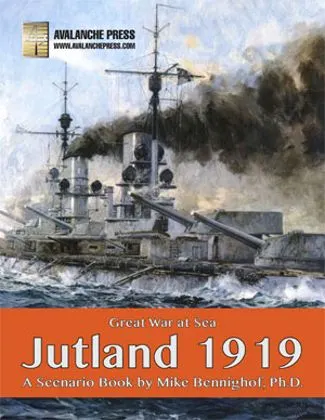
Great War at Sea: Jutland 1919
- 2 players
- 30–240 min
- Complexity 3.0/5
- 2018
Rules assistance for Great War at Sea: High Seas Fleet
Plain-language explanations of turns, card effects and disputed situations, with official source references and saved question history.
What would you like to know?
Answers come from the official rulebook, with the page to check.
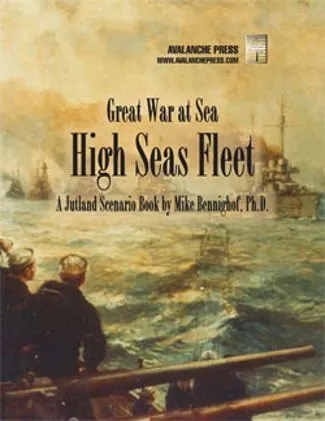
Great War at Sea: High Seas Fleet is an expansion for Great War at Sea: Jutland released in 2015 for 1–2 players, 30–240 minutes per game, and ages 12 and up. It was designed by Michael Bennighof and its main mechanics are Dice Rolling, Secret Unit Deployment, and Hexagon Grid.










Description from the publisher: During the brief period between 1906 and 1914, so the story goes, Britain and Germany engaged in a furious naval arms race sparked by the launch of the Royal Navy’s revolutionary battleship Dreadnought. This rivalry, egged on in Germany by Grand Admiral Alfred von Tirpitz, then helped ignite the First World War. As usual, reality is a little more complicated than popular history. Tirpitz’s enemy lay not across the North Sea but rather in the War Ministry offices just on the other side of the Brandenburger Tor. Army and Navy battled furiously for funding, inventing, respectively, the (possibly mythical) Schlieffen Plan and the Risk Theory (less mythical, but just as detached from reality) to justify ever-higher levels of spending. In the event, neither got what they wanted: the Navy did not build a new class of dreadnoughts every fiscal year, nor did the Army get to muster two dozen new divisions to “reinforce the right.” But what if Tirpitz had won his real battle? Germany had the financial and industrial resources to build a fleet to challenge the British. What might this fleet have looked like, and how would it have stood up to the Grand Fleet in battle? High Seas Fleet is a supplement for the Great War at Sea series that studies this question with background essays, over two dozen new scenarios, and 70 new scorchless, sootless laser-cut playing pieces. It is not playable by itself; you’ll need our Jutland game (and only our Jutland game) to play the scenarios. You can, of course, just read the essays and fondle the pieces without owning Jutland. We won’t tell. New pieces include German battleships designed but never built: the 1904 semi-dreadnought, the 1905 dreadnought, the 1912 dreadnought with 13.8-inch main guns, and the repeat Baden class super-dreadnoughts. There are additional cruisers and battleships to fill out the classes of the German program, and the full Blücher class of six armored cruisers. This is a powerful fleet that can stand toe-to-toe with the British Grand Fleet – the fleet the propagandists boasted of but Tirpitz feared to actually build. Now you can lead it into battle.
Great War at Sea: High Seas Fleet supports 1–2 players according to the catalogue. This range comes from the publisher’s listed player count, so the game can be set up for any group size within it. Some setups, rules and scoring details may still vary by player count, so check your edition’s rulebook for the exact configuration.
The listed playing time for Great War at Sea: High Seas Fleet is 30–240 minutes. This is the publisher’s estimate for a full game. The actual duration depends on the group, the player count and familiarity with the rules: first sessions usually run longer, while experienced groups often finish faster. Setup and teaching time are not included in this estimate.
The catalogue lists Great War at Sea: High Seas Fleet for ages 12 and up. This is the publisher’s recommendation and reflects reading demands, rule complexity and small components rather than theme alone. Younger players can often join with help from an adult, so check the age guidance on your edition and consider your group’s experience with board games.
Great War at Sea: High Seas Fleet has a complexity rating of 3.0 out of 5 from BoardGameGeek players, which makes it a medium-weight game. The rating reflects how much rules knowledge, planning and decision-making a typical game demands. Expect a longer first teach for heavier games, and use a preparation guide before game night.
Great War at Sea: High Seas Fleet belongs to these categories: Wargame, Nautical, and Expansion for Base-game. Its main mechanics are Dice Rolling, Secret Unit Deployment, and Hexagon Grid. Categories describe the theme and setting of a game, while mechanics describe what players actually do on their turns. Each mechanic links to a catalogue hub with similar games, which helps when you want something comparable.
The credited designers of Great War at Sea: High Seas Fleet are: Michael Bennighof. These credits come from the published game data and name the people responsible for the game’s design, not its illustrators or publishers. Designer pages on MeepleRules collect other titles by the same designers, which helps when you enjoy a game and want to find similar ones.
The catalogue lists Great War at Sea: High Seas Fleet as an expansion for Great War at Sea: Jutland. Expansions add new content, rules or scenarios to the base game and usually cannot be played on their own, so you need Great War at Sea: Jutland to use it. Check that your edition of Great War at Sea: Jutland is compatible, as some expansions were revised between editions.