

- BGG rank
- BGG #18,595
- BGG rating
- 8.0
La Bataille de Hanau
- 2 players
- Complexity 3.5/5
- 2021
2011
Rules assistance for Le Retour de l'Empereur
Plain-language explanations of turns, card effects and disputed situations, with official source references and saved question history.
What would you like to know?
Answers come from the official rulebook, with the page to check.
Le Retour de l'Empereur is a board game released in 2011 for 2–8 players and 180–720 minutes per game. It was designed by Didier Rouy and its main mechanics are Hexagon Grid, Line of Sight, and Movement Points.

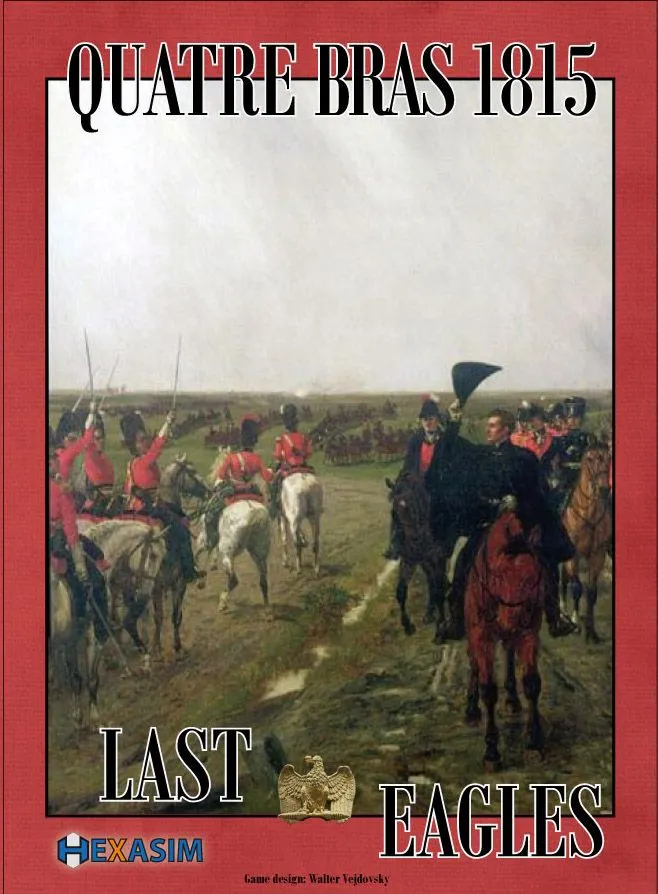


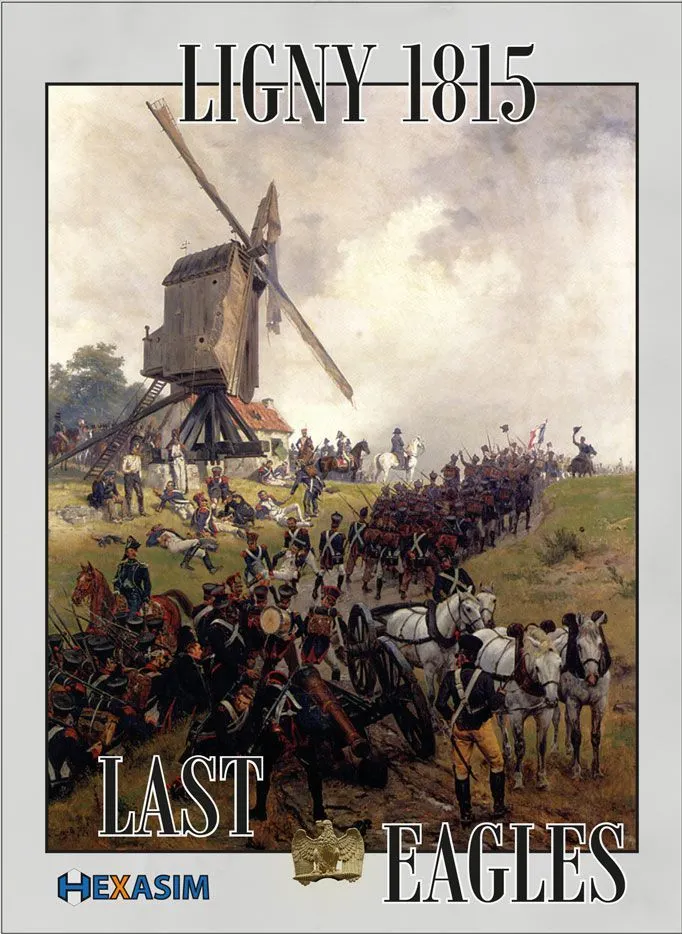
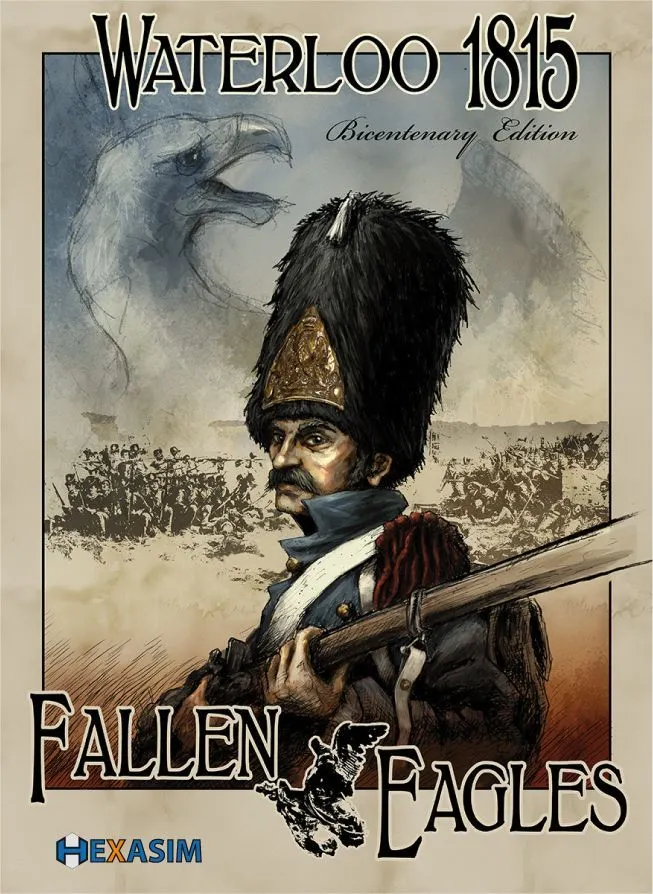

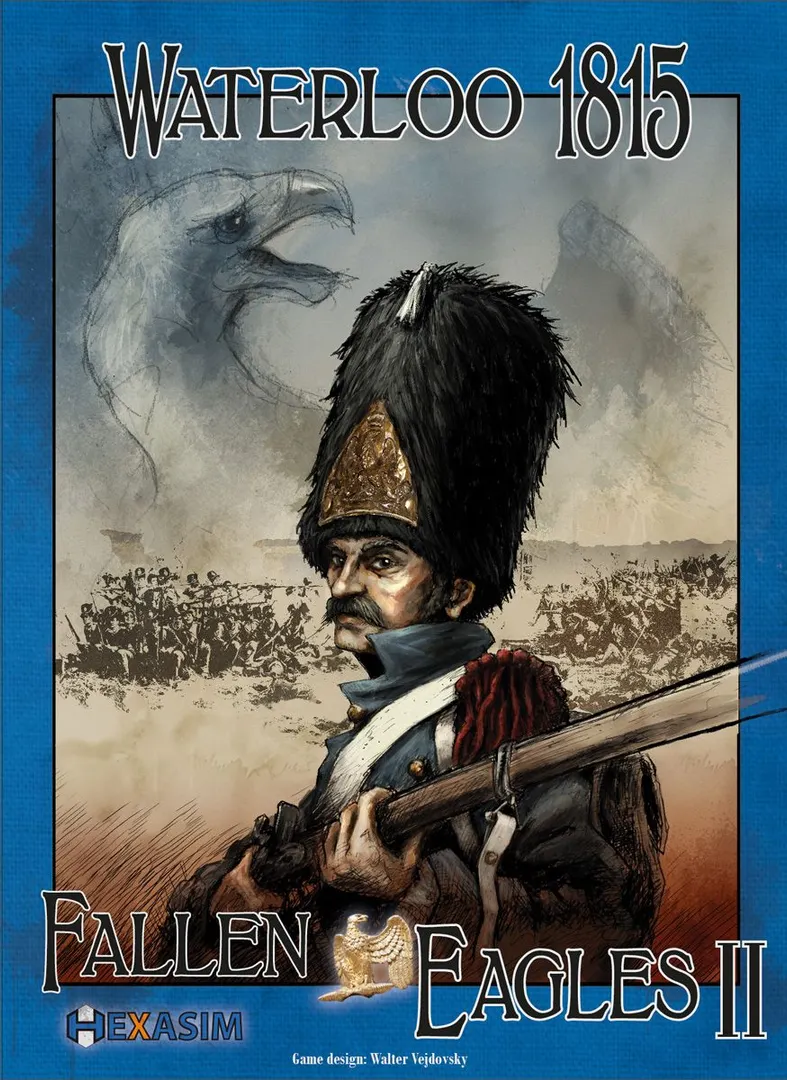
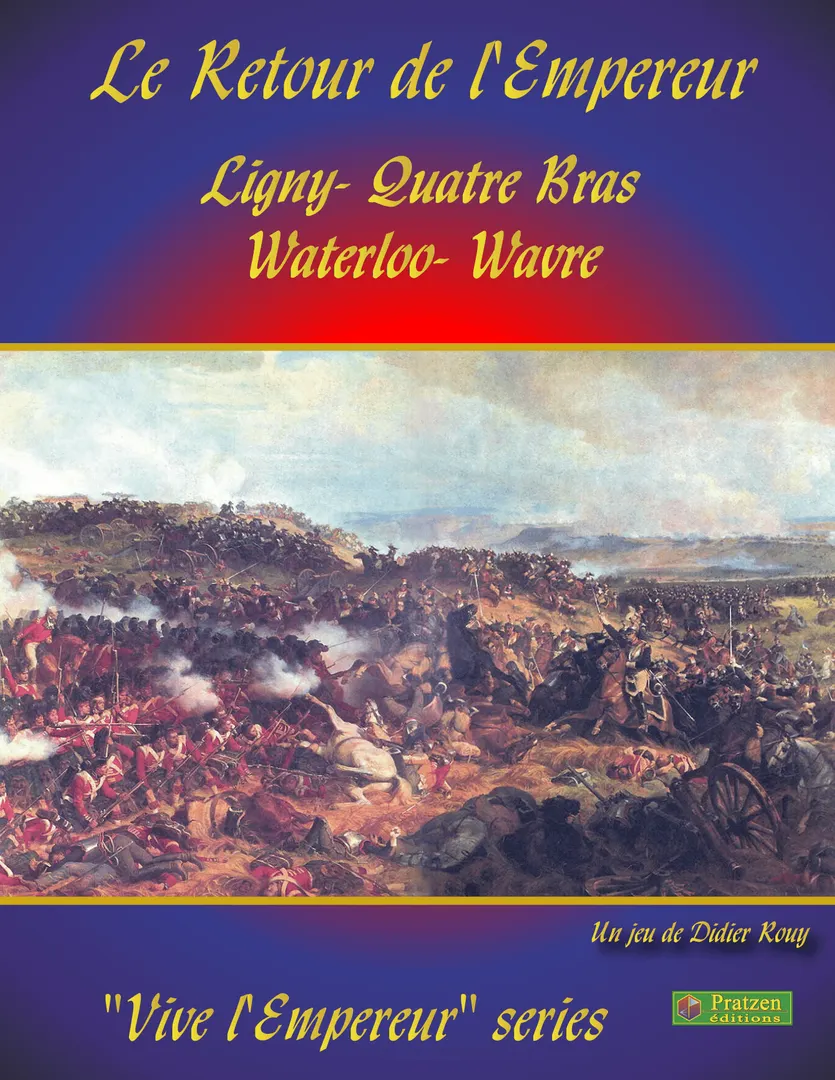
Le Retour de l'Empereur (the Return of the Emperor) is a game on four battles of 1815: Quatre Bras, Ligny, Waterloo and Wavre, using the "Vive l'Empereur" game system. "Vive l’Empereur!" is a series of simulation games using a standard rules system and a set of exclusive rules specific to each battle. These particular rules include an historical commentary and the victory conditions for each scenario. The aim of this system is to refight at the regimental scale the numerous battles fought during the Napoleonic Era in Europe, between 1805 and 1815. It uses a map on which the players move counters representing the combat units involved in these battles. The present game simulates battles of the campaign of 1815 in Belgium that belongs to the legend. After he returns from Elba, Napoléon reconstructed an army and landed a preventive strike on the two closest armies, the Prussian army under the old and faithful Blücher, and the Anglo-Allied army under the Duke of Wellington. At first spread over a vast area, these two armies eventually assembled and fought four legendary battles at Quatre Bras and Ligny on the 16th of June, and then two days later at Wavre and of course Waterloo, called Mont St Jean by the French, and La Belle Alliance by the Prussians. This campaign is an impressive collection of missed opportunities on both sides. Now it is your turn to do at least as well, or better... Components: six 22" x 34" maps (scale 250m/hex) 600 counters, including 300 combat units 2 rules booklets: the Standard Rules Version 3 and the special rules 10 charts and tables, including army losses more than 30 scenarios and what-ifs, including a 3-day campaing game
Le Retour de l'Empereur supports 2–8 players according to the catalogue. This range comes from the publisher’s listed player count, so the game can be set up for any group size within it. Some setups, rules and scoring details may still vary by player count, so check your edition’s rulebook for the exact configuration.
The listed playing time for Le Retour de l'Empereur is 180–720 minutes. This is the publisher’s estimate for a full game. The actual duration depends on the group, the player count and familiarity with the rules: first sessions usually run longer, while experienced groups often finish faster. Setup and teaching time are not included in this estimate.
Le Retour de l'Empereur has a complexity rating of 3.3 out of 5 from BoardGameGeek players, which makes it a medium-weight game. The rating reflects how much rules knowledge, planning and decision-making a typical game demands. Expect a longer first teach for heavier games, and use a preparation guide before game night.
Le Retour de l'Empereur belongs to these categories: Wargame and Napoleonic. Its main mechanics are Hexagon Grid, Line of Sight, and Movement Points. Categories describe the theme and setting of a game, while mechanics describe what players actually do on their turns. Each mechanic links to a catalogue hub with similar games, which helps when you want something comparable.
The credited designers of Le Retour de l'Empereur are: Didier Rouy. These credits come from the published game data and name the people responsible for the game’s design, not its illustrators or publishers. Designer pages on MeepleRules collect other titles by the same designers, which helps when you enjoy a game and want to find similar ones.
The catalogue lists Le Retour de l'Empereur as a base game. It can be played on its own with the components in the box and does not require any other title. Expansions, if any exist, add new content or rules on top of it and are listed separately in the catalogue with a link back to this base game.