
- BGG rank
- BGG #8,361
- BGG rating
- 8.1
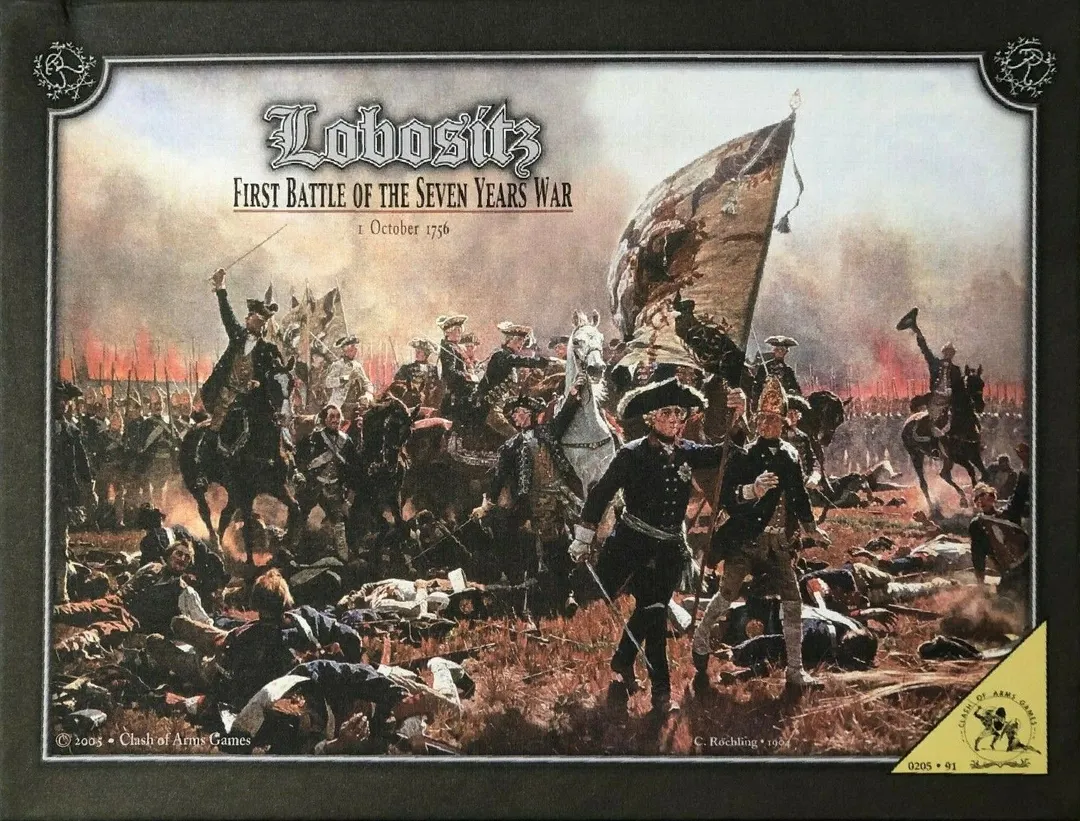
Lobositz: First Battle of the Seven Years War
- 2 players
- 360 min
- Complexity 3.9/5
- 2005
1997
Rules assistance for Leuthen: Frederick's Greatest Victory
Plain-language explanations of turns, card effects and disputed situations, with official source references and saved question history.
For 1 player
What would you like to know?
Answers come from the official rulebook, with the page to check.
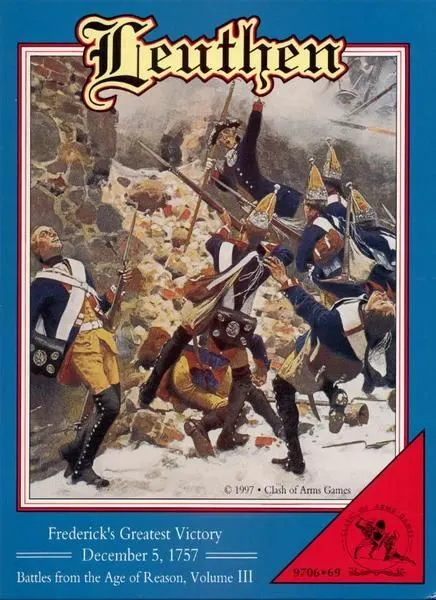
Leuthen: Frederick's Greatest Victory is a board game released in 1997 for 1–2 players, 360 minutes per game, and ages 16 and up. It was designed by Paul Dangel and its main mechanics are Dice Rolling, Hexagon Grid, and Simulation.
December 1757: Not since losing Silesia in 1742 had Austria come so close to regaining the province. With the recent Imperial victory at Breslau (November 22) Austrian forces under Prince Charles of Lorraine and Field-marshal Daun, the victor at Kolin, were only a battle away from that goal. They expected to fight this battle in the new campaign year which would begin in the coming spring. For King Frederick II the loss of Silesia would not only be a devastating blow to his prestige but deprived of its resources, revenue and manpower Prussia's ability to continue the war would be desperately compromised. Rather than to allow the enemy to go unchallenged Frederick marched his remaining army of 40,000 men composed of Rossbach veterans and Breslau survivors against Charles' nearly 60,000-strong force of Austrians, Hungarians, Imperials, Bavarians and Wurttembergers. On a frigid December 5th, in a season when armies usually sought the comfort of winter quarters, the opposing forces met on the snow covered fields surrounding the Silesian village of Leuthen. After deftly maneuvering around Prince Charles' flank Frederick's Prussians attacked with unprecedented fury collapsing the enemy line. However, despite this initial crushing blow the Austrians were able to reorganize their front and fight the Prussians to a standstill leaving the battle's final outcome still in doubt. Only after a climactic cavalry charge did the Habsburg army finally break and retreat to Breslau. Two weeks later the city capitulated and the Austrians evacuated Silesia. Although the war would continue for another six years Frederick would never again attain the level of success he did at Leuthen, his greatest victory. Leuthen (Battles from the Age of Reason, Vol. 3) presents both gamers and students of the period with a colorful and meticulously detailed simulation with which to explore the actual events and possibilities of this definitive battle. Included is an historical commentary written especially for the game by the period's leading authority, Prof. Christopher Duffy. This narrative contains many previously unpublished aspects of the battle and includes maps, diagrams, statistics and his analysis of the 1757 campaign in Silesia. Contents: 2nd edition standard series rules booklet Special rules, scenarios & historical commentary booklet (28 pages) four 22 x 34 inch game map 2 countersheets with 280 counters each (Leuthen countersheet, BAR 2nd edition Markers countersheet) Game scale: Units: Infantry battalions, cavalry regiments, artillery sections Ground: 1 hex = 100 yards Time: 1 turn = 20 minutes (from the back of the box and user's description)
Leuthen: Frederick's Greatest Victory supports 1–2 players according to the catalogue. This range comes from the publisher’s listed player count, so the game can be set up for any group size within it. Some setups, rules and scoring details may still vary by player count, so check your edition’s rulebook for the exact configuration.
The listed playing time for Leuthen: Frederick's Greatest Victory is 360 minutes. This is the publisher’s estimate for a full game. The actual duration depends on the group, the player count and familiarity with the rules: first sessions usually run longer, while experienced groups often finish faster. Setup and teaching time are not included in this estimate.
The catalogue lists Leuthen: Frederick's Greatest Victory for ages 16 and up. This is the publisher’s recommendation and reflects reading demands, rule complexity and small components rather than theme alone. Younger players can often join with help from an adult, so check the age guidance on your edition and consider your group’s experience with board games.
Leuthen: Frederick's Greatest Victory has a complexity rating of 4.0 out of 5 from BoardGameGeek players, which makes it a heavy game. The rating reflects how much rules knowledge, planning and decision-making a typical game demands. Expect a longer first teach for heavier games, and use a preparation guide before game night.
Leuthen: Frederick's Greatest Victory belongs to these categories: Wargame and Age of Reason. Its main mechanics are Dice Rolling, Hexagon Grid, and Simulation. Categories describe the theme and setting of a game, while mechanics describe what players actually do on their turns. Each mechanic links to a catalogue hub with similar games, which helps when you want something comparable.
The credited designers of Leuthen: Frederick's Greatest Victory are: Paul Dangel. These credits come from the published game data and name the people responsible for the game’s design, not its illustrators or publishers. Designer pages on MeepleRules collect other titles by the same designers, which helps when you enjoy a game and want to find similar ones.
The catalogue lists Leuthen: Frederick's Greatest Victory as a base game. It can be played on its own with the components in the box and does not require any other title. Expansions, if any exist, add new content or rules on top of it and are listed separately in the catalogue with a link back to this base game.