
- BGG rank
- BGG #10,627
- BGG rating
- 7.6
Bleeding Kansas
- 2 players
- 60–180 min
- Complexity 2.3/5
- 2019
2013
Rules assistance for Lincoln's War
Plain-language explanations of turns, card effects and disputed situations, with official source references and saved question history.
For 1 player
What would you like to know?
Answers come from the official rulebook, with the page to check.
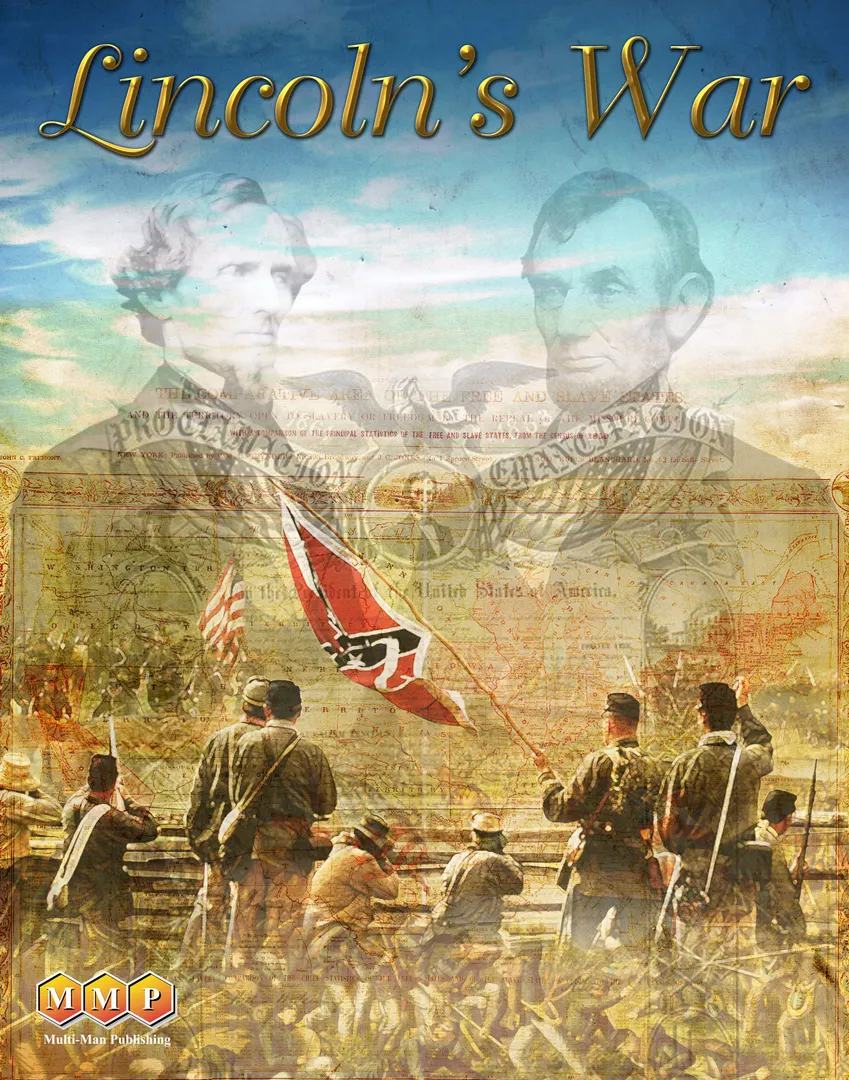
Lincoln's War is a board game released in 2013 for 1–4 players and 180 minutes per game. It was designed by John Poniske and its main mechanics are Hexagon Grid and Campaign / Battle Card Driven.


Lincoln’s War reflects the fickle nature of politics and its influence on military policy-making during the American Civil War. Here, the battlefield is an extension of the political arena. Many historical movers and shakers support or oppose their presidents’ war plans. Will Mr. Lincoln save the Union? Will Mr. Davis succeed in sundering one nation and creating another? How will you direct their political support? Lincoln’s War is a card-driven game using cards to activate generals, but in Lincoln’s War, activation numbers are also political currency or PC. PC not only activates generals but promotes worthy commanders, purchases war material, forces indecisive commanders to act, and represents support for the war. A decisive PC point spread is an advantage in winning the game but driving an opponent to 0 PC (and 0 Congressional support) at the end of a turn will ensure victory, even in the face of defeat. Unique features include a diceless combat system, seditious characters, and immobilization tokens. The combat system requires players to husband resources and congressional political support to ensure victory. Seditious characters oppose their respective Presidents’ handling of the war and sooner or later will erode a president’s vital political support. Immobilization tokens reflect damage in the form of casualties, as well as hesitation, confusion and even insubordination. Lincoln’s War contains: 1 22" x 34" map 1 color rulebook 1 color play and background booklet 162 Operations Cards 2 countersheets 2 player aid cards Lincoln’s War was designed by John Poniske with the assistance of Mike Joslyn, and features the artwork of Niko Eskubi and map artwork by Mark Mahaffey. (source: MMP website)
Lincoln's War supports 1–4 players according to the catalogue. This range comes from the publisher’s listed player count, so the game can be set up for any group size within it. Some setups, rules and scoring details may still vary by player count, so check your edition’s rulebook for the exact configuration.
The listed playing time for Lincoln's War is 180 minutes. This is the publisher’s estimate for a full game. The actual duration depends on the group, the player count and familiarity with the rules: first sessions usually run longer, while experienced groups often finish faster. Setup and teaching time are not included in this estimate.
Lincoln's War has a complexity rating of 3.1 out of 5 from BoardGameGeek players, which makes it a medium-weight game. The rating reflects how much rules knowledge, planning and decision-making a typical game demands. Expect a longer first teach for heavier games, and use a preparation guide before game night.
Lincoln's War belongs to these categories: Wargame and American Civil War. Its main mechanics are Hexagon Grid and Campaign / Battle Card Driven. Categories describe the theme and setting of a game, while mechanics describe what players actually do on their turns. Each mechanic links to a catalogue hub with similar games, which helps when you want something comparable.
The credited designers of Lincoln's War are: John Poniske. These credits come from the published game data and name the people responsible for the game’s design, not its illustrators or publishers. Designer pages on MeepleRules collect other titles by the same designers, which helps when you enjoy a game and want to find similar ones.
The catalogue lists Lincoln's War as a base game. It can be played on its own with the components in the box and does not require any other title. Expansions, if any exist, add new content or rules on top of it and are listed separately in the catalogue with a link back to this base game.