
- BGG rank
- BGG #6,354
- BGG rating
- 8.0
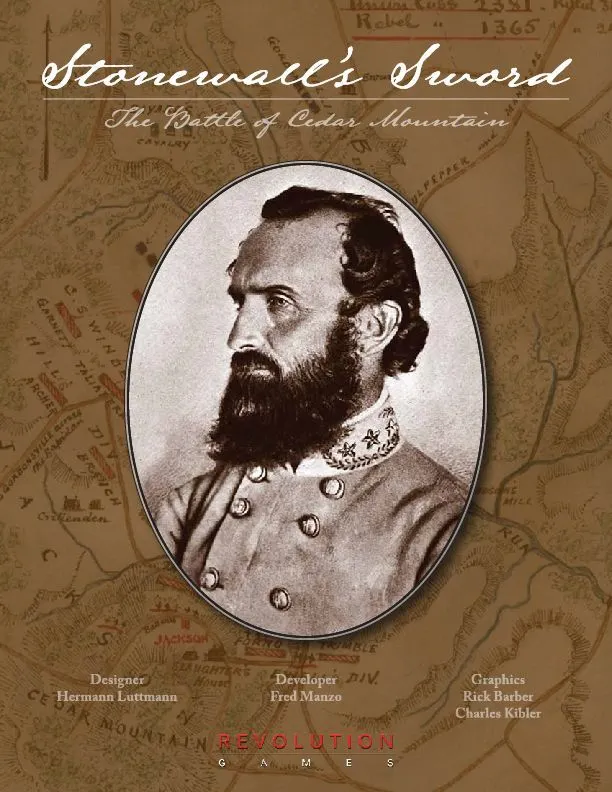
Stonewall's Sword: The Battle of Cedar Mountain
- 1–2 players
- 180 min
- Complexity 3.1/5
- 2015
2018
Rules assistance for Longstreet Attacks: The Second Day at Gettysburg
Plain-language explanations of turns, card effects and disputed situations, with official source references and saved question history.
For 1 player
What would you like to know?
Answers come from the official rulebook, with the page to check.
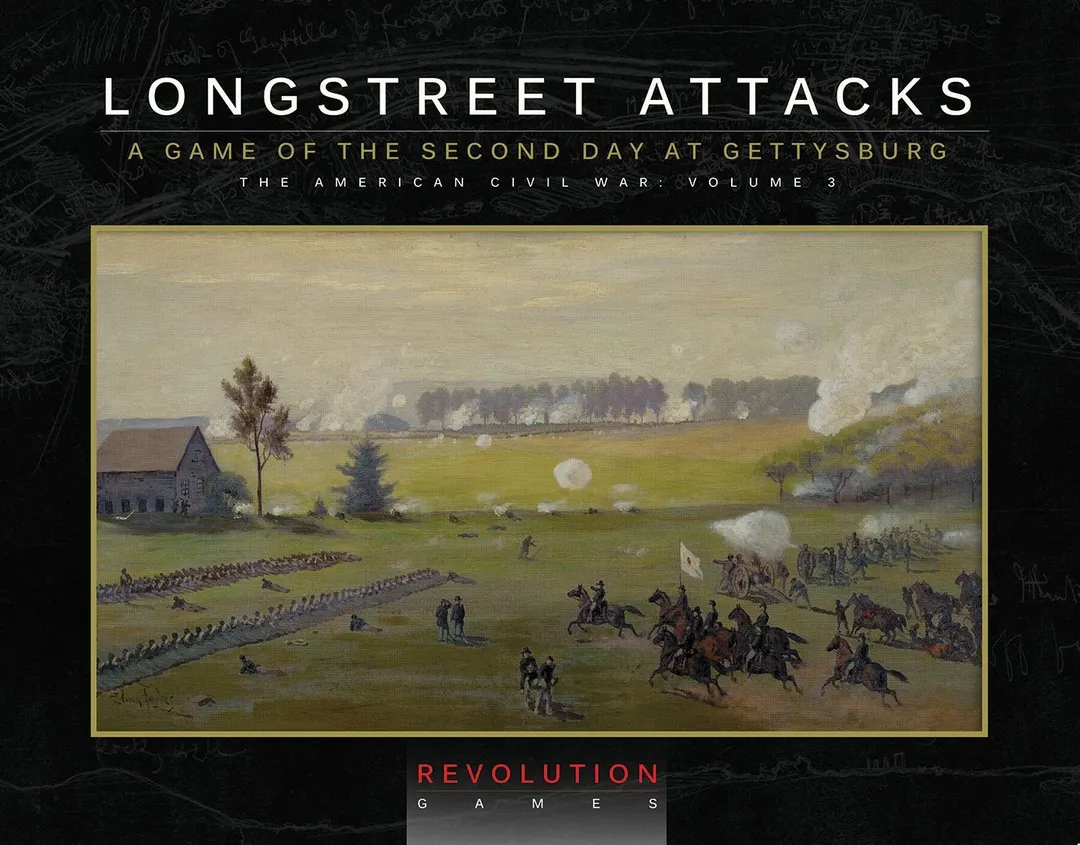
Longstreet Attacks: The Second Day at Gettysburg is a board game released in 2018 for 1–4 players, 90–720 minutes per game, and ages 12 and up. It was designed by Hermann Luttmann and its main mechanics are Dice Rolling, Grid Movement, and Hexagon Grid.




Longstreet Attacks: The Second Day at Gettysburg is a two-player Tactical level board-wargame simulating the fighting on July 2nd, 1863 during the second day of the Battle of Gettysburg and focuses on the southern portion of the battlefield. These engagements involved General Longstreet’s attack against Sickles’ positions, with troops from Hood’s and McLaws’ Divisions, assisted as well by Anderson’s Division of A.P. Hill’s Corps. The game is specifically designed to be a playable regimental-scale game that players can complete in a long evening. It allows the players the immersive experience of tactical combat without the heavy rules overhead normally found in such games, while also delivering a comprehensive experience of limited intelligence and unexpected events. The game features the Blind Swords chit-pull system which emphasizes the three “FOW’s” of military conflict: fog-of-war, friction-of-war and fortunes-of-war. With each chit pull, players will be challenged to make tough decisions based on their assessment of the situation at that moment. Unlike traditional chit-pull systems, the Blind Swords system ensures that no combat units can be counted on, or conversely, counted out. This yields an environment of tense action and constant surprises – an environment that will challenge each player. UNITS All regiments and batteries of the Army of Northern Virginia and the Army of the Potomac that took part in these actions are represented in the Order of Battle. Each unit has a Strength Point number, with each point equaling 50 men or 1 artillery piece, and a Cohesion Rating, representing the unit’s morale, training and experience. SYSTEM HIGHLIGHTS Combat and Cohesion System: The combat system is “firepower” based and utilizes the unit’s size and Cohesion Rating to determine its effectiveness. The combat system is driven by a unique four-D6 dice mechanic. All four differently-colored dice are rolled simultaneously. The black and white dice generate an initial result ranging from 11 to 66. The other two dice (red and blue) simultaneously give the players the tangible effect of the initial result and represent physical casualties suffered by the unit (the red die) and the morale effect of the enemy’s fire (the blue die). Orders System: A player must first choose one of four possible Orders that an activated Brigade will operate under – Attack, Defend, Maneuver or Rally. Each Order has specific parameters that provide benefits and restrictions. This Order choice can be critical to a unit’s performance during its activation. Chit-Pull System: The Blind Swords chit-pull system is a unique mechanic and generates challenging actions and difficult decisions for the players. It features four different types of chits, all of which reside in the same cup, each with special effects: Division Activation Chits. These activate any one Brigade (not yet activated) from the Division listed on the chit. However, further Brigade activations from this Division are dependent on the Division General’s Command Rating and a die roll. A successful die roll places the chit back into the cup and thereby the other Brigades of the Division have a chance to activate in the future. A failed die roll discards the chit for the turn and the remaining Brigades will not be able to activate normally (however, see below). CIC Chits. These are a special kind of Activation Chit. The Union player has a Sickles chit and the Confederate player has a Longstreet chit. These chits allow the player to select any one Brigade in the game for activation - even if it has already activated or will be activated later in the turn. Thus, this is the opportunity to activate a Brigade twice in the turn or activate a Brigade from a Division that has lost its Division Activation Chit. Event Chits. There are nine Event chits assigned to each player. At the start of each turn, players may select any one of these chits to place in the cup (obviously an Event they really want). Three Event chits are randomly thrown out of the turn and will not be used – the remaining five Event chits are also then placed into the cup with the previously pre-selected chit. In this manner, players are never assured of drawing any particular Event chit, except for the one they chose. Each Event chit has a Unique Event side (all the chits have a different Event listed) and a Command Event side. The Unique Event is a tactical event that can be used on the battlefield and each Event has specific effects and options for the player to consider. Examples are Rebel Yell!, Union Logistics, Quick March and Heroic Stand. The Command Event side is used for more strategic options. The Union player may call for reinforcements from the rest of the Army of the Potomac (only the III Corps Divisions are available at start) and the Confederate player can attempt to better coordinate his attack (by increasing his Division General’s Command Ratings). Wild Chits. These are the two “chaos” chits. One chit is Fog of War, which can possibly cause units from either side to conduct unexpected attacks or withdrawals, or can cause General officer casualties. The other chit is Fortunes of War which will immediately discard the next chit pulled with no effect – including that special pre-selected Event chit if it happens to come up! MAP The map is 22” x 34” hexagonal map of the entire south end of the Gettysburg battlefield. Each hex equal 150 yards and contains all the significant terrain details – elevations, slopes, woods, swamps, buildings, orchards, etc. SCENARIOS The game will include at least five scenarios: The Round Tops. A small scenario to introduce people to the games rules. The Whirlpool. A ten turn scenario about the most contested part of the battlefield. The Wheatfield, Devils Den, Houck's Ridge and the Peach Orchard. 4:20 to 7:20pm Assault on the Emmitsburg Road. A 9 turn scenario of the battle for the Peach Orchard and Cemetery Ridge. 5:40 to 8:20 PM Hammerin' Sickles. The full second days action on this part of the field. 14 turns. 4:00 to 8:20 pm. Sickles Stays Put. A what if scenario exploring a set up closer to what Meade intended for Sickles before his forward advance. Map by Rick Barber Counters by Charlie Kibler Box by Mark Mahaffey
Longstreet Attacks: The Second Day at Gettysburg supports 1–4 players according to the catalogue. This range comes from the publisher’s listed player count, so the game can be set up for any group size within it. Some setups, rules and scoring details may still vary by player count, so check your edition’s rulebook for the exact configuration.
The listed playing time for Longstreet Attacks: The Second Day at Gettysburg is 90–720 minutes. This is the publisher’s estimate for a full game. The actual duration depends on the group, the player count and familiarity with the rules: first sessions usually run longer, while experienced groups often finish faster. Setup and teaching time are not included in this estimate.
The catalogue lists Longstreet Attacks: The Second Day at Gettysburg for ages 12 and up. This is the publisher’s recommendation and reflects reading demands, rule complexity and small components rather than theme alone. Younger players can often join with help from an adult, so check the age guidance on your edition and consider your group’s experience with board games.
Longstreet Attacks: The Second Day at Gettysburg has a complexity rating of 3.5 out of 5 from BoardGameGeek players, which makes it a medium-weight game. The rating reflects how much rules knowledge, planning and decision-making a typical game demands. Expect a longer first teach for heavier games, and use a preparation guide before game night.
Longstreet Attacks: The Second Day at Gettysburg belongs to these categories: Wargame, Civil War, and Post-Napoleonic. Its main mechanics are Dice Rolling, Grid Movement, and Hexagon Grid. Categories describe the theme and setting of a game, while mechanics describe what players actually do on their turns. Each mechanic links to a catalogue hub with similar games, which helps when you want something comparable.
The credited designers of Longstreet Attacks: The Second Day at Gettysburg are: Hermann Luttmann. These credits come from the published game data and name the people responsible for the game’s design, not its illustrators or publishers. Designer pages on MeepleRules collect other titles by the same designers, which helps when you enjoy a game and want to find similar ones.
The catalogue lists Longstreet Attacks: The Second Day at Gettysburg as a base game. It can be played on its own with the components in the box and does not require any other title. Expansions, if any exist, add new content or rules on top of it and are listed separately in the catalogue with a link back to this base game.