- BGG rating
- 6.0
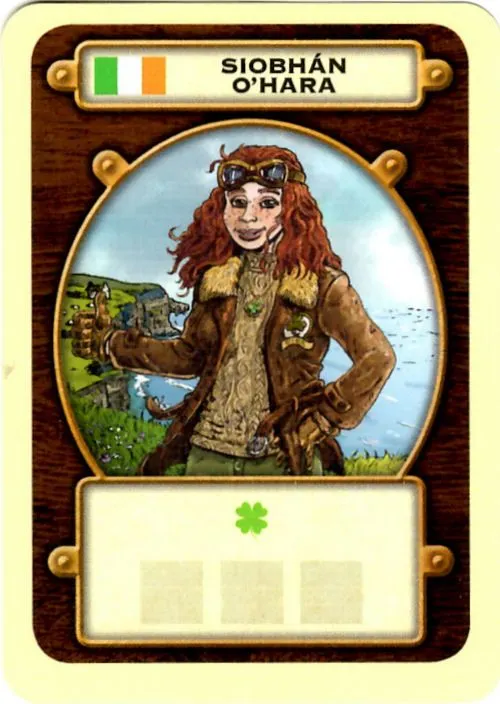
Magnificent Flying Machines: Siobhán O'Hara
- 2–6 players
- 60–150 min
- 2018
2018
Rules assistance for Magnificent Flying Machines
Plain-language explanations of turns, card effects and disputed situations, with official source references and saved question history.
What would you like to know?
Answers come from the official rulebook, with the page to check.
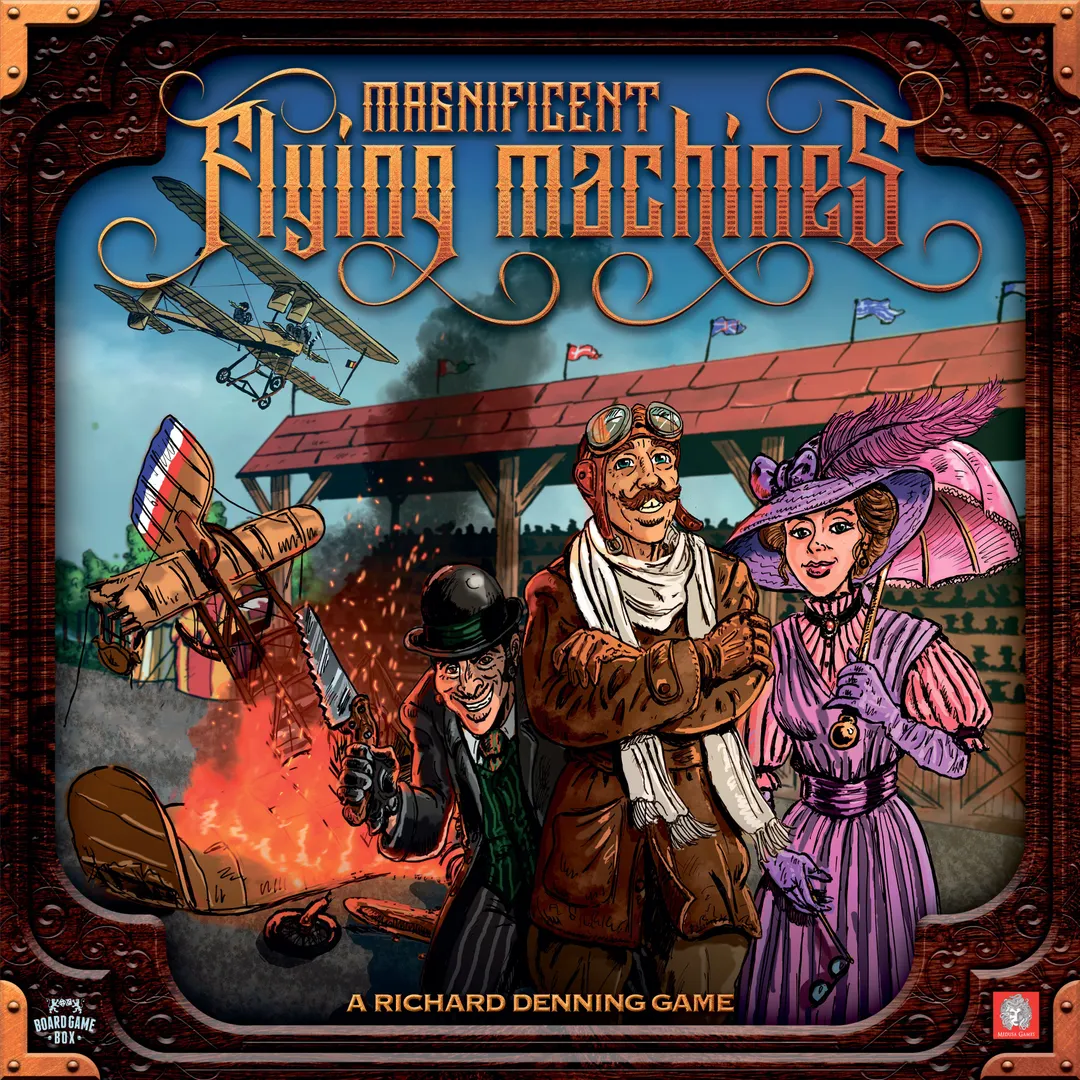
Magnificent Flying Machines is a board game released in 2018 for 2–6 players, 60–150 minutes per game, and ages 12 and up. It was designed by Richard Denning and its main mechanics are Push Your Luck, Dice Rolling, and Simulation.





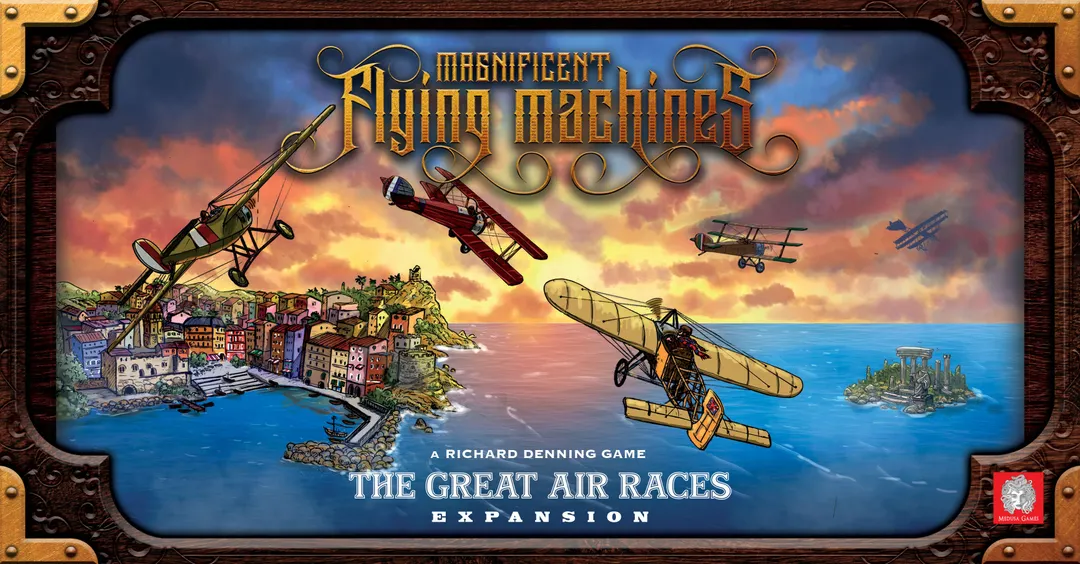
This game takes inspiration from the great air races of circa 1908 to 1913 which took place in the pioneering era of air travel. These air races galvanized interest across the world and encouraged by generous prizes by newspapers and other sponsors attracted international entries. Air travel was risky and most unreliable. Often only a small number of the entrants would make it to the finish line. Will one of your pilots manage to face up to the challenge? But watch out: In this era of gentlemanly behavior and stiff upper lips, there are a few cads and bounders who will cheat to win. In Magnificent Flying Machines, the player who ends the game with the most victory points wins. These can be earned in various ways including being the first to land successfully on a certain terrain tile, landing on the middle airfield, transporting cargo or passengers, or performing trick maneuvers. Simply being the first to cross the finishing line is unlikely to be enough on its own to secure a victory. The winner will be the player who picks a strategy that best matches the abilities of the pilot and features of the flying machine they are using. The game is played in a series of rounds. A round begins with the first player taking a turn. Each player takes their turn in order clockwise around the table. During a turn a player has two action phases available. There are three types of action phase to choose from. These are the takeoff phase (which may also include refueling, repairing and scavenging spare parts), the flying phase (which may also include gaining altitude and performing trick maneuvers), and the landing phase (which may also include refueling). In addition, whenever a flying machine lands on a terrain tile any passengers that wish to will disembark, and any cargo intended for that terrain type is unloaded. It may also take on available equipment, cargo and passengers if space is available to do so. Players progress in the game by passing a series of takeoff, flying and landing tests. To determine the difficulty of a particular test, first look at the number of symbols for that test shown on the terrain tile that the flying machine is on. Simply add the number of symbols shown on the terrain tile to the number of symbols on the relevant weather tile. If a player needs to take a test, first check to see the total number of relevant symbols shown on the flying machine dashboard. This is the number of dice that may be rolled when attempting to obtain a sufficient number of symbols to pass the test. If the player does not roll enough symbols they may then choose to make use of special equipment, use spare parts, or play trick and boost cards to obtain additional symbols in order to pass the test. If a player is unable to obtain a sufficient number of symbols to pass the test then a failure occurs. If the dice rolled include a catastrophic failure symbol, then a catastrophic failure occurs. The effects of such a failure vary depending on the test being taken.
Magnificent Flying Machines supports 2–6 players according to the catalogue. This range comes from the publisher’s listed player count, so the game can be set up for any group size within it. Some setups, rules and scoring details may still vary by player count, so check your edition’s rulebook for the exact configuration.
The listed playing time for Magnificent Flying Machines is 60–150 minutes. This is the publisher’s estimate for a full game. The actual duration depends on the group, the player count and familiarity with the rules: first sessions usually run longer, while experienced groups often finish faster. Setup and teaching time are not included in this estimate.
The catalogue lists Magnificent Flying Machines for ages 12 and up. This is the publisher’s recommendation and reflects reading demands, rule complexity and small components rather than theme alone. Younger players can often join with help from an adult, so check the age guidance on your edition and consider your group’s experience with board games.
Magnificent Flying Machines has a complexity rating of 2.3 out of 5 from BoardGameGeek players, which makes it a medium-light game. The rating reflects how much rules knowledge, planning and decision-making a typical game demands. Expect a longer first teach for heavier games, and use a preparation guide before game night.
Magnificent Flying Machines belongs to these categories: Transportation and Aviation / Flight. Its main mechanics are Push Your Luck, Dice Rolling, and Simulation. Categories describe the theme and setting of a game, while mechanics describe what players actually do on their turns. Each mechanic links to a catalogue hub with similar games, which helps when you want something comparable.
The credited designers of Magnificent Flying Machines are: Richard Denning. These credits come from the published game data and name the people responsible for the game’s design, not its illustrators or publishers. Designer pages on MeepleRules collect other titles by the same designers, which helps when you enjoy a game and want to find similar ones.
The catalogue lists Magnificent Flying Machines as a base game. It can be played on its own with the components in the box and does not require any other title. Expansions, if any exist, add new content or rules on top of it and are listed separately in the catalogue with a link back to this base game.