
- BGG rank
- BGG #14,730
- BGG rating
- 6.6
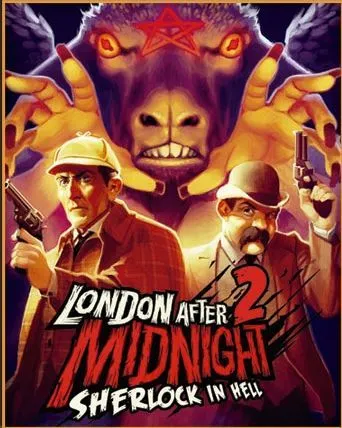
London After Midnight 2: Sherlock in Hell
- 2–6 players
- 10–15 min
- Complexity 1.3/5
- 2016
2015
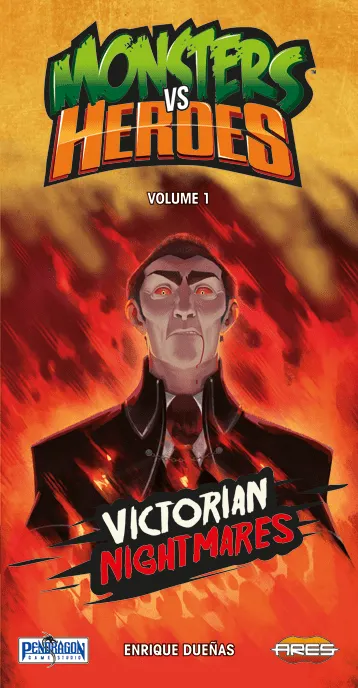
Rules assistance for Monsters vs. Heroes: Victorian Nightmares
Plain-language explanations of turns, card effects and disputed situations, with official source references and saved question history.
For 2 players
What would you like to know?
Answers come from the official rulebook, with the page to check.
Monsters vs. Heroes: Victorian Nightmares is a board game released in 2015 for 2–8 players, 10–30 minutes per game, and ages 8 and up. It was designed by Enrique Dueñas González and its main mechanics are Take That and Open Drafting.
Heroes and monsters fight to death in the streets of victorian London! Each player take a secret faction card, that will say if he is at the side of the "Heroes" or at the side of "Monsters". During the game, a player can either play a card from his hand or draw a new card. Each card will give you "black" points (if you are a Monster) or "white" points (if you are a Hero). Also, each card represents a character with a special skill that you can use in your favor. Dracula can control the forces of darkness. Van Helsing can destroy the undead. Frankenstein's monster can run havoc. Arsene Lupin can steal a card from another player. Jekyll and Hyde discard each other... The game ends when the last card is drawn. Then, each player reveals his faction and count his points. There can be only one winner! Monsters vs. Heroes: Victorian Nightmares — first released as London After Midnight — is very easy to learn and very fun to play. There is a total of 18 different characters, in a deck of 30 cards. Some of these characters are unique and deadly, like the werewolf, but others are more common and less powerful, like the brave young men. In addition to this, each faction card will give you an extra point if you have a certain character in front of you at the end of the game. That means that some cards are more useful for some players than for others. ••• ¡Héroes y monstruos combaten a muerte en las calles del Londres victoriano! Cada jugador coge una carta de facción secreta, que dirá si está del lado de los "Héroes" o de los "Monstruos". Durante la partida, un jugador puede, o bien jugar una carta desde su mano, o bien robar una nueva carta. Cada carta proporciona puntos negros (si estás del lado de los monstruos) o blancos (si estás del lado de los héroes). Además, cada una de estas cartas representa a un personaje con una habilidad especial que puedes usar en tu beneficio. Drácula puede controlar las fuerzas de la oscuridad. Van Helsing puede destruir a los no-muertos. El monstruo de Frankenstein puede provocar el caos. Arsene Lupin puede robar una carta a otro jugador. Jekyll y Hyde se descartan mutuamente... El juego termina cuando se roba la última carta del mazo. Entonces, cada jugador revela su carta de facción y cuenta los puntos. ¡Sólo puede haber un ganador! "London after midnight" es muy fácil de aprender y muy divertido de jugar. Contiene 18 personajes distintos, en un mazo con un total de 30 cartas. Algunos de estos personajes son únicos y letales, como el hombre lobo, mientras que otros son más comunes y menos poderosos, como los jóvenes aguerridos. Además, cada carta de facción te dará un punto extra si tienes a cierto personaje frente a ti al final del juego. Esto significa que algunas cartas son más útiles para unos jugadores que para otros. Tendrás que engañar, jugar de forma estratégica y traicionar a tus amigos. ¡¡Si te gustan los juegos de cartas rápidos y las películas de terror antiguas, "London after midnight" está hecho para ti!!
Monsters vs. Heroes: Victorian Nightmares supports 2–8 players according to the catalogue. This range comes from the publisher’s listed player count, so the game can be set up for any group size within it. Some setups, rules and scoring details may still vary by player count, so check your edition’s rulebook for the exact configuration.
The listed playing time for Monsters vs. Heroes: Victorian Nightmares is 10–30 minutes. This is the publisher’s estimate for a full game. The actual duration depends on the group, the player count and familiarity with the rules: first sessions usually run longer, while experienced groups often finish faster. Setup and teaching time are not included in this estimate.
The catalogue lists Monsters vs. Heroes: Victorian Nightmares for ages 8 and up. This is the publisher’s recommendation and reflects reading demands, rule complexity and small components rather than theme alone. Younger players can often join with help from an adult, so check the age guidance on your edition and consider your group’s experience with board games.
Monsters vs. Heroes: Victorian Nightmares has a complexity rating of 1.3 out of 5 from BoardGameGeek players, which makes it a light game. The rating reflects how much rules knowledge, planning and decision-making a typical game demands. Expect a longer first teach for heavier games, and use a preparation guide before game night.
Monsters vs. Heroes: Victorian Nightmares belongs to these categories: Card Game and Horror. Its main mechanics are Take That and Open Drafting. Categories describe the theme and setting of a game, while mechanics describe what players actually do on their turns. Each mechanic links to a catalogue hub with similar games, which helps when you want something comparable.
The credited designers of Monsters vs. Heroes: Victorian Nightmares are: Enrique Dueñas González. These credits come from the published game data and name the people responsible for the game’s design, not its illustrators or publishers. Designer pages on MeepleRules collect other titles by the same designers, which helps when you enjoy a game and want to find similar ones.
The catalogue lists Monsters vs. Heroes: Victorian Nightmares as a base game. It can be played on its own with the components in the box and does not require any other title. Expansions, if any exist, add new content or rules on top of it and are listed separately in the catalogue with a link back to this base game.