
- BGG rating
- 7.3
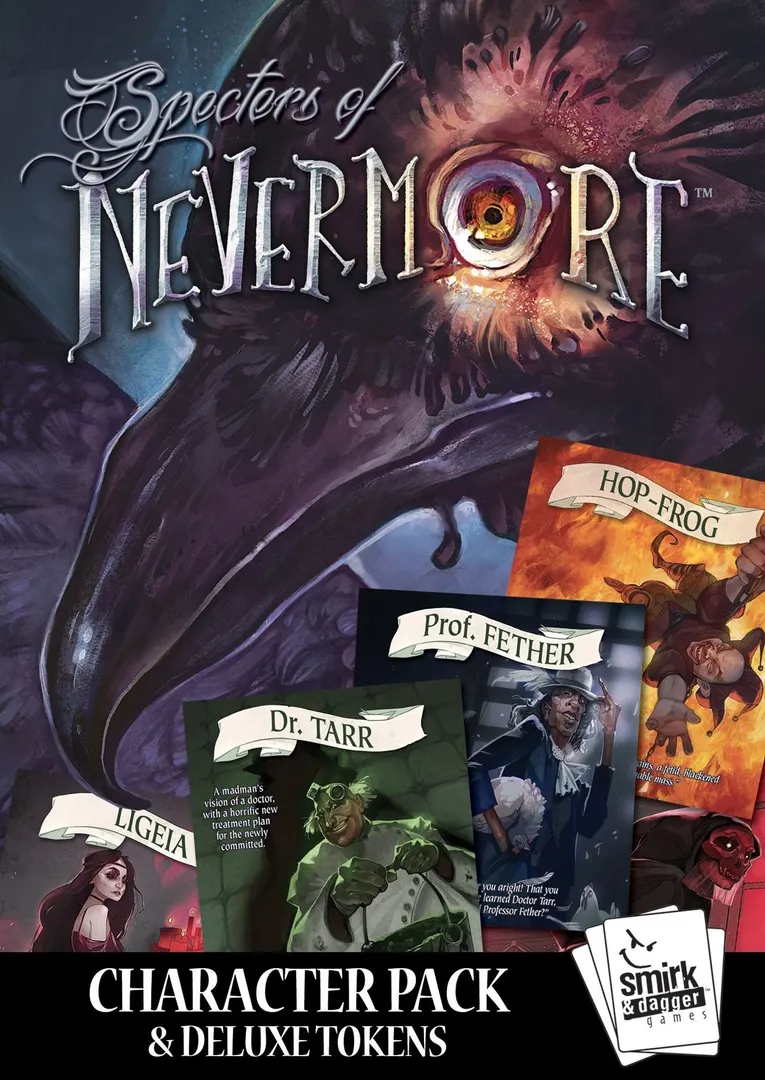
Specters of Nevermore
- 3–6 players
- 45–60 min
- 2016
2015
Rules assistance for Nevermore
Plain-language explanations of turns, card effects and disputed situations, with official source references and saved question history.
For 3 players
What would you like to know?
Answers come from the official rulebook, with the page to check.
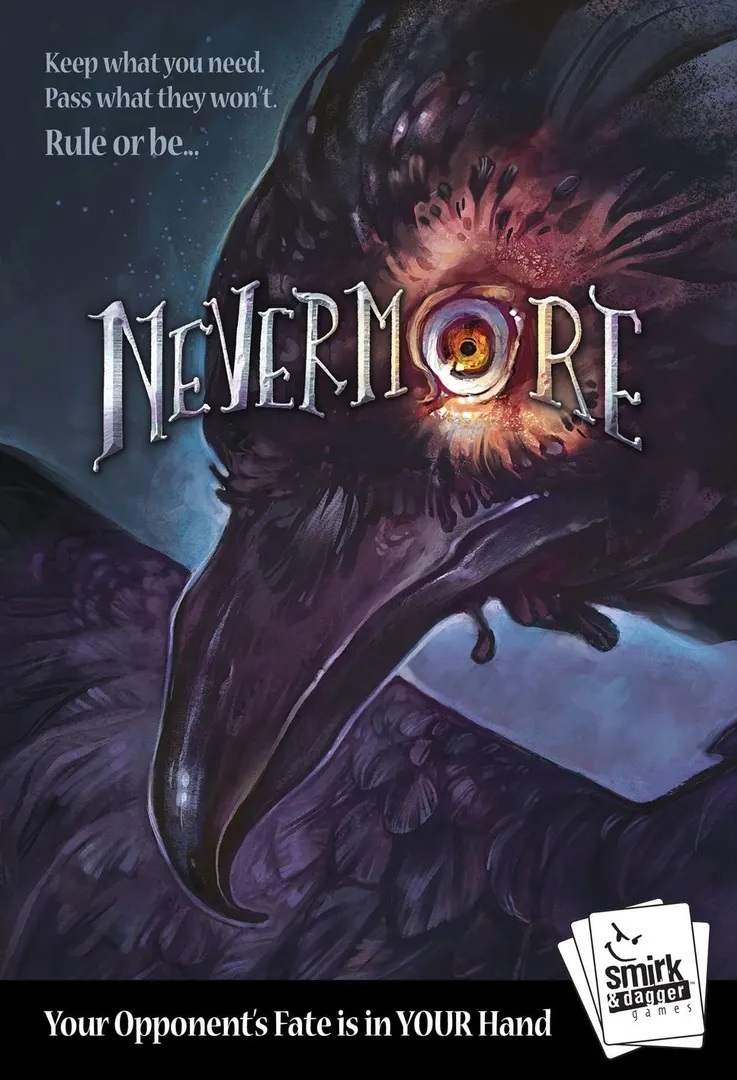
Nevermore is a board game released in 2015 for 3–6 players, 45–60 minutes per game, and ages 14 and up. It was designed by Curt Covert and its main mechanics are Hand Management, Take That, and Set Collection.


Pass with care... Many are the paths to power: brute force, subtle deception, cunning trickery. You hold the cards...but you can't keep them all. What will you decide to collect for personal gain? And what are you willing to give up in order to destroy? The Ravens are gathering, many of whom used to be rivals. Will you rise to power or simply be...nevermore. Nevermore is a casual-style, card-drafting game in which you quickly build your hand each round, collecting cards you want and poisoning your opponent's hand by passing along cards you think they can't use. Whoever holds the most of a given suit, gains the power of that suit to attack, heal, acquire Light or Shadow magicks and score victory points. Will you transform all your rivals into ravens — or can they regain their human form in time to score enough victory to win? Nevermore can be taught in less than five minutes, yet hides a surprising amount of depth in strategy, as players try to outwit and outmaneuver their opponents. Player ‘transformation’ replaces player elimination, keeping everyone in the game until the last moment, yet still rewards players who have performed better during the game. That's because a player who has become a Raven cannot win until they can find a way to transform back, but they still play, helping to doom other players and trying to collect one of two specific hands (all of one suit - or - one of every suit) to become human again. Short game length encourages multiple plays per session and appeals to players of all skill levels – with plenty of underhanded plotting and backstabby goodness. Play Overview: Players are dealt a hand of 5 cards - but they will not keep them all. During the drafting phase, players must pass three of those cards to the player on their left. From their new set of five, they must then pass two to the left. Lastly, they will pass one card left - ending the drafting phase with a final drafted hand of five cards. They will have attempted to collect cards from a certain suit (or two) trying to be the player who has the most of that suit this hand - and also carefully managing what they are passing to their opponent, to make sure they don't end up with too powerful a hand. During the resolution phase, each suit is called for, one at a time. All players show cards from that suit simultaneously. The player with the most gains the power of the suit - and the strength of the ability is determined by subtracting the second highest total of that suit. Example: I hold three Attack cards. Two other players each hold one Attack card. (3-1=2) I do a 2 point attack on a player I choose. Healing, Victory points and Radiance (which draws a Light Magick card for each you have minus the second highest amount) all work the same way. All but Ravens, who kill cards of other suits in your hand. Example: I have 3 Victory, 1 Attack and 1 Raven. I must choose to sacrifice either 1 Attack or 1 Victory card from my hand as they are Resolved. Certain special hands give additional benefits and/or Victory points. If your 5 Health points drop to 0, you become a Raven, still in the game, but unable to win until you can transform back. The winner is either the last human player standing - or the first to score 6 Victory points.
Nevermore supports 3–6 players according to the catalogue. This range comes from the publisher’s listed player count, so the game can be set up for any group size within it. Some setups, rules and scoring details may still vary by player count, so check your edition’s rulebook for the exact configuration.
The listed playing time for Nevermore is 45–60 minutes. This is the publisher’s estimate for a full game. The actual duration depends on the group, the player count and familiarity with the rules: first sessions usually run longer, while experienced groups often finish faster. Setup and teaching time are not included in this estimate.
The catalogue lists Nevermore for ages 14 and up. This is the publisher’s recommendation and reflects reading demands, rule complexity and small components rather than theme alone. Younger players can often join with help from an adult, so check the age guidance on your edition and consider your group’s experience with board games.
Nevermore has a complexity rating of 1.9 out of 5 from BoardGameGeek players, which makes it a light game. The rating reflects how much rules knowledge, planning and decision-making a typical game demands. Expect a longer first teach for heavier games, and use a preparation guide before game night.
Nevermore belongs to these categories: Card Game and Animals. Its main mechanics are Hand Management, Take That, and Set Collection. Categories describe the theme and setting of a game, while mechanics describe what players actually do on their turns. Each mechanic links to a catalogue hub with similar games, which helps when you want something comparable.
The credited designers of Nevermore are: Curt Covert. These credits come from the published game data and name the people responsible for the game’s design, not its illustrators or publishers. Designer pages on MeepleRules collect other titles by the same designers, which helps when you enjoy a game and want to find similar ones.
The catalogue lists Nevermore as a base game. It can be played on its own with the components in the box and does not require any other title. Expansions, if any exist, add new content or rules on top of it and are listed separately in the catalogue with a link back to this base game.