
- BGG rank
- BGG #3,826
- BGG rating
- 8.0
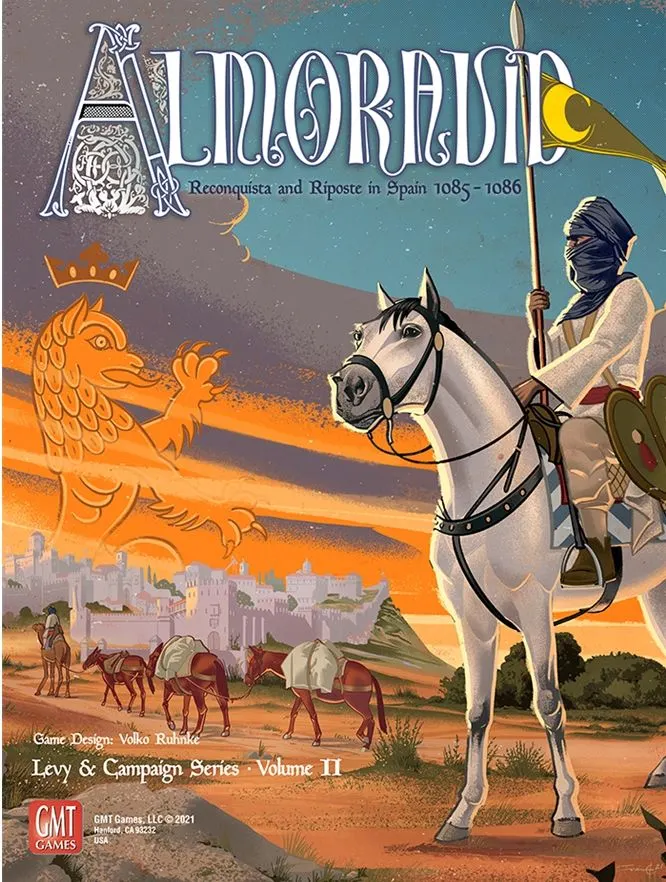
Almoravid: Reconquista and Riposte in Spain 1085-1086
- 1–2 players
- 60–360 min
- Complexity 4.1/5
- 2022
2019
Rules assistance for Nevsky: Teutons and Rus in Collision 1240-1242
Plain-language explanations of turns, card effects and disputed situations, with official source references and saved question history.
For 1 player
What would you like to know?
Answers come from the official rulebook, with the page to check.
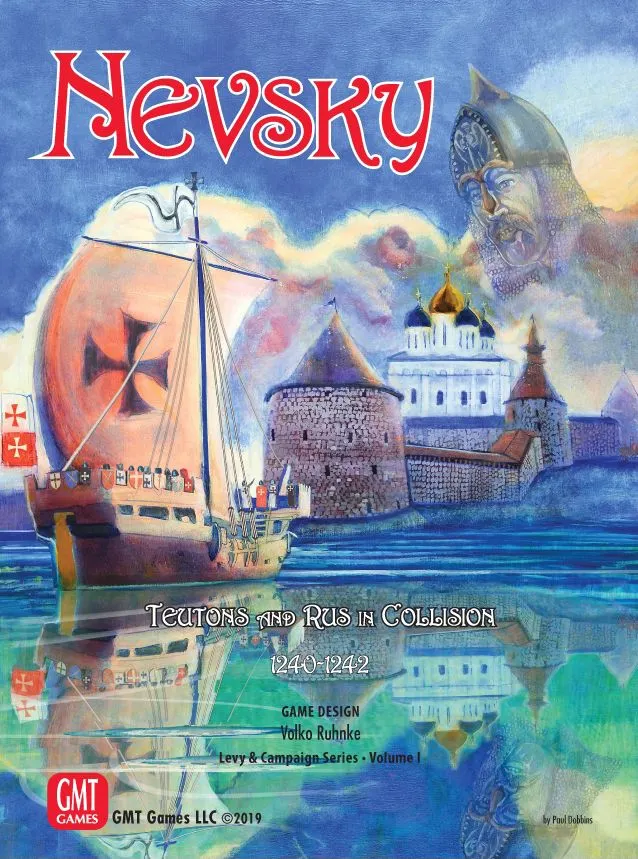
Nevsky: Teutons and Rus in Collision 1240-1242 is a board game released in 2019 for 1–2 players, 60–360 minutes per game, and ages 14 and up. It was designed by Volko Ruhnke and its main mechanics are Dice Rolling, Point to Point Movement, and Variable Set-up.





Nevsky: Teutons and Rus in Collision 1240-1242 is a board wargame about the storied clash between Latin Teutonic and Orthodox Russian powers along the Baltic frontier of the mid-13th-Century. It is the first volume in GMT Games’ "Levy & Campaign Series" portraying military operations in a variety of pre-industrial conflicts. In Nevsky players raise and equip their armies, then provision and maneuver them to ravage or conquer enemy territory or defeat enemy forces in battle. Feudal politics obligate an array of lords and vassals to serve on campaign—but only for limited periods. Players must keep an eye on the calendar and reward lords to keep their armies in the field. Nevsky is solitaire friendly or can add a rules option with screens that hide what the two players’ lords levy. A second option adds detail regarding vassal forces’ terms of service. In Nevsky, two players take the roles of “Russians” and “Teutons”, respectively. The Russians represent the wealthy city-state of Novgorod and its allies. The Teutons comprise German and Danish landholders—including the Teutonic Order—expanding a Baltic dominion. The sides every 40 days will levy various lords and vassals and their forces, transport, and capabilities, backed by higher political authorities—a papal legate for the Teutons and Novgorod’s city council (veche) for the Russians. Each lord is rated for fealty, lordship, service, and command and lays out his forces and assets on a mat. Wooden pieces represent units of knights, mounted sergeants, light and Asiatic cavalry, men-at-arms, and unarmored serfs and militia. Assets include counters for transport such as carts, boats, and sleds; provender to feed the army; and coin to pay for longer service or booty captured by ravaging or conquering enemy regions. The players then plan and command a campaign for that 40 days with the lords who have mustered. To represent the limits of communications on medieval operations, stacks of command cards commit players to activating lords in a sequence that may or may not meet the needs of the developing situation. Cylinder pieces on the map show the lords’ maneuvers, while markers on a feudal calendar show how much longer the lords will serve, influenced by success or failure in their campaigns. When lords clash in field battle or storming a castle, players array their lords’ mats left, right, center, and reserve and attempt to rout the enemy. Various event and capability cards reveal cultural and technological particulars that influence levy, campaign, and combat.
Nevsky: Teutons and Rus in Collision 1240-1242 supports 1–2 players according to the catalogue. This range comes from the publisher’s listed player count, so the game can be set up for any group size within it. Some setups, rules and scoring details may still vary by player count, so check your edition’s rulebook for the exact configuration.
The listed playing time for Nevsky: Teutons and Rus in Collision 1240-1242 is 60–360 minutes. This is the publisher’s estimate for a full game. The actual duration depends on the group, the player count and familiarity with the rules: first sessions usually run longer, while experienced groups often finish faster. Setup and teaching time are not included in this estimate.
The catalogue lists Nevsky: Teutons and Rus in Collision 1240-1242 for ages 14 and up. This is the publisher’s recommendation and reflects reading demands, rule complexity and small components rather than theme alone. Younger players can often join with help from an adult, so check the age guidance on your edition and consider your group’s experience with board games.
Nevsky: Teutons and Rus in Collision 1240-1242 has a complexity rating of 4.0 out of 5 from BoardGameGeek players, which makes it a heavy game. The rating reflects how much rules knowledge, planning and decision-making a typical game demands. Expect a longer first teach for heavier games, and use a preparation guide before game night.
Nevsky: Teutons and Rus in Collision 1240-1242 belongs to these categories: Wargame and Medieval. Its main mechanics are Dice Rolling, Point to Point Movement, and Variable Set-up. Categories describe the theme and setting of a game, while mechanics describe what players actually do on their turns. Each mechanic links to a catalogue hub with similar games, which helps when you want something comparable.
The credited designers of Nevsky: Teutons and Rus in Collision 1240-1242 are: Volko Ruhnke. These credits come from the published game data and name the people responsible for the game’s design, not its illustrators or publishers. Designer pages on MeepleRules collect other titles by the same designers, which helps when you enjoy a game and want to find similar ones.
The catalogue lists Nevsky: Teutons and Rus in Collision 1240-1242 as a base game. It can be played on its own with the components in the box and does not require any other title. Expansions, if any exist, add new content or rules on top of it and are listed separately in the catalogue with a link back to this base game.