
- BGG rank
- BGG #7,414
- BGG rating
- 8.2
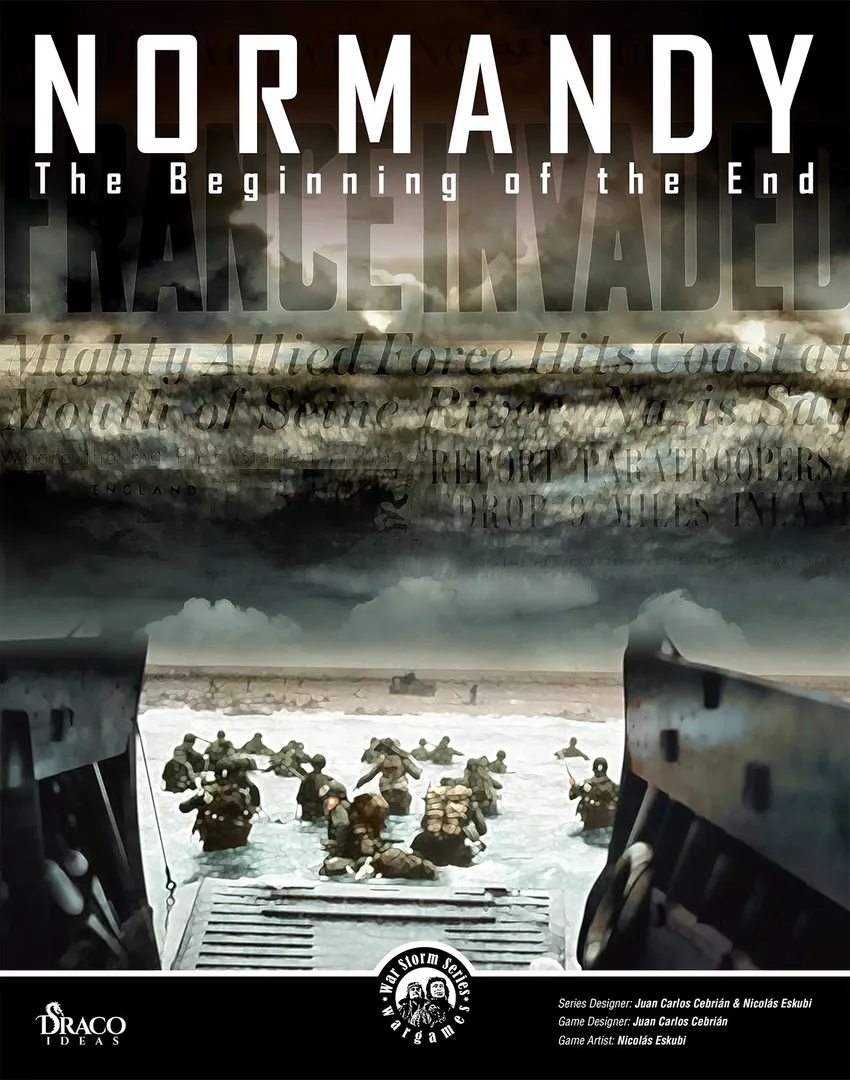
Normandy: The Beginning of the End
- 2 players
- 60–120 min
- Complexity 3.9/5
- 2018
2016
Rules assistance for Paths to Hell: Operation Barbarossa, June – December 1941
Plain-language explanations of turns, card effects and disputed situations, with official source references and saved question history.
For 1 player
What would you like to know?
Answers come from the official rulebook, with the page to check.
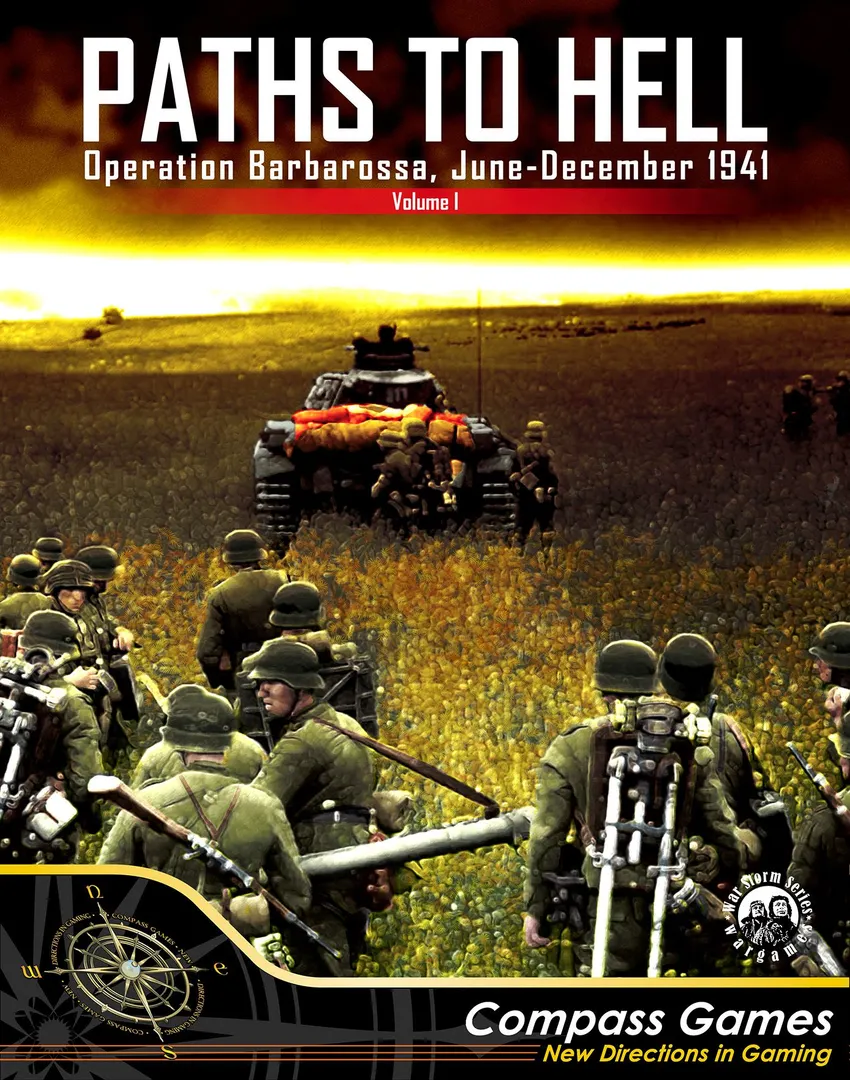
Paths to Hell: Operation Barbarossa, June – December 1941 is a board game released in 2016 for 1–2 players. It was designed by Juan Carlos Cebrián and Nicolás Eskubi and its main mechanics are Dice Rolling, Hexagon Grid, and Simulation.
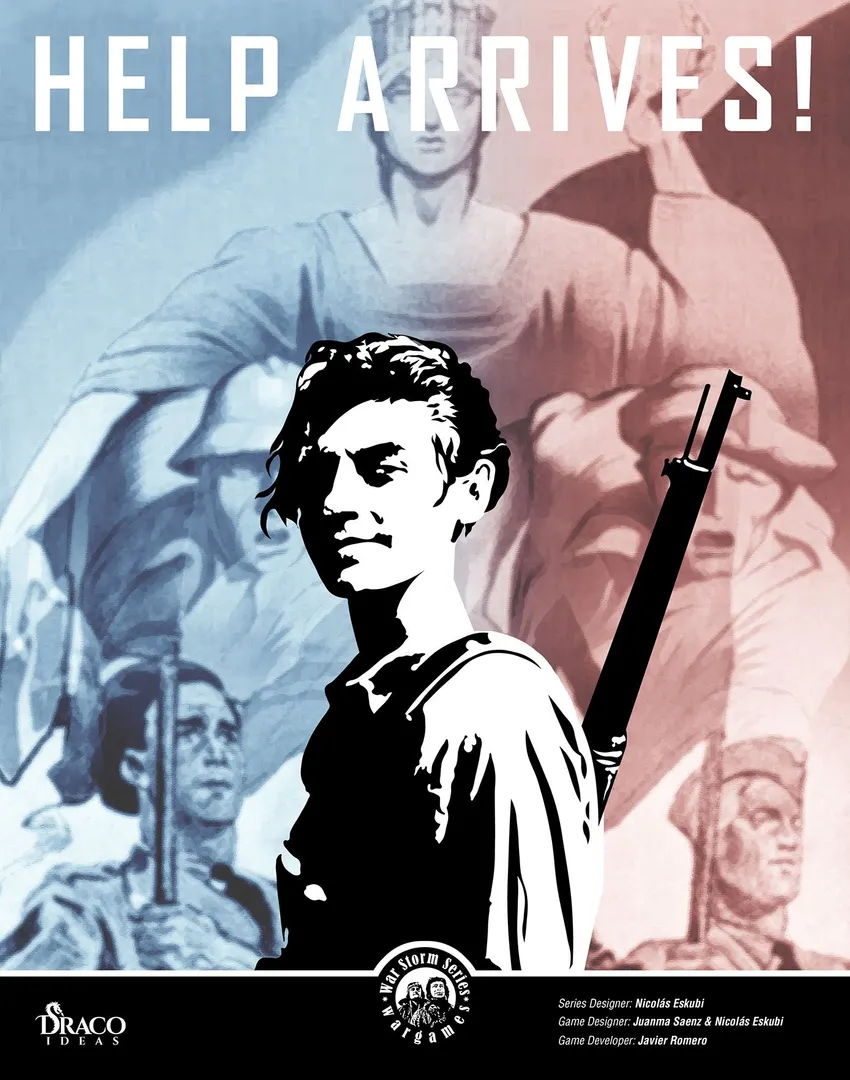


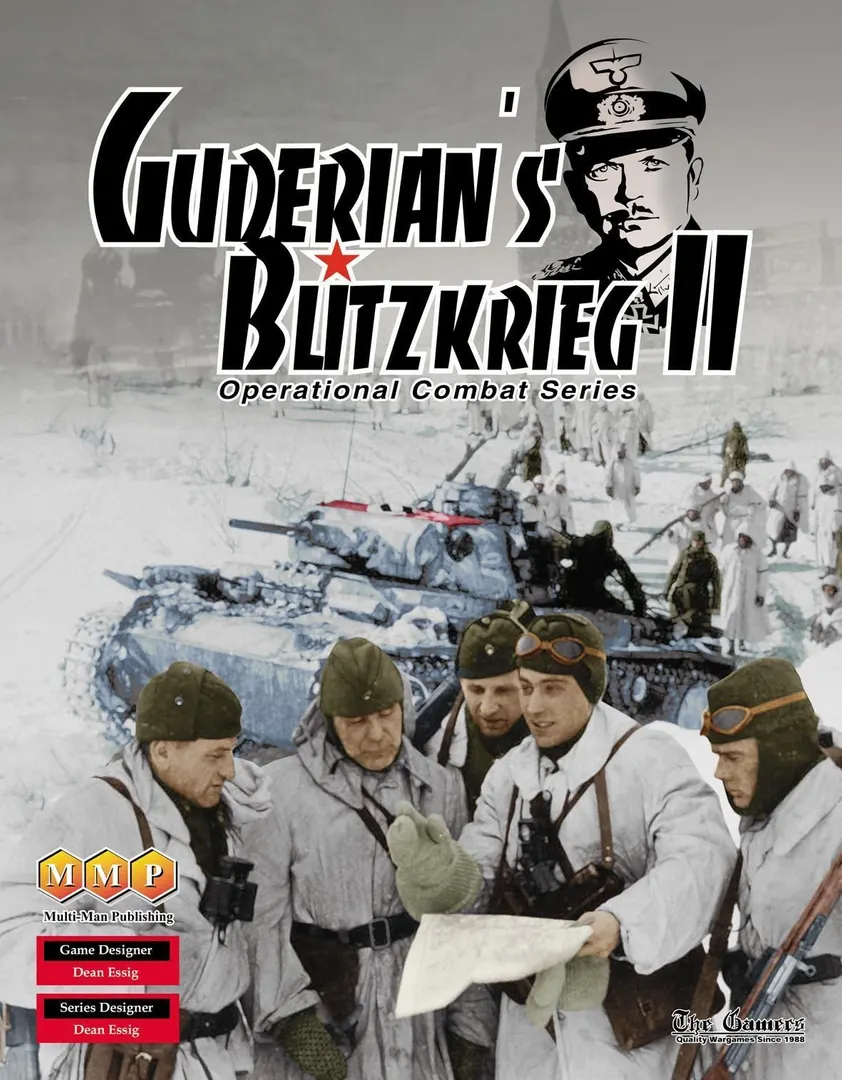
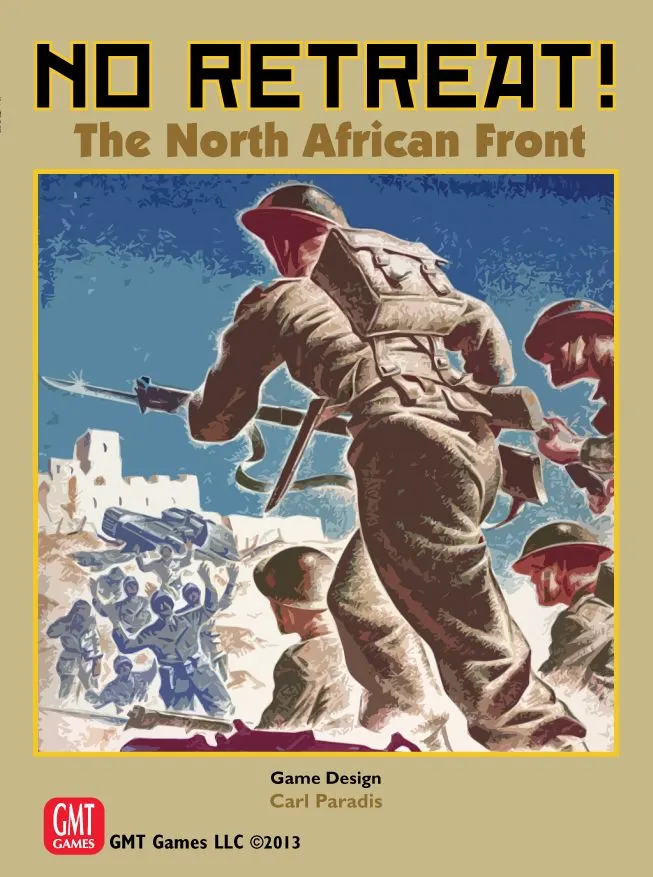
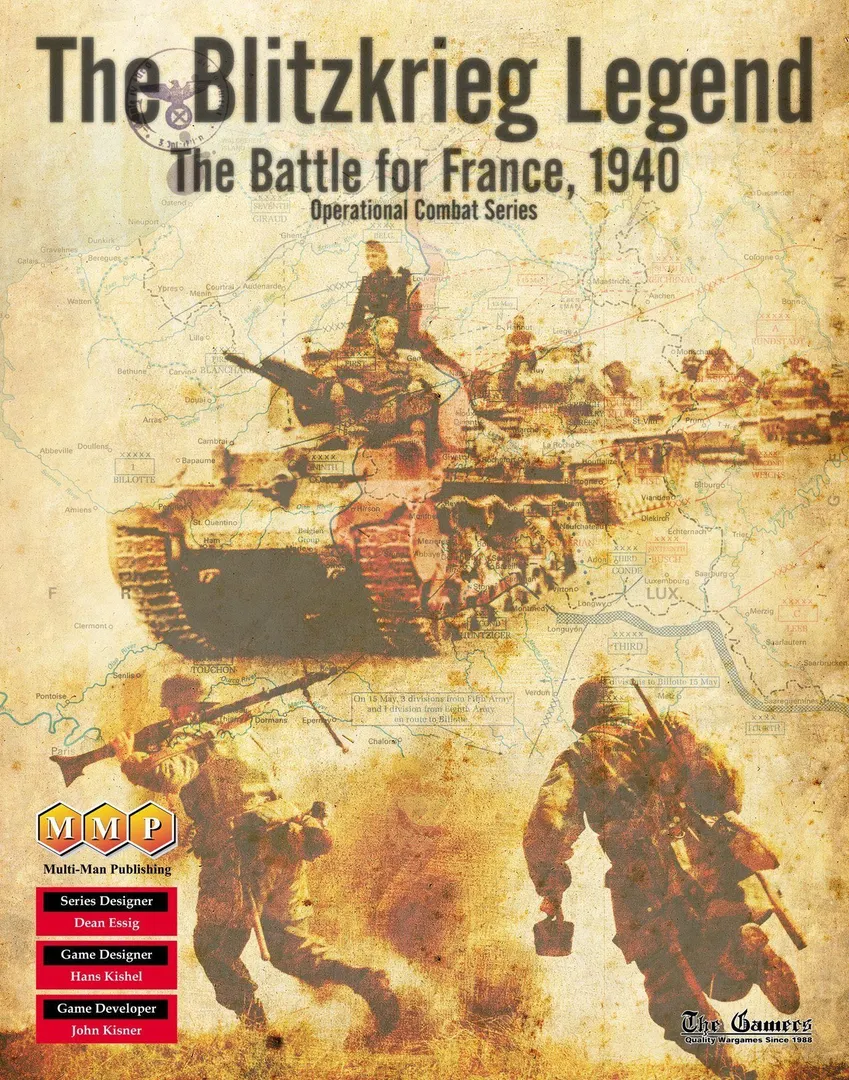

Paths to Hell (PTH) (Volume III) is a stand-alone game in the War Storms series (WSS). Recreates the events of those days and allows the players to reproduce the most famous battles of the Blitzkrieg on the East Front at a tactical level. Players take command of either the Allied or Axis forces (or can play solitaire) in the tactical battles of each scenario. PTH while utilizing "La Bataille de France, 1940" base rules, incorporates new and adapted rules and additions for this new front. The WSS promises many hours of fierce fighting between the infantry, tanks, artillery and aircraft belonging to the armies enveloped in this conflict. Just a few of the additions include: Human wave attacks Battalion officers Communist Commissars Recon rules Flamethrower tanks Motorcycle recon Waffen SS Rumnanian Gully Rail Roads One 8'5 x 11" chart with many overlays PTH has a moderate complexity with good solitaire suitability. The system emphasizes the role of officers. Officers can activate units, coordinate with other officers and their units, call for artillery support, air support, smoke screens, influence moral checks, coordinate assaults, and much more. Rules for special actions. Based on the principle of simultaneous execution, or simply "WE GO", a hybrid system of turns and "real time". The players must activate unit leaders to perform many actions (fire, assault, move, coordinate, etc). A turn ends when both players have completed all their activations. The scale is platoon level with units representing groups of between 30 and 40 soldiers, weapons units represents groups of 3-4 weapons and their accompanying crews (20-25 soldiers), and the AFVs/Transports representing groups of 3 to 5 vehicles and their corresponding crews. Scenarios are divided into turns representing about 12-15 minutes of action. Turns are divided into the following phases: Command Phase, Initiative Phase, Activation Phase and Marker Removal Phase The game uses isomorphic mapboards, each of which can align to any edge of equal length on any other mapboard. This allows for an almost unlimited number of combinations to create any terrain situation, including player designed scenarios. Each map hex represents a distance of approximately 150 to 200 metres. Components 4 Isomorphic Maps 8 Overlays 5 sheets of Counters (3 of 5/8” and 2 of 3/4”) 1 Standard Rulebook 1 Exclusive Rulebook 7 Scenario Cards featuring 13 scenarios 3 Charts and Table Cards 2 Battalion Charts Cards 2 six-side dice
Paths to Hell: Operation Barbarossa, June – December 1941 supports 1–2 players according to the catalogue. This range comes from the publisher’s listed player count, so the game can be set up for any group size within it. Some setups, rules and scoring details may still vary by player count, so check your edition’s rulebook for the exact configuration.
Paths to Hell: Operation Barbarossa, June – December 1941 has a complexity rating of 3.4 out of 5 from BoardGameGeek players, which makes it a medium-weight game. The rating reflects how much rules knowledge, planning and decision-making a typical game demands. Expect a longer first teach for heavier games, and use a preparation guide before game night.
Paths to Hell: Operation Barbarossa, June – December 1941 belongs to these categories: Wargame and World War II. Its main mechanics are Dice Rolling, Hexagon Grid, and Simulation. Categories describe the theme and setting of a game, while mechanics describe what players actually do on their turns. Each mechanic links to a catalogue hub with similar games, which helps when you want something comparable.
The credited designers of Paths to Hell: Operation Barbarossa, June – December 1941 are: Juan Carlos Cebrián and Nicolás Eskubi. These credits come from the published game data and name the people responsible for the game’s design, not its illustrators or publishers. Designer pages on MeepleRules collect other titles by the same designers, which helps when you enjoy a game and want to find similar ones.
The catalogue lists Paths to Hell: Operation Barbarossa, June – December 1941 as a base game. It can be played on its own with the components in the box and does not require any other title. Expansions, if any exist, add new content or rules on top of it and are listed separately in the catalogue with a link back to this base game.