
- BGG rating
- 7.7
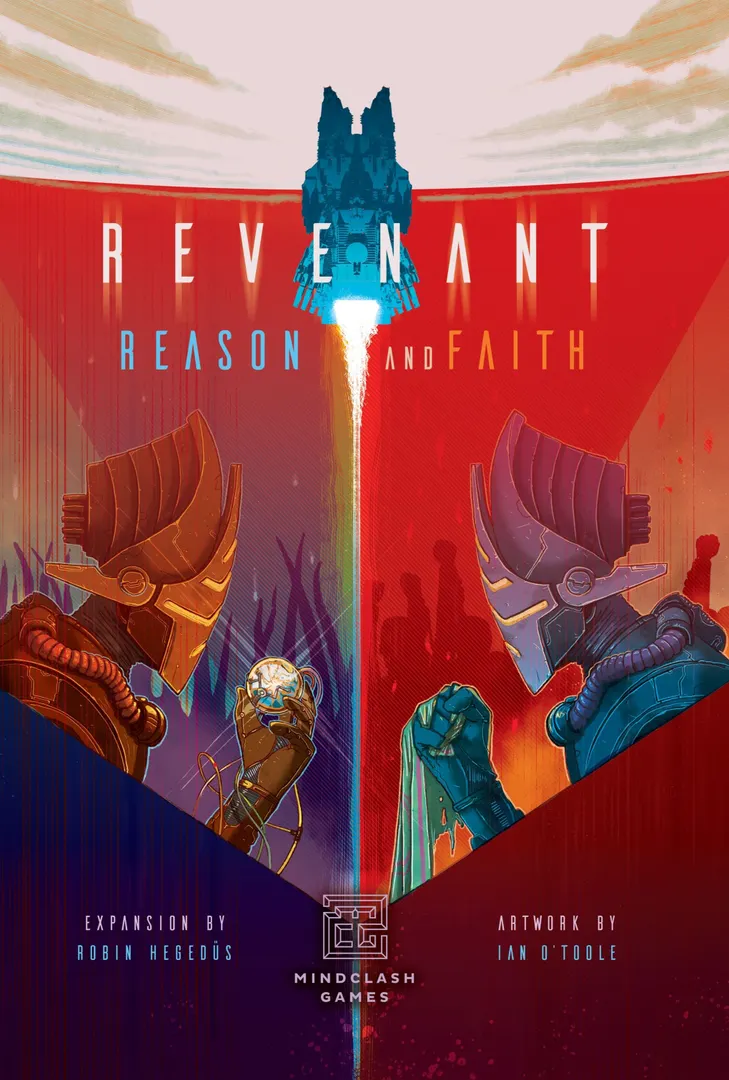
Revenant: Reason and Faith
- 1–4 players
- 90–120 min
- 2026
2026
Rules assistance for Revenant
Plain-language explanations of turns, card effects and disputed situations, with official source references and saved question history.
For 1 player
What would you like to know?
Answers come from the official rulebook, with the page to check.
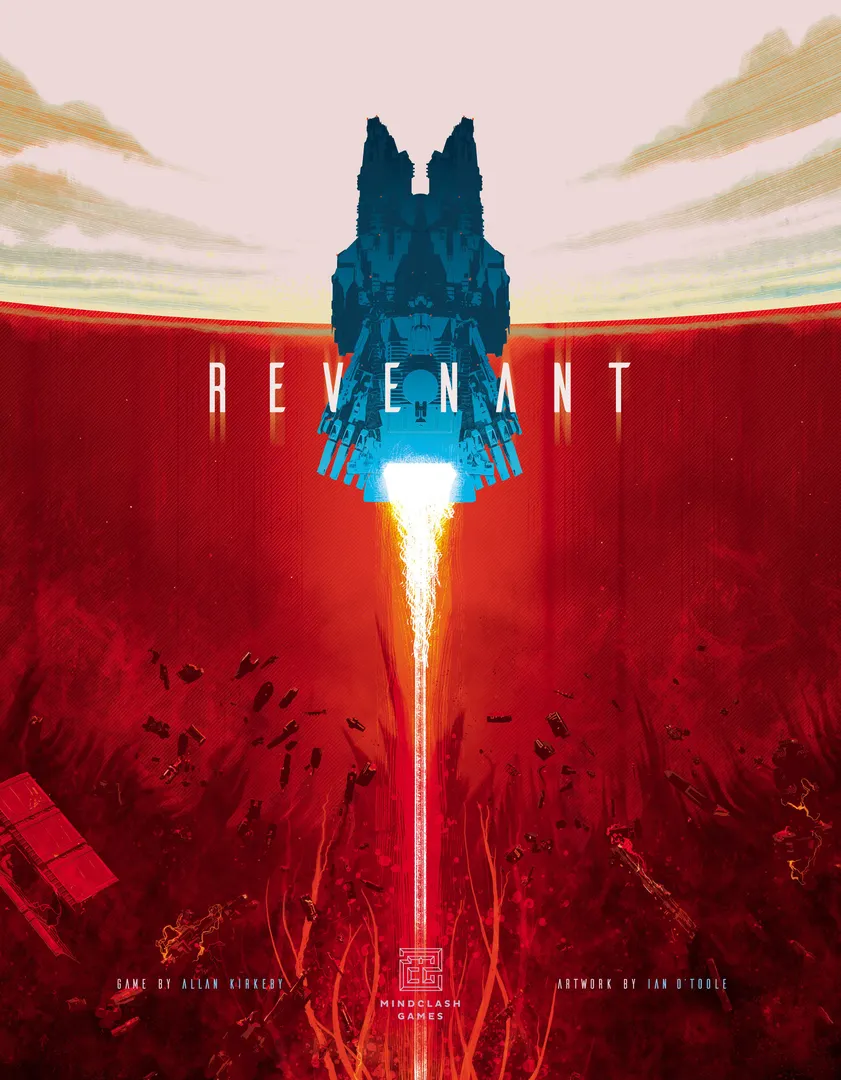
Revenant is a board game released in 2026 for 1–4 players, 90–120 minutes per game, and ages 14 and up. It was designed by Allan Kirkeby and its main mechanics are Variable Player Powers, Area Majority / Influence, and Hidden Victory Points.







From the void between dimensions, an ancient cosmic entity emerged—corrupting, consuming, and devouring all in its path. In the wake of the cataclysm known as Voidfall, the admirals of the fallen galactic empire, the Domineum, forged a desperate contingency plan. To preserve the legacy of the human civilization from the Voidborn threat, a former imperial flagship, the Revenant, was retrofitted to carry vast databanks containing the accumulated knowledge of humanity and escape the fallen empire. Now, bearing humanity’s last hope and escorted by the ships of the Domineum’s last Great Houses, you must guide the fleet to safety beyond the known galaxy, balance fragile alliances, and secure not only the survival of humankind—but also your own political destiny. Revenant is a standalone, competitive worker placement game of shifting allegiances, set in the Voidfall universe. Players take on the role of rival admirals coordinating the defense of a fleeing starfleet, and competing to earn influence with the factions that stand to survive the journey. Across four rounds, players assign crew to ships throughout the fleet, from which they will fight corrupted ships, explore planets in search of resources, upgrade their ship and crew, deploy new vessels, and more. Each ship is affiliated with one of the Great Houses, and each time you assign crew there, you gain influence with that House. The journey won’t be an easy one. The Voidborn’s corrupted forces will continuously attack the fleet, dealing damage to various ships at the end of every round. You can take your part in protecting the fleet by destroying enemy ships, repairing friendly vessels or maneuvering them to safe areas, or ultimately activating the Revenant’s hyperdrive to jump to a safer sector. Regardless of your efforts, there will be casualties - you have to make sure that the Houses you have influence in are protected above others. Revenant spices up the resource management and engine-building of a mid-weight euro with dynamic tactical challenges, constant player interaction, and shifting allegiances. —description from the publisher
Revenant supports 1–4 players according to the catalogue. This range comes from the publisher’s listed player count, so the game can be set up for any group size within it. Some setups, rules and scoring details may still vary by player count, so check your edition’s rulebook for the exact configuration.
The listed playing time for Revenant is 90–120 minutes. This is the publisher’s estimate for a full game. The actual duration depends on the group, the player count and familiarity with the rules: first sessions usually run longer, while experienced groups often finish faster. Setup and teaching time are not included in this estimate.
The catalogue lists Revenant for ages 14 and up. This is the publisher’s recommendation and reflects reading demands, rule complexity and small components rather than theme alone. Younger players can often join with help from an adult, so check the age guidance on your edition and consider your group’s experience with board games.
Revenant has a complexity rating of 4.2 out of 5 from BoardGameGeek players, which makes it a heavy game. The rating reflects how much rules knowledge, planning and decision-making a typical game demands. Expect a longer first teach for heavier games, and use a preparation guide before game night.
Revenant belongs to these categories: Science Fiction. Its main mechanics are Variable Player Powers, Area Majority / Influence, and Hidden Victory Points. Categories describe the theme and setting of a game, while mechanics describe what players actually do on their turns. Each mechanic links to a catalogue hub with similar games, which helps when you want something comparable.
The credited designers of Revenant are: Allan Kirkeby. These credits come from the published game data and name the people responsible for the game’s design, not its illustrators or publishers. Designer pages on MeepleRules collect other titles by the same designers, which helps when you enjoy a game and want to find similar ones.
The catalogue lists Revenant as a base game. It can be played on its own with the components in the box and does not require any other title. Expansions, if any exist, add new content or rules on top of it and are listed separately in the catalogue with a link back to this base game.