- BGG rating
- 6.8
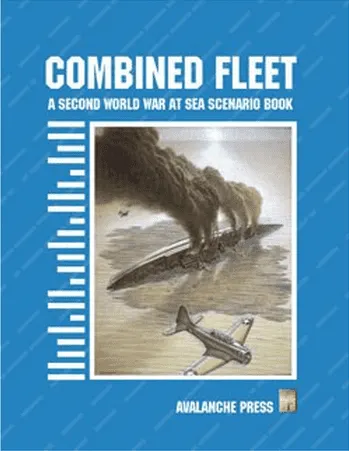
Second World War at Sea: Combined Fleet
- 1–2 players
- 30 min
- 2010
2010
Rules assistance for Second World War at Sea: Coral Sea
Plain-language explanations of turns, card effects and disputed situations, with official source references and saved question history.
For 2 players
What would you like to know?
Answers come from the official rulebook, with the page to check.
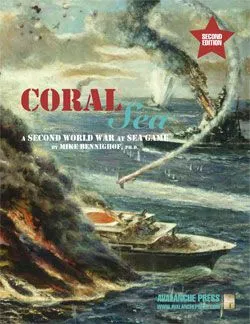
Second World War at Sea: Coral Sea is a board game released in 2010 for 2 players and 30–120 minutes per game. It was designed by Michael Bennighof and its main mechanics are Hexagon Grid.





In May 1942, the Japanese sought to capture Port Moresby on the south coast of New Guinea and interrupt communications between the United States and Australia. Such a move, they hoped, would bring the Americans to battle. The United States Navy needed no special inducement to fight its nation's enemies. Two American aircraft carriers met one small and two large Japanese carriers in the world's first battle between these powerful new warships. For the first time in naval history, a major battle was decided with no warship of either fleet even sighting an enemy ship directly. Aircraft were the new measure of naval power. Coral Sea is the new introductory boxed game for the Second World War at Sea series. It covers this key battle and is intended as a gateway for players new to the world's most popular series of naval boardgames. The Japanese player must establish new bases in New Guinea and at Tulagi in the Solomon Islands; the American player must stop them. Forces are very closely balanced, and victory will rest with the player who can best make use of his or her resources. The 22x17-inch operational map covers the Coral Sea off northeastern Australia as well as surrounding waters. Players maneuver their task forces on this map and search for one another with aircraft, submarines and surface ships. When contact is made, player moves to the tactical map. The tactical map is a generic blue field of hexagons, used to resolve surface combat. There, ships maneuver and fight using their gunnery and torpedo factors. Each player rolls a number of dice according to the ship’s capabilities, hitting on a result of 6. Gunnery and torpedo damage tables give the results: ships can suffer damage to engines, hull or armament. Air attacks are resolved in similar fashion. The combat systems yield results rapidly but in a historically accurate fashion, giving a good balance of fun and insight.
Second World War at Sea: Coral Sea supports 2 players according to the catalogue. This is the publisher’s listed player count, so the game is designed for exactly that number of participants. Variants for other group sizes, if any, are described in the rulebook of your edition, so check it before setting up a different configuration.
The listed playing time for Second World War at Sea: Coral Sea is 30–120 minutes. This is the publisher’s estimate for a full game. The actual duration depends on the group, the player count and familiarity with the rules: first sessions usually run longer, while experienced groups often finish faster. Setup and teaching time are not included in this estimate.
Second World War at Sea: Coral Sea has a complexity rating of 3.1 out of 5 from BoardGameGeek players, which makes it a medium-weight game. The rating reflects how much rules knowledge, planning and decision-making a typical game demands. Expect a longer first teach for heavier games, and use a preparation guide before game night.
Second World War at Sea: Coral Sea belongs to these categories: Wargame, Nautical, and World War II. Its main mechanics are Hexagon Grid. Categories describe the theme and setting of a game, while mechanics describe what players actually do on their turns. Each mechanic links to a catalogue hub with similar games, which helps when you want something comparable.
The credited designers of Second World War at Sea: Coral Sea are: Michael Bennighof. These credits come from the published game data and name the people responsible for the game’s design, not its illustrators or publishers. Designer pages on MeepleRules collect other titles by the same designers, which helps when you enjoy a game and want to find similar ones.
The catalogue lists Second World War at Sea: Coral Sea as a base game. It can be played on its own with the components in the box and does not require any other title. Expansions, if any exist, add new content or rules on top of it and are listed separately in the catalogue with a link back to this base game.