
- BGG rating
- 9.0
Shibumi: Further Games
- 2–6 players
- 10–20 min
- 2020
2011
Rules assistance for Shibumi
Plain-language explanations of turns, card effects and disputed situations, with official source references and saved question history.
For 1 player
What would you like to know?
Answers come from the official rulebook, with the page to check.
Shibumi is a board game released in 2011 for 1–8 players, 15 minutes per game, and ages 6 and up. It was designed by Cameron Browne and its main mechanics are Hand Management, Network and Route Building, and Enclosure.


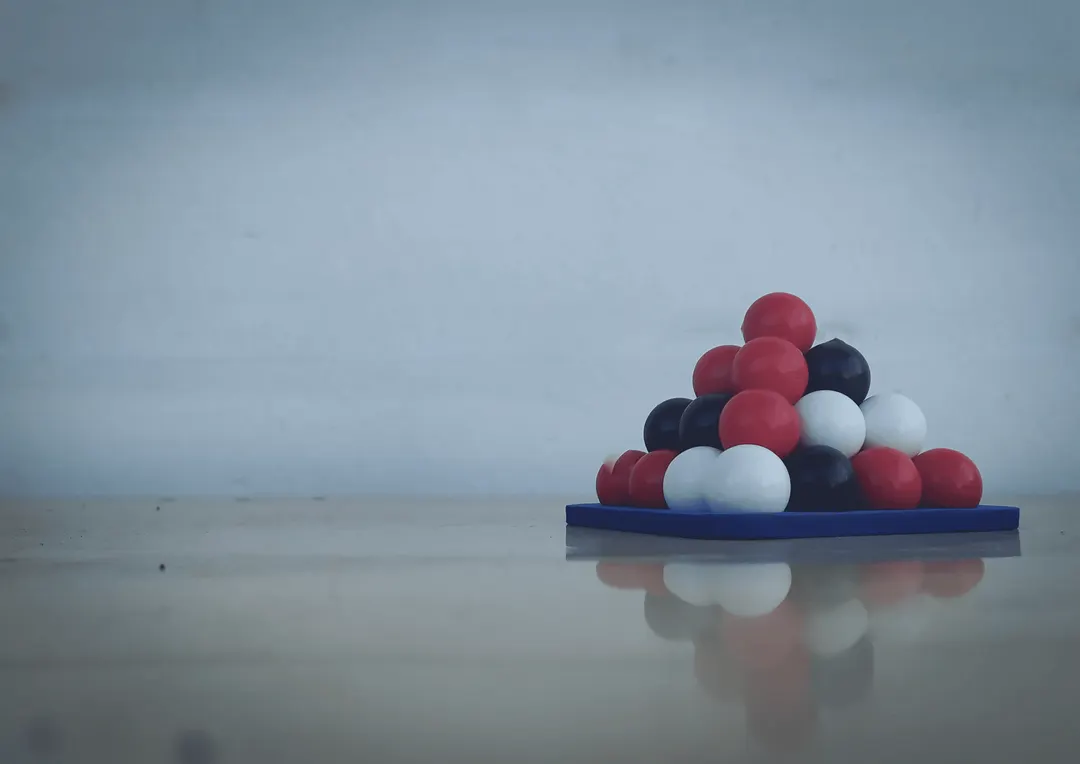
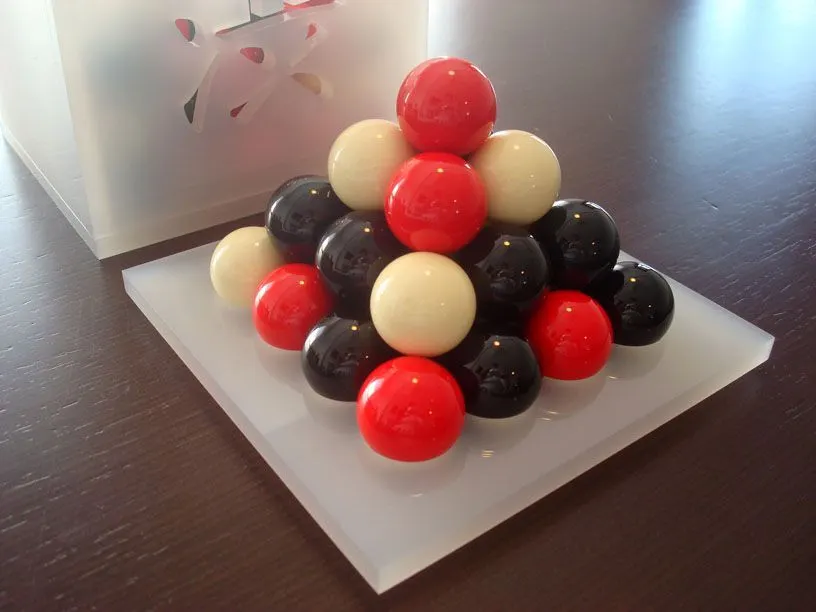
INTRODUCTION Shibumi is the essence of beauty, or elegance in its minimal form. A shibumi object may appear simple but will reward the viewer with hidden depths as it is explored over time. Shibumi is simplicity hiding complexity. COMPONENTS The Shibumi set is not a single game but many games; it is the simplest of game systems. The set includes a square board with 4x4 holes and 48 white, black and red balls (16 each). Balls may only stack on 2x2 platforms of existing balls. Conversely, if a ball is removed then any others that it supports will drop. Any ball that directly supports two or more on the level above is pinned and cannot be removed. If a ball is not pinned then it’s free. EDITIONS Published by nestorgames, it is presented in 3 editions: - Ninja: Small, light, portable. It includes a black and small cotton bag, a blue foam board, 19mm plastic balls in 3 colours (16 each of white, black and red), and a sheet with rules for 7 games. - Samurai: Big, solid, strong. It includes a big white bag, a laser-cut 8mm thick 'ice' acrylic board and 25mm phenolic resin balls (same material as snooker balls) in 3 colours (16 each of white, black and red), and a sheet with rules for 7 games. Optionaly 3 bowls for the marbles can be purchased. - Shogun: The executive edition for the big boss. It includes a big laser-cut 8mm thick 'ice' acrylic box with 4x4 holes on its lid, a big white bag, 25mm phenolic resin balls in 3 colours (16 each of white, black and red), and a pendrive with rules for many games. You will be able download future games and computer versions into your pendrive as they become available. The phenolic balls are absolutely exquisite as they are: - Light: around 15 grams each. - Round: each ball is perfectly spherical without blemish; they stack and drop correctly every time. - Warm: both in temperature and in the nice snooker ball "clack" they make when struck together. - Tough: they won't chip or crack and seem pretty much indestructible. They look and feel fantastic. When you pick them up you just want to keep fondling them. HISTORY Games and puzzles based on square pyramidal stackings have existed at least since Edouard Lucas' cannon-ball stacking problem of 1875. The most famous 4x4 square pyramidal game is Pylos (published by Gigamic). Shibumi is different due to the third ball colour, drop mechanism, different numbers of players, lack of a board gutter, and the fact that it's a system for playing many games rather than the embodiment of a single game. Some Shibumi games may be playable with a Pylos set but many will not. Shibumi game system concept by Cameron Browne 2011. GAMES This is the official geeklist of Shibumi games: Official Shibumi games list Please feel free to create your own game for this system! The names of these games all start with ‘SP’ because they're Square Pyramidal games:
Shibumi supports 1–8 players according to the catalogue. This range comes from the publisher’s listed player count, so the game can be set up for any group size within it. Some setups, rules and scoring details may still vary by player count, so check your edition’s rulebook for the exact configuration.
The listed playing time for Shibumi is 15 minutes. This is the publisher’s estimate for a full game. The actual duration depends on the group, the player count and familiarity with the rules: first sessions usually run longer, while experienced groups often finish faster. Setup and teaching time are not included in this estimate.
The catalogue lists Shibumi for ages 6 and up. This is the publisher’s recommendation and reflects reading demands, rule complexity and small components rather than theme alone. Younger players can often join with help from an adult, so check the age guidance on your edition and consider your group’s experience with board games.
Shibumi has a complexity rating of 2.8 out of 5 from BoardGameGeek players, which makes it a medium-light game. The rating reflects how much rules knowledge, planning and decision-making a typical game demands. Expect a longer first teach for heavier games, and use a preparation guide before game night.
Shibumi belongs to these categories: Abstract Strategy, Puzzle, and Game System. Its main mechanics are Hand Management, Network and Route Building, and Enclosure. Categories describe the theme and setting of a game, while mechanics describe what players actually do on their turns. Each mechanic links to a catalogue hub with similar games, which helps when you want something comparable.
The credited designers of Shibumi are: Cameron Browne. These credits come from the published game data and name the people responsible for the game’s design, not its illustrators or publishers. Designer pages on MeepleRules collect other titles by the same designers, which helps when you enjoy a game and want to find similar ones.
The catalogue lists Shibumi as a base game. It can be played on its own with the components in the box and does not require any other title. Expansions, if any exist, add new content or rules on top of it and are listed separately in the catalogue with a link back to this base game.