
- BGG rank
- BGG #1,899
- BGG rating
- 7.7
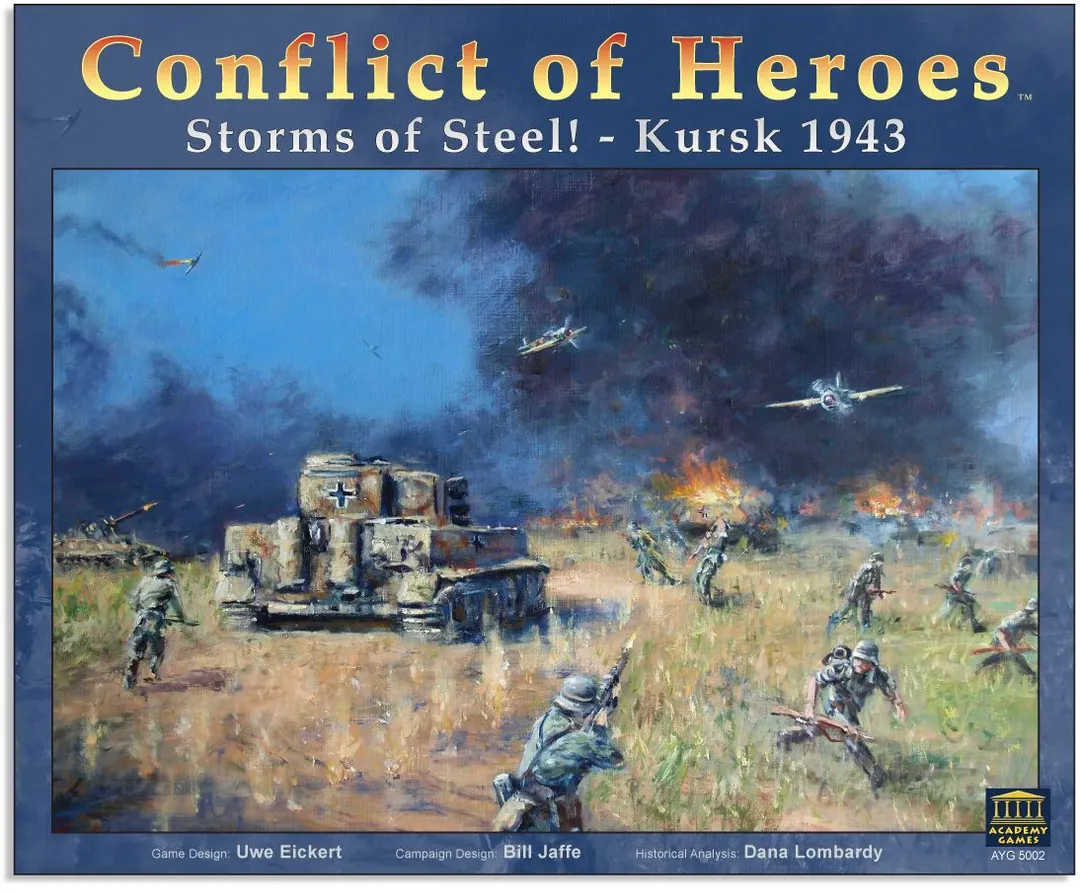
Conflict of Heroes: Storms of Steel! – Kursk 1943
- 1–4 players
- 120 min
- Complexity 3.1/5
- 2009
1979
Rules assistance for Streets of Stalingrad
Plain-language explanations of turns, card effects and disputed situations, with official source references and saved question history.
For 2 players
What would you like to know?
Answers come from the official rulebook, with the page to check.
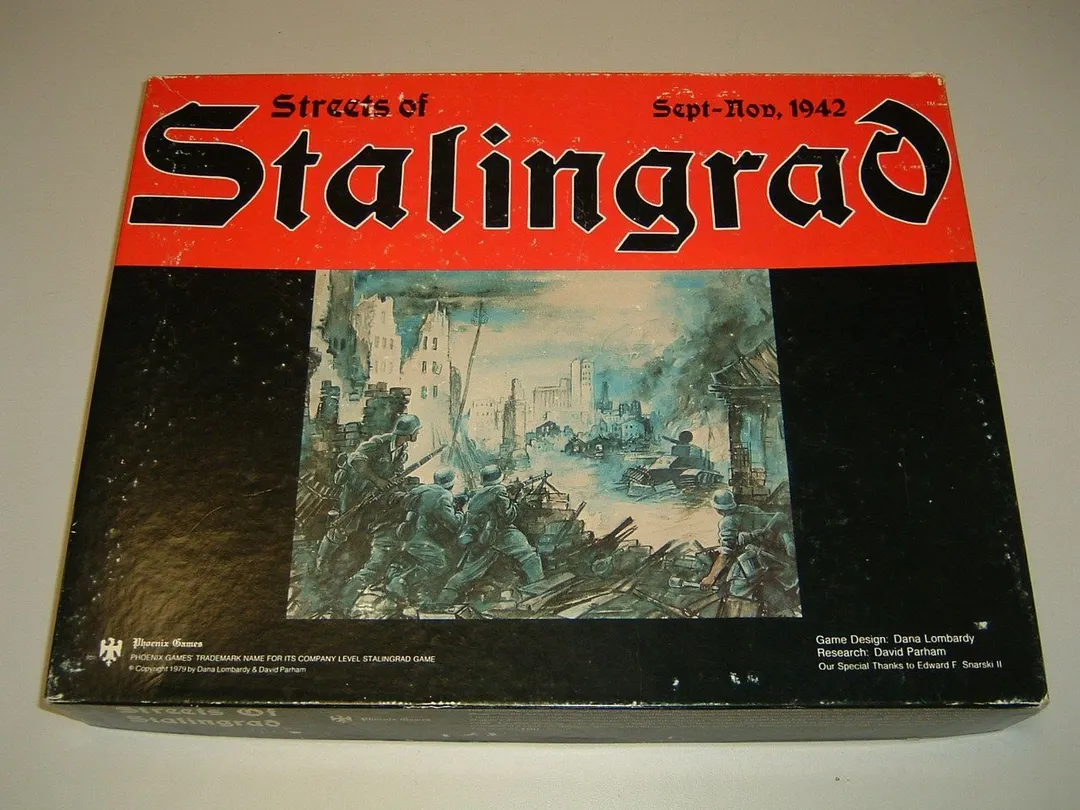
Streets of Stalingrad is a board game released in 1979 for 2 players, 180 minutes per game, and ages 12 and up. It was designed by Dana Lombardy and David Parham and its main mechanics are Dice Rolling and Hexagon Grid.
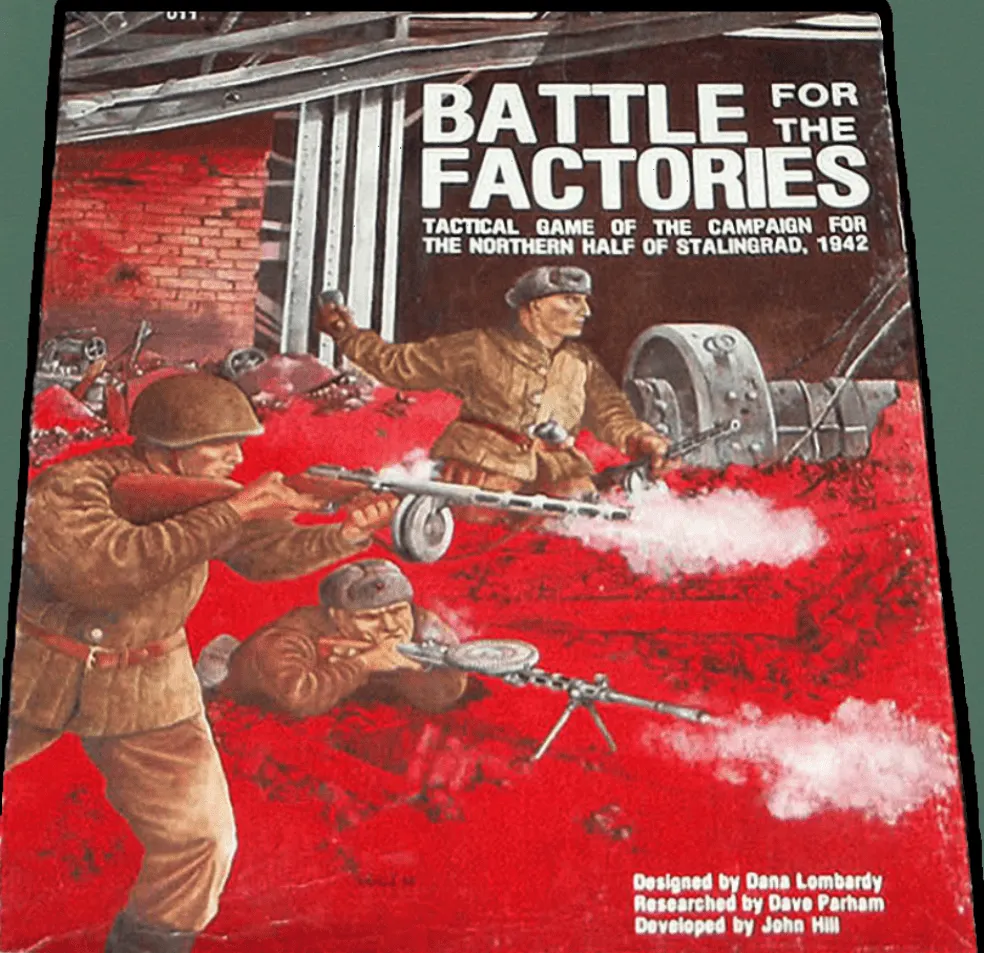
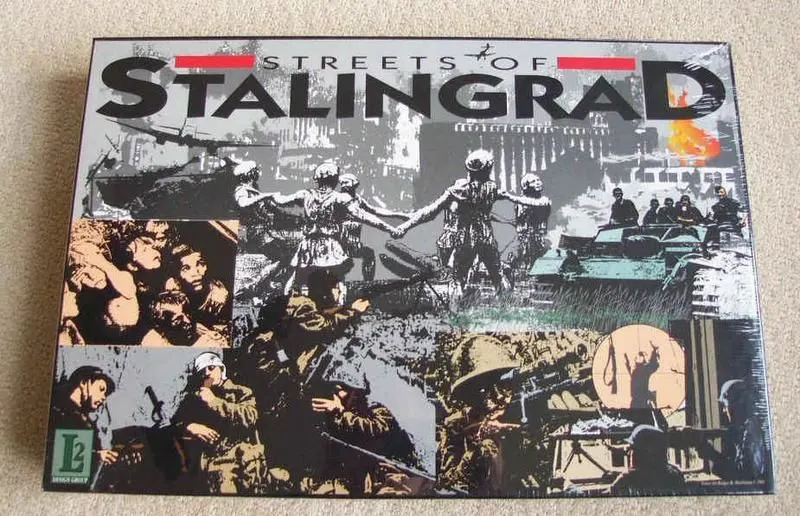
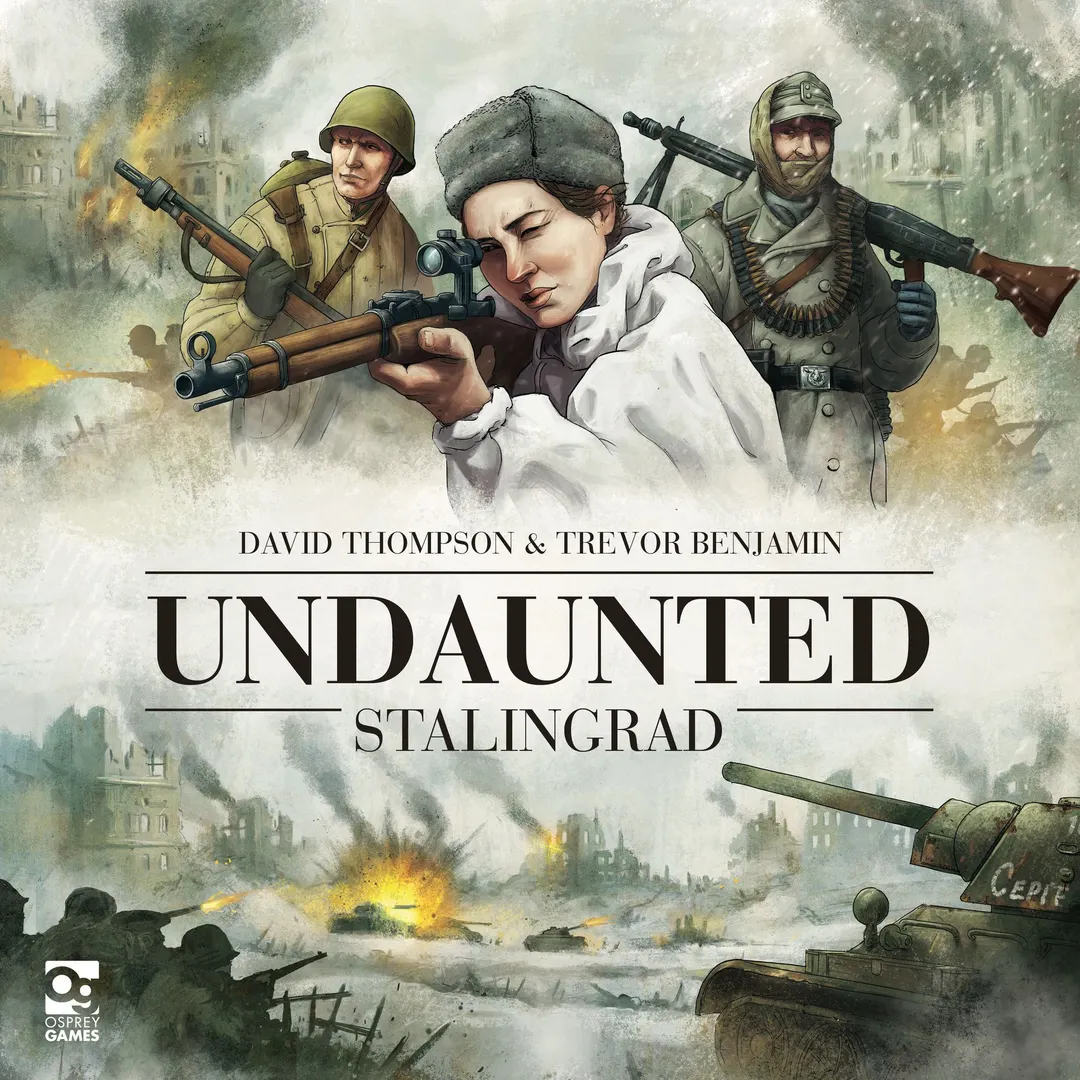
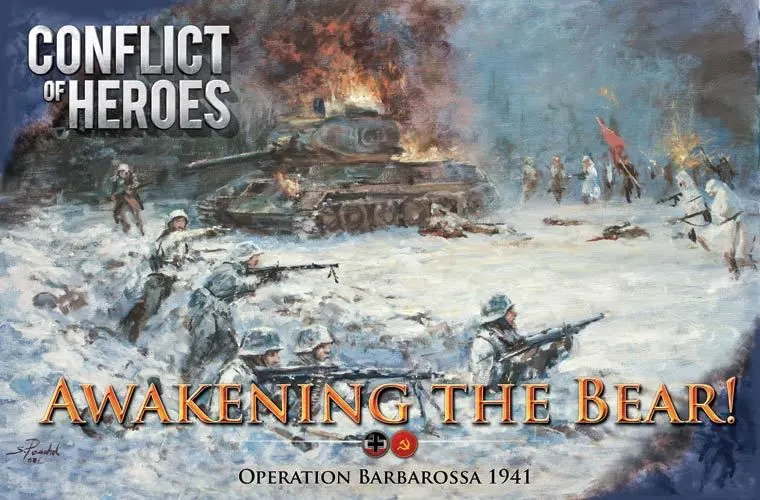
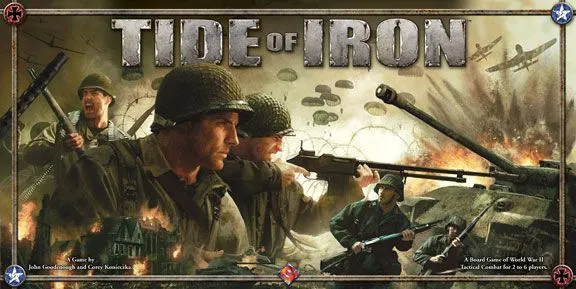
"Streets of Stalingrad" is a World War 2 East Front wargame that models the fight for the city of Stalingrad, September-October, 1942, at the company level. It employs a scale of 300 meters per hex, with daily turns and 2160 counters. The two designers spent years researching the orders of battle and aerial maps to produce a game that is possibly the most researched and arguably the most accurate depiction of a battle, mechanics aside. The large, fairly thin but sturdy counters are the shades of the uniforms of the armies according to the designers. Instead of the usual American style designations on the counters to depict what type of unit it is, the designers used the actual designations used by the separate armies. This could be confusing except for the wonderful large player aids supplied with actual photos of the unit types. Labels and ziplock bag are even supplied for sorting purposes although sorting can be confusing. Moves mag put out an issue in the late '70's, early '80's with an article that fixed the problem. The 3 large maps are taken straight from aerial photos. You see the city block by block and outside the city individual buildings can even be seen. There is very little color on the maps but they are beautiful and very functional. The terrain effects chart once again has actual photos of the terrain so you can get an idea of exactly what the soldiers were facing. There are many scenarios available so you can tailor the game for time and room as some only use 1 map or a portion of a map. Each scenario has a separate set up sheet for both sides that are large enough to put all the counters on the sheets. Each scenario has a miniature version of the map to be used with set up information. For a monster game it is very easy to set up and get into a game. There are 3 rulebooks included, 2 basic game and 1 advanced game. When learning the game it is fantastic that they included a rulebook for each player. This is the kind of detail that is evident throughout the game. The rule books are detailed without being overbearing, as a lot of Avalon Hill's and SPI's were from the time period. They are chock full of examples to clear up ambiguities. The game is difficult because of the scale only. It is actually a fairly simple game, mechanics wise, and can be played by anyone with some wargame experience. This game shows that it has been designed to play, by wargamers, in every detail.
Streets of Stalingrad supports 2 players according to the catalogue. This is the publisher’s listed player count, so the game is designed for exactly that number of participants. Variants for other group sizes, if any, are described in the rulebook of your edition, so check it before setting up a different configuration.
The listed playing time for Streets of Stalingrad is 180 minutes. This is the publisher’s estimate for a full game. The actual duration depends on the group, the player count and familiarity with the rules: first sessions usually run longer, while experienced groups often finish faster. Setup and teaching time are not included in this estimate.
The catalogue lists Streets of Stalingrad for ages 12 and up. This is the publisher’s recommendation and reflects reading demands, rule complexity and small components rather than theme alone. Younger players can often join with help from an adult, so check the age guidance on your edition and consider your group’s experience with board games.
Streets of Stalingrad has a complexity rating of 4.3 out of 5 from BoardGameGeek players, which makes it a heavy game. The rating reflects how much rules knowledge, planning and decision-making a typical game demands. Expect a longer first teach for heavier games, and use a preparation guide before game night.
Streets of Stalingrad belongs to these categories: Wargame and World War II. Its main mechanics are Dice Rolling and Hexagon Grid. Categories describe the theme and setting of a game, while mechanics describe what players actually do on their turns. Each mechanic links to a catalogue hub with similar games, which helps when you want something comparable.
The credited designers of Streets of Stalingrad are: Dana Lombardy and David Parham. These credits come from the published game data and name the people responsible for the game’s design, not its illustrators or publishers. Designer pages on MeepleRules collect other titles by the same designers, which helps when you enjoy a game and want to find similar ones.
The catalogue lists Streets of Stalingrad as a base game. It can be played on its own with the components in the box and does not require any other title. Expansions, if any exist, add new content or rules on top of it and are listed separately in the catalogue with a link back to this base game.