
- BGG rank
- BGG #257
- BGG rating
- 7.8
Commands & Colors: Ancients
- 2 players
- 60 min
- Complexity 2.7/5
- 2006
Expansion for Barbarian: Rome vs. The Gauls and Samnites, 315-200 BC – SPQR Battle Module
2012
Rules assistance for The Great Battles of Magna Graecia: Part 1
Plain-language explanations of turns, card effects and disputed situations, with official source references and saved question history.
What would you like to know?
Answers come from the official rulebook, with the page to check.
The Great Battles of Magna Graecia: Part 1 is an expansion for Barbarian: Rome vs. The Gauls and Samnites, 315-200 BC – SPQR Battle Module released in 2012 for 2 players and ages 12 and up. It was designed by Dan Fournie and its main mechanics are Dice Rolling, Hexagon Grid, and Simulation.


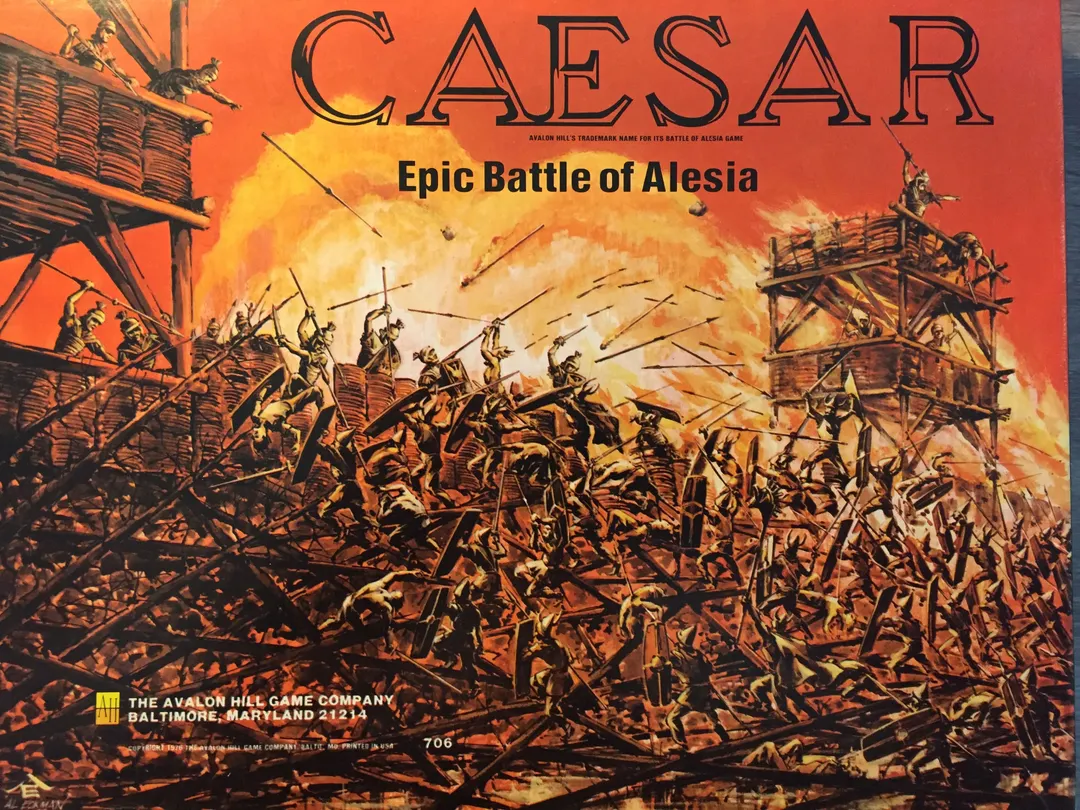







C3i Magazine #26 : A C3i Game Module for SPQR Deluxe and The Barbarian Module. From the publisher: "SPQR Deluxe features three great battles of King Pyrrhus of Epirus - Heraclea, Asculum and Beneventum. These battles give us agood look at the Greco-Macedonian military system in action against Rome. However, before Tarentum called in King Pyrrhus to battle the Romans in southern Italy, this Greek city-state had summoned a number of other Greek condotiere to fight the barbarian tribes of the interior - the piratical Apulians, the fierce Lucanians, the savage Bruttians, the mighty Samnites and the stalwart Romans. The Greek soldiers of fortune who answered her call hailed from many directions - Epirus to the esat, Sparta to the southeast and Syracuse to the southwest. The Hellenistic armies they led were similar in composition, but not indentical. Each mercenary captain brouht a core of troops from his homeland, supplemented by large mercenary forces drawn from the Adriatic and Ionian shores, the levies of Tarentum and tge Italiot League and occasionnally friendly Italian tribes. They were not altogether unsucessful, but none managed to achieve permanent résultats. This survey of foreign Greek armies battling to preserve Magna Graecia in the late Fourth Century BC will be presented in two parts. The battles presented provide an interesting mis of clashing military systems: the Hellenistic combined arms army versus a number of barbarian tribes, Samnite cohorts and even the legions of Rome. Part I begins with the campaigns of King Alexander I Molossus of Epirus." - The Battle of Sipontum, 334 BC. (Epirotes VS Apulians) - The Battle of Consentia, 333 BC. (Bruttians VS Epirotes) - The Battle of Paestrum, 332 BC. (Samnites and Lucanians VS Epirotes) - 4-pages historical background article. - 4-pages scenarios card - 4 new Leaders Counters
The Great Battles of Magna Graecia: Part 1 supports 2 players according to the catalogue. This is the publisher’s listed player count, so the game is designed for exactly that number of participants. Variants for other group sizes, if any, are described in the rulebook of your edition, so check it before setting up a different configuration.
The catalogue lists The Great Battles of Magna Graecia: Part 1 for ages 12 and up. This is the publisher’s recommendation and reflects reading demands, rule complexity and small components rather than theme alone. Younger players can often join with help from an adult, so check the age guidance on your edition and consider your group’s experience with board games.
The Great Battles of Magna Graecia: Part 1 has a complexity rating of 4.0 out of 5 from BoardGameGeek players, which makes it a heavy game. The rating reflects how much rules knowledge, planning and decision-making a typical game demands. Expect a longer first teach for heavier games, and use a preparation guide before game night.
The Great Battles of Magna Graecia: Part 1 belongs to these categories: Wargame, Ancient, and Expansion for Base-game. Its main mechanics are Dice Rolling, Hexagon Grid, and Simulation. Categories describe the theme and setting of a game, while mechanics describe what players actually do on their turns. Each mechanic links to a catalogue hub with similar games, which helps when you want something comparable.
The credited designers of The Great Battles of Magna Graecia: Part 1 are: Dan Fournie. These credits come from the published game data and name the people responsible for the game’s design, not its illustrators or publishers. Designer pages on MeepleRules collect other titles by the same designers, which helps when you enjoy a game and want to find similar ones.
The catalogue lists The Great Battles of Magna Graecia: Part 1 as an expansion for Barbarian: Rome vs. The Gauls and Samnites, 315-200 BC – SPQR Battle Module. Expansions add new content, rules or scenarios to the base game and usually cannot be played on their own, so you need Barbarian: Rome vs. The Gauls and Samnites, 315-200 BC – SPQR Battle Module to use it. Check that your edition of Barbarian: Rome vs. The Gauls and Samnites, 315-200 BC – SPQR Battle Module is compatible, as some expansions were revised between editions.